
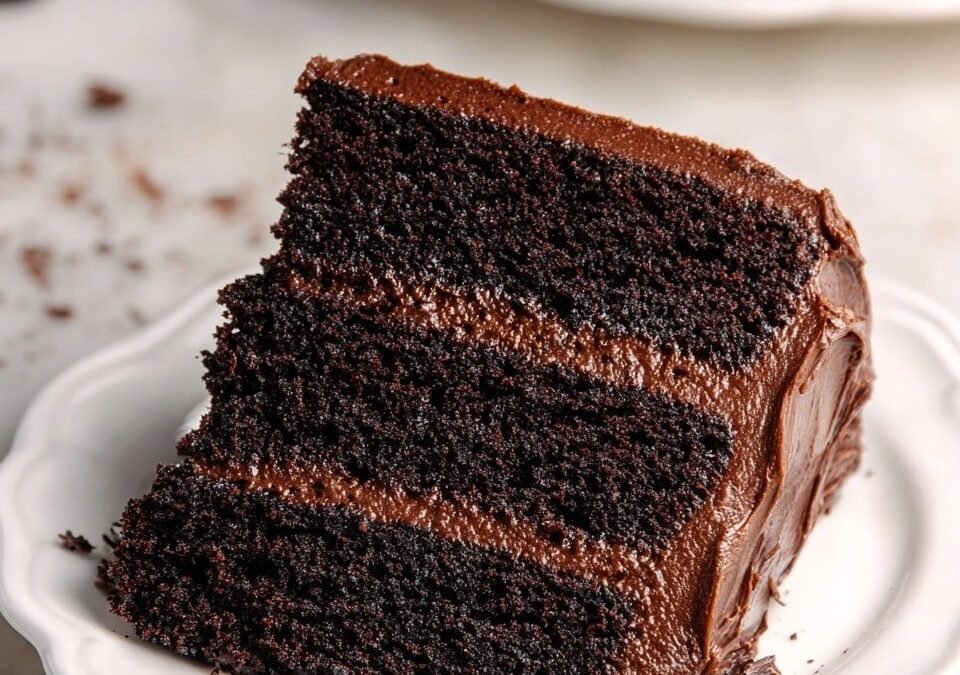
A cake can follow a trusted formula exactly and still emerge dry when small habits work against moisture. Measuring flour by scooping, trusting a dial that runs hot, or slicing too soon each pull water and tenderness out of the crumb. Every question below pairs one such habit with a practical correction, so the next bake keeps its softness for days. None of these fixes calls for exotic ingredients or professional gear. Most ask only for a lighter hand, a closer watch on the clock, and a little patience after the pan leaves the oven. Bakers who enjoy learning one project at a time will find the same patient approach pays off when trying homemade pizza dough for beginners, where careful measuring and gentle handling matter just as much.
Why Does Scooping Flour Make a Moist Cake Dry?
Scooping looks efficient, yet it quietly packs flour tight inside the cup. Dragging a measure through a bag or canister compresses the powder against the sides, and the cup ends up holding far more than a recipe writer intended. Flour in excess absorbs liquid that was meant to keep the crumb tender, so the batter turns thick, the rise suffers, and the finished slice tastes chalky even when every other step went well. Of all the errors that rob a cake of moisture, this one ranks near the top simply because it happens before mixing even begins.
The gentler method takes only a few extra seconds. Stir the flour lightly to loosen it, spoon it into the measure until it mounds above the rim, then sweep a straight edge across the top so the surplus falls away. Weighing removes the guesswork entirely, since a scale reads the same amount regardless of how settled the bag has become. Background reading on the history and structure of cake, as set out on Wikipedia, shows how closely the balance of flour, fat, sugar, and liquid defines crumb, which is why a heavy hand with just one ingredient shifts the whole result.
Too much flour also changes mixing. A stiff batter tempts a baker to keep stirring in search of smoothness, and extra stirring develops gluten that makes the crumb chewy rather than soft. If your batter pours like thick cream and settles slowly in the pan, the proportion is probably sound. If it sits in stiff peaks and needs coaxing into the corners, flour has likely crept in beyond the intended amount, and a spoonful or two of milk stirred in gently can partly restore balance before the pan goes into the heat.
How Does an Overheating Oven Steal Moisture From Cake?
An oven dial is a request, not a promise. Heating elements cycle on and off, hot pockets form near walls, and many home ovens drift well away from the number shown, sometimes by a wide margin. A cake that should bake gently near three hundred fifty degrees Fahrenheit instead sits in stronger heat, so its edges set and dry while the center still rises, and water escapes as steam for longer than the formula allows. The result is a firm rim, a domed top that cracks, and a crumb that stales by the following morning.
An inexpensive thermometer that hangs from a rack tells the truth about the space where food actually cooks. Place it in the center, heat the oven fully, and compare the reading with the dial before any batter goes in. Adjust the setting up or down until the thermometer holds steady near the target, and note the correction for future bakes, since most ovens drift in a consistent direction. Wider context on baking methods collected on Wikipedia underlines how controlled dry heat transforms batter, and control begins with knowing the real temperature rather than trusting a printed number.
Pan choice adds another layer. Dark metal absorbs heat aggressively and can overbrown the sides of a layer before the middle finishes, while glass holds heat and keeps cooking after removal. Light colored metal pans give the most even result for tender cakes. Bake on a middle rack, and avoid opening the door early, since lost heat invites a sunken center.
When Should a Moist Cake Leave the Oven?
Timing printed on a recipe is an estimate shaped by the writer’s oven, pans, and ingredients. Your kitchen will differ slightly, so doneness cues deserve more trust than the clock alone. Begin checking a few minutes before the stated finish. The top should spring back when pressed lightly with a fingertip, leaving no dent, and the edges should just start drawing away from the sides of the pan. A thin tester slipped near the center should emerge carrying a few damp crumbs, not wet batter and not a completely clean, dry surface.
That crumb detail matters. Wet batter means the structure has not set and the layer may collapse as it cools. A spotless tester usually signals that baking has already gone a touch too far, because residual heat inside the pan continues cooking the crumb during the first minutes of cooling. Even a brief overrun, a handful of minutes in a hot oven, pulls noticeable moisture from a delicate sponge or butter cake. Pulling the pan at the damp crumb stage lets carryover heat finish the job gently while the crumb stays soft.
Cooling in the pan needs the same restraint. Leave a layer cake resting for roughly ten to fifteen minutes, long enough to firm slightly so it will not tear, then turn it onto a rack. Left sitting in hot metal, the base steams and turns gummy; turned out too soon, it can crack or stick. Once on the rack, let the layers cool fully before wrapping or frosting, because trapped steam from a warm interior softens crusts and can make frosting slide. Patience at both ends of the bake, before and after the oven, protects texture as surely as any ingredient.
Why Does Slicing a Warm Cake Ruin Its Crumb?
A warm cake looks inviting, yet its structure is still settling. Inside, steam remains trapped among tender crumbs, fats are soft, and the network that gives a slice clean edges has not firmed. A knife drawn through that fragile interior compresses rather than cuts, dragging crumbs, tearing the surface, and letting steam rush out of the cut faces. Each slice then loses moisture faster than it would have if the cake had rested whole, and the remaining loaf or layer dries from the exposed surfaces inward.
Resting allows redistribution. As the cake cools gradually, steam settles back into the crumb instead of escaping, fats set to a pleasant softness, and flavors meld so the slice tastes richer than a piece cut in haste. This is one of the quieter missteps where bakers go wrong, because nothing looks damaged at the moment of cutting. The harm appears later, in slices that crumble and feel stale well before their time.
When serving cannot wait, reduce the damage with method. Use a long, thin knife, wipe the blade clean between cuts, and saw gently rather than pressing straight down. Serve modest slices so the cake is cut fewer times, and cover the cut faces promptly once everyone has been served. For a frosted celebration cake, a short spell in the fridge before cutting yields neater slices, provided each slice then rests on a plate for a short while until the crumb and frosting turn tender again.
How Does Storage Decide Whether Cake Stays Moist?
Air is the enemy once a cake cools. An unwrapped layer on a counter loses moisture hour by hour as water migrates from crumb to dry room air, and refrigeration, while useful for perishable frostings, can firm butter based crumb and mute flavor if a cake sits uncovered. Storage choices made on baking day largely decide whether the third day slice tastes nearly fresh or sadly stale.
Unfrosted layers keep best when wrapped snugly once fully cool, then held at room temperature for a day or frozen for longer keeping. Wrapping while still slightly warm traps a whisper of steam, though wrapping a genuinely hot layer invites sogginess, so judge the temperature with care. Some bakers rest wrapped layers overnight before frosting, finding that the crumb settles, slices level more easily, and moisture evens out from center to edge. A light brushing of simple syrup, made by dissolving sugar in an equal measure of hot water and cooling it, adds insurance to layers that feel borderline, soaking in without making the cake taste obviously sweet.
A cut cake needs its exposed faces protected. Press a piece of wrap directly against the cut surface, or tuck a slice of plain bread against it inside an airtight container, a humble trick that sacrifices the bread instead of the cake. Keep the container at room temperature for a few days when the frosting allows, and bring refrigerated slices back to room temperature before serving so the crumb relaxes. Freezing individual slices, wrapped tightly and then bagged, preserves moisture well and lets you thaw one portion at a time rather than exposing a whole cake repeatedly to air.
Can Sour Cream or Oil Rescue a Dry-Prone Cake Batter?
Certain ingredients defend moisture from inside the batter. Sour cream brings fat, gentle acidity, and thickness, so a modest addition tenderizes the crumb, weakens gluten formation slightly, and helps a cake stay soft after cooling. Plain yogurt can play a similar role, though its thinner texture changes batter consistency a little more. Buttermilk contributes acidity and liquid, supporting a fine, tender grain, especially in chocolate and spice cakes where its tang blends into the background.
Oil defends moisture in a different way. Butter firms as it cools, so a butter cake can taste lush when warm and noticeably firmer the next day, whereas oil stays liquid at room temperature and keeps the crumb feeling supple for longer. Many bakers blend the two, keeping butter for flavor and adding a portion of neutral oil for keeping quality. Creaming butter and sugar thoroughly still matters, because the air beaten in during that stage helps the cake rise evenly, and an even rise bakes more uniformly than a dense, uneven one.
Ingredients at room temperature support all of these efforts. Cold eggs, milk, or sour cream resist blending, leaving streaks that bake unevenly and pockets that turn out dry or rubbery. Set dairy and eggs out ahead of time so they lose their chill, then mix the batter only until the flour disappears, finishing the last streaks by hand with a spatula. Used together, these adjustments, modest fat enrichment, gentle acidity, proper temperature, and restrained mixing, turn a formula that once disappointed into one that stays moist through serving and storage alike.

One comment