A tray of cookies can look pale and soft one minute and turn deep golden at the edges only moments later, which is why guessing rarely works. Small choices made before the oven door closes, from scoop size to dough temperature, decide whether the centres stay chewy or the whole batch bakes up crisp. The timing that follows treats the clock as one signal among several, with colour and texture carrying equal weight. Watch the first tray closely, because your own oven, your own pan, and your own scoop will shift the timing slightly, and the notes you take on that first tray will serve every tray after it.
Cookie dough forgives a handful of extra chips or a pinch more salt. It does not forgive an oven running well past its setting, butter melted into a puddle, or scoops that vary wildly in size so half the tray burns while the rest stays raw.
Chocolate Chip Cookie Ingredients and Equipment to Gather First
Start with all purpose flour, baking soda, fine salt, unsalted butter, granulated sugar, brown sugar, eggs, vanilla extract, and semisweet chocolate chips. The brown sugar matters more than many beginners expect, because its molasses holds moisture and pushes the finished cookie toward chew, while a larger share of granulated sugar pushes the same dough toward crisp edges and a snappier bite. Butter can be softened for a classic creamed dough or melted for a denser, chewier result, and either choice works as long as you stay consistent from batch to batch so your timing notes stay meaningful.
Equipment stays simple: two sturdy mixing bowls, a whisk, a wooden spoon or a hand mixer, a rubber spatula, measuring cups and spoons, and a scale if you own one. You also need light coloured baking sheets, parchment paper or silicone mats, a scoop or two spoons, and a wire rack for cooling. Dark pans brown bottoms faster, sometimes by a full minute or more, so note which pan you used when you record your timing. Anyone still building confidence in the oven can also practise with baking muffins from scratch, since muffins need no chilling and give quick feedback on how your oven really behaves.
Set the eggs and butter out ahead of time when you plan to cream them, because room temperature ingredients blend into a smooth, even emulsion instead of a curdled looking mixture with streaks of butter. Cold eggs added to soft butter can seize the mixture and leave the dough uneven, which then bakes unevenly. Give the butter about thirty to forty five minutes on the counter in a cool kitchen, and set cold eggs in a bowl of warm tap water for about ten minutes if you forgot to plan ahead.
Mixing Chocolate Chip Cookie Dough in the Right Order
Whisk the flour, baking soda, and salt together in one bowl first, so the soda spreads evenly and no single cookie gets a bitter, soapy pocket. In the larger bowl, beat the butter with both sugars until the mixture looks pale and slightly fluffy, roughly two to three minutes with a hand mixer, then beat in the eggs one at a time with the vanilla. The pairing of butter, brown sugar, eggs, and chopped chocolate became a fixture of American home baking during the last century, and Wikipedia’s overview of the chocolate chip cookie and its origins traces how a Massachusetts inn recipe turned into a national habit.
Add the dry mixture to the butter mixture in two additions, mixing on the lowest speed or by hand only until the last streaks of flour disappear. Overmixing at this stage develops gluten, and gluten is what turns a tender cookie tough and bready. Fold the chips in last with the spatula, scraping the bottom of the bowl where flour likes to hide. The dough should look soft and slightly glossy, hold a scoop shape without slumping, and feel cool rather than warm when you press a fingertip into it.
If the dough feels very soft or greasy, the butter was probably too warm, and the fix is patience rather than extra flour, which dries the cookie and mutes the butter flavour. A rest in the refrigerator firms the fat without changing the balance of the recipe, and one test cookie baked alone tells you almost everything about spread before you commit the whole batch.
Chilling Chocolate Chip Cookie Dough Before Baking
Chilling rests the dough for at least thirty minutes, and the difference shows up clearly in the oven. Cold fat melts more slowly, so the cookies spread less and bake thicker, with centres that stay soft instead of running into thin, lacy discs. The flour also hydrates during the rest, which evens out the crumb, and the flavour deepens in a way tasters describe as more caramel like and less raw. Dough keeps well in the refrigerator for up to three days, covered tightly so it does not pick up odours from neighbouring foods or dry at the surface.
For longer rests, scoop the dough into portions first, chill the scoops until firm on a tray, then move them into a sealed container or a freezer bag. Portioning before chilling means you can bake two cookies on a weeknight without wrestling a rock hard bowl of dough, and frozen portions bake straight from the freezer with only a small timing adjustment covered below. Let refrigerated dough that was chilled as one solid mass sit on the counter for about fifteen to twenty minutes before scooping, just until a scoop can press through it without cracking it apart.
Chilling also steadies your schedule, since dough made in the morning bakes off in the evening without any loss. Scoops baked straight from a long chill hold a slightly taller shape and need the upper end of the timing range, because each centre starts colder.
Baking Chocolate Chip Cookies and Reading Doneness Cues
Heat the oven fully before the first tray goes in, and give it a good twenty minutes to settle, because an oven that has just reached temperature often overshoots or lags in pockets. Bake on the middle rack with an oven at three hundred fifty degrees Fahrenheit, one tray at a time for the most even results, rotating the tray front to back halfway through if your oven browns one side harder than the other. That enclosed dry heat does the real work, as the broader account of baking methods on Wikipedia explains when it describes how oven air and radiant heat cook food from the outside inward.
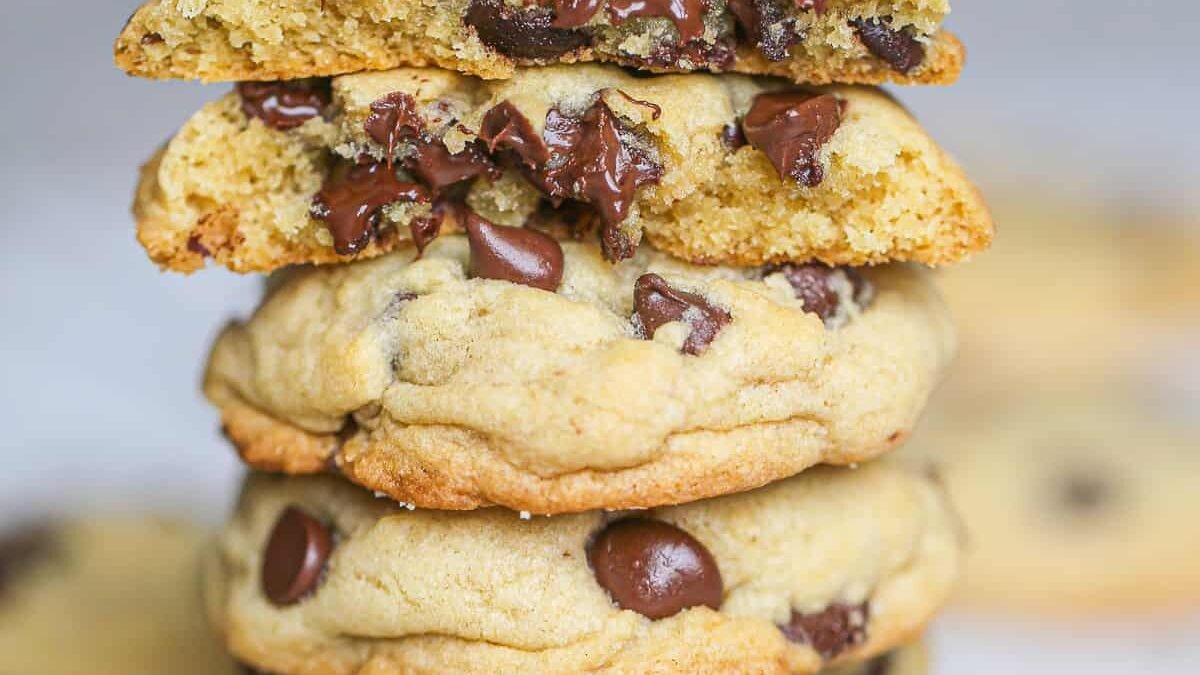
Read the cookies, not only the clock. Edges should look set and light golden, while centres still look slightly soft, pale, and a touch underdone, with a dull sheen rather than a wet shine. That soft centre is not a mistake: the crumb is still setting, and the structure firms as the cookie cools. Pull the tray when the edges colour and the middle loses its raw gloss, even if the stated time has not quite run out, and leave the tray in longer only when the centres still look soupy or the edges show no colour at all.
Leave the cookies on the hot pan for roughly five minutes after the tray leaves the oven. Residual heat from the pan keeps cooking the bottoms gently and lets the centres finish setting, a stage bakers call carryover, and moving the cookies too early tears their soft middles. After those minutes on the pan, slide them onto a wire rack so air circulates underneath and the bottoms stay crisp instead of steaming themselves soft. If the first tray spreads more than you like, chill the remaining scoops while that tray bakes and cools.
Chocolate Chip Cookie Timing for Small, Large and Jumbo Scoops
Small scoops, about a level tablespoon of dough each, bake fastest, usually in about eight to ten minutes at the same oven temperature. Their small mass heats through quickly, the edges colour sooner, and the window between perfect and overdone narrows, so watch the first tray from about the seven minute mark onward. Small cookies also cool faster and firm up sooner, which makes them a good choice when you want a crisper result without changing the recipe at all.
Regular scoops, roughly two to three tablespoons of dough, land in the standard window of about nine to twelve minutes. Start checking at nine minutes, look for golden edges with a soft centre, and remember that chilled dough sits toward the top of that range while room temperature dough sits toward the bottom. Large bakery style scoops, four tablespoons or more, need about thirteen to sixteen minutes, and their thick centres stay soft long after the edges set, so judge them by edge colour and by how the centre looks when you nudge the tray, not by firmness under a fingertip.
Frozen scoops add about one to two minutes to whichever range fits their size, and they often bake up slightly thicker because the fat stays firm longer. Jumbo scoops baked from frozen can need close to eighteen minutes, and covering them loosely near the end is rarely necessary, though a sheet that browns too fast on the bottom can move up one rack level for the final minutes. Whatever size you choose, write the scoop size beside the timing in your notes, because a timing without a size attached is almost useless a month later.
Cooling, Storing and Freezing Chocolate Chip Cookies
Cool cookies fully on the rack before sealing them away, since trapped steam softens crisp edges and can leave a whole tin tasting stale within a day. Stored in an airtight tin or container on the counter, baked cookies stay fresh and pleasant for several days, with chewy styles often tasting better on the second day as the crumb settles and the flavours mingle. Keep crisp and chewy batches in separate containers when you can, because they trade moisture with each other until both land somewhere in the middle.
Refresh a cookie that has gone slightly soft with a few minutes in a low oven, which drives off surface moisture and wakes the edges back up. Freeze baked cookies in a sealed bag with the air pressed out, and thaw them on the counter still wrapped so condensation settles on the wrapping rather than on the cookie. Raw portions, as noted earlier, freeze neatly for months and bake from frozen, which turns a single afternoon of mixing into many small, fresh bakes spread across the season.
Finish by recording what actually happened: scoop size, chill length, pan type, and the minute the edges coloured. That small habit converts a rough sense of timing into a reliable personal schedule, and it is the real difference between hoping a tray turns out and knowing it will. Cookies reward attention more than fussiness, and once your own numbers are written down, the pale one minute and burnt the next problem mostly disappears.