Bones and vegetable trimmings that might otherwise be thrown away carry enough flavour to anchor weeks of soups and sauces. Simmered slowly with water and a few aromatics, those scraps become a stock with real body that boxed versions rarely match. Once frozen in handy portions, homemade stock quietly improves risottos, gravies, and weeknight soups without extra shopping.
The method itself is simple: cover bones or scraps with cold water, bring the pot up slowly, hold it at a bare simmer for hours rather than minutes, then strain, chill, and store it in portions. Nothing in that sequence is difficult, and the only real demand is time, most of it unattended. A cook who is already in the habit of using up leftovers creatively will find that stock making fits the same rhythm, because the raw material is whatever the week has already produced.
Soup Stock Ingredients Gathered From Bones and Scraps
For chicken stock, gather a carcass or a pile of wings, backs, and necks amounting to roughly three to four pounds, then add one onion cut in quarters, a couple of carrots, a couple of celery stalks, two or three bay leaves, a small handful of black peppercorns, and the stems from a bunch of parsley. Cover everything with roughly four quarts of cold water. The cooking stock entry on Wikipedia sets out this same basic pattern of bones, water, and aromatics simmered and strained, which has stayed stable across cuisines because it works.
Save scraps with the pot in mind. Onion ends, carrot peelings, celery tops, leek greens, mushroom stems, and herb stalks all belong in a freezer bag rather than the bin, and roasted chicken carcasses from Sunday dinner are prime material. Avoid brassica scraps such as cabbage and broccoli in large amounts, since their strong flavours take over during a long simmer, and skip anything mouldy or tired beyond use. Fatty skin can go in, though much of it will be skimmed away later, so very fatty scraps are better trimmed first.
A wide, heavy pot with a lid suits the job, along with a fine mesh strainer, a large bowl, cheesecloth if you want an especially clear result, and containers for storage. Ice cube trays earn their place here too, because stock frozen in cubes thaws in minutes and measures out neatly for pan sauces. None of this equipment needs to be special, and the pot matters mostly for holding enough water to cover the bones without crowding them.
Building Chicken Soup Stock Step by Step
Put the bones and cold water in the pot and bring it up slowly over medium heat. Starting cold helps proteins and impurities rise gradually in a foam that is easy to skim, and it keeps the finished liquid clearer than a pot started with hot water. As the surface begins to move, skim off the grey foam with a spoon during the first half hour or so, then add the vegetables and aromatics once the worst of the foam has passed.
Settle the pot into a gentle simmer and leave it there for about four to six hours. A simmer means lazy bubbles breaking the surface now and then, not a rolling boil. Hard boiling churns fat and fine particles through the liquid, emulsifying them into a cloudy, greasy stock that no amount of straining fully repairs. Keep the lid slightly ajar so the temperature stays steady, top up with a little hot water if the level drops well below the bones, and resist stirring, which clouds the pot for the same reason boiling does.
Taste near the end. The stock should taste savoury and rounded rather than watery, with the chicken flavour clear and the vegetables in the background. If it tastes thin, simmer it a little longer with the lid off so some water evaporates and the flavour concentrates. Leave the salt out at this stage, because a stock that tastes perfectly salted now will taste far too salty after it reduces inside a soup or sauce later.
Vegetable and Beef Soup Stock Variations
Vegetable stock follows the same shape with a much shorter clock. Simmer onions, carrots, celery, leeks, mushrooms, garlic, tomatoes, and herbs for about forty five minutes to one hour, and no longer, because vegetable flavours turn dull and slightly bitter when they cook for hours. A handful of dried mushrooms or a piece of parmesan rind adds depth that plain vegetables lack. Wikipedia’s explanation of broth and how it differs from stock is useful here, since the two words get swapped loosely even though stock leans on bones and body while broth leans on meat and seasoning.
Beef stock asks for the longest day. Roast beef bones in a hot oven until deeply browned, about forty five minutes, then simmer them with the same aromatics for roughly six to eight hours. Roasting builds the dark colour and roasted flavour that define the result, and a spoonful of tomato paste roasted with the bones deepens both. Beef stock benefits from an overnight chill even more than chicken does, because its fat sets into a thick cap that lifts away cleanly.
Brown chicken stock sits between the two: roast or brown the chicken parts and vegetables before simmering when a soup or gravy wants a darker, richer base. Whichever version you make, write the type and the date on each container, because frozen stock all looks alike in February and a mystery container tends to stay frozen forever.
Straining, Chilling and Storing Homemade Soup Stock
Strain the finished stock through a fine mesh strainer into a clean bowl or a fresh pot, pressing lightly on the solids without mashing them, since hard pressing pushes cloudy particles through. For the clearest result, line the strainer with cheesecloth and pour slowly. Discard the solids, which have given up nearly all their flavour, though meat picked from chicken bones before straining can still serve in a soup if it has not cooked to rags.
Cool the stock quickly rather than leaving a deep pot warm on the counter for hours. Divide it into shallow containers, or set the pot in a sink of cold water and stir now and then, then refrigerate it as soon as it stops steaming. In the refrigerator it keeps for about three to four days. Once chilled, the fat sets into a pale cap on top that lifts off in pieces with a spoon, leaving a lean stock underneath, and that cap can be discarded or saved for roasting potatoes.
For the freezer, fill jars or containers only about three quarters full, because stock expands as it freezes and a brimful jar can crack. Frozen stock keeps well for several months. Freeze one batch in ice cube trays and another in flat freezer bags laid on a tray, and between the cubes, the bags, and a few larger tubs you will have portions for everything from a single pan sauce to a full pot of soup.
Using Soup Stock Across Soups, Sauces and Grains
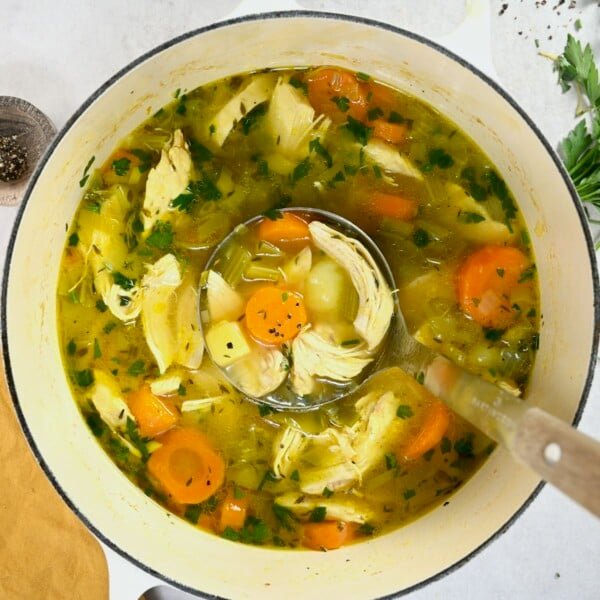
Soup is the obvious home: a chicken stock with real body turns a simple noodle soup, a bean soup, or a lentil pot into something that tastes deliberate. Grains change completely when cooked in stock instead of water, so reach for it when making rice, couscous, quinoa, or a risotto, and remember to hold back on added salt until the end because the stock already carries seasoning potential once it reduces.
Sauces and gravies lean on stock for depth that water cannot give. Deglaze a roasting pan with a splash of stock and scrape up the browned bits, reduce stock down for a pan sauce, or stir cubes into a braise that looks dry halfway through cooking. A few cubes also rescue a pot of mashed potatoes, loosen a thick stew, and give reheated leftovers a fresher texture than plain water ever manages.
Keep a small container thawed in the refrigerator during busy weeks and the stock will get used, almost by accident, in place after place. That steady usefulness is the real return on one afternoon of simmering: better soups, better grains, and a freezer asset built almost entirely from things that were headed for the bin.
Once the habit forms, the rhythm sustains itself. Roast chicken on Sunday, stock on Monday, soup later in the week, and a freezer that always holds a few portions for the days when dinner needs help. Few kitchen routines pay back so much for so little active work, and fewer still begin with ingredients most cooks were about to throw away.
Can stock be made in a slow cooker or a pressure cooker?
Yes, both work well. A slow cooker holds stock at a gentle heat for eight to ten hours with almost no attention, which suits chicken stock especially. A pressure cooker shortens the job sharply, giving a sound chicken stock in about one hour under pressure, though the flavour runs a little cleaner and less rounded than a long open simmer.
Why does chilled stock sometimes set like jelly?
That wobble is a good sign. Bones, joints, and connective tissue release gelatin during a long simmer, and gelatin sets as the stock cools, which is exactly what gives a finished soup its silky body. Stock made mostly from breast meat or from a short simmer stays thin and liquid, while stock rich in wings and joints often sets firmly enough to slice.
Should stock be salted before it goes into the freezer?
Better not. Freezing itself causes no problem, but an unsalted stock stays flexible, because dishes reduce stock by different amounts and a pre salted batch can push a finished soup or sauce past pleasant. Season the dish at the end of its own cooking, when you can taste the full effect, and the stock will serve every recipe equally well.
Can frozen vegetable scraps go straight into the pot?
They can, and that is the point of keeping a scrap bag in the freezer. Frozen onion ends, carrot peelings, and herb stems go directly into the cold water with no thawing, since they give up their flavour as the pot warms. Just keep the bag honest: add fresh scraps in rotation and use the oldest first so nothing lives in the freezer for a year.