
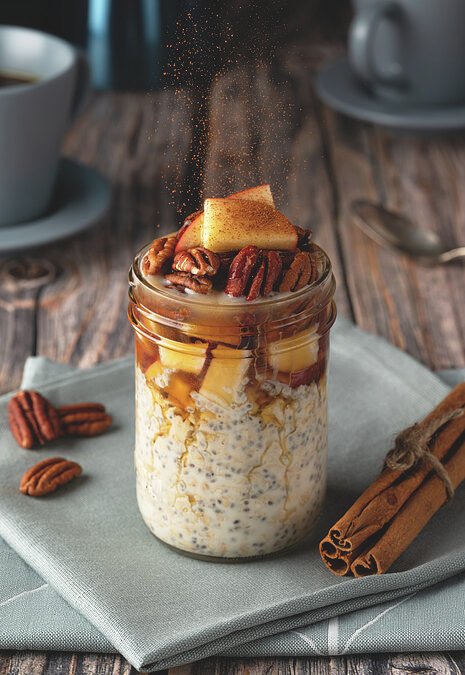
Breakfast might be the easiest meal to overpay for, since a cafe sells chilled oats in a plastic cup at a markup that would embarrass most lunch spots. Pricing out a homemade jar ingredient by ingredient shows exactly where that markup lives. The method that follows keeps a running total for one jar, adding each ingredient in the order a maker actually adds it, so the final figure arrives honestly rather than as a claim. Nothing in the jar is exotic, and that is the point. Ordinary pantry goods, measured plainly, expose how much of the cafe price pays for a cup, a lid, and a chilled shelf.
What Do the Base Ingredients for Overnight Oats Cost Per Jar?
A single jar starts with rolled oats, measured at a half cup from a large canister, costing roughly twenty cents. Canister oats bought in bulk sit at the bottom of the oat price range, while small branded boxes and single serve packets multiply that figure several times over for the same grain in fancier packaging. Staple pricing behaves this way across the pantry, and a reader who has worked through the cost of cooking rice at home will recognize that pattern at once, since bulk dry goods reward the buyer who stores a canister and measures out portions across many mornings. Milk comes next, poured to the half cup line, at about fifteen cents for ordinary dairy milk from a full carton. Plant milks usually add a few cents more at the same measure, and water, while free, gives a thinner jar that few makers enjoy twice.
Adding those two figures gives the running total its starting point. Twenty cents of oats plus fifteen cents of milk brings the base of the jar to roughly thirty five cents. That base already contains the whole structure of the dish, because oats soften by absorbing liquid slowly in the cold, swelling into a spoonable porridge without any cooking at all. Anyone wanting the preparation story behind the dish can read how Wikipedia describes overnight oats preparation and its recent rise, a method that amounts to soaking rather than cooking.
The grain underneath deserves a word as well, since the encyclopedia entry on oats as a grain, also on Wikipedia, sets out the varieties and milling that produce the flakes in the canister. Rolled oats, flattened between rollers, soften properly overnight and keep a pleasant chew. Steel cut oats stay unpleasantly hard and gritty without cooking, however long they soak, and instant oats tend to collapse into a uniform mush by morning.
A pinch of salt belongs in the base even though its cost rounds to nothing, because unsalted oats taste flat. Vanilla extract adds perhaps two or three cents and a warmth that makes the jar taste finished, while ground cinnamon contributes a similar tiny sum. Keeping the base honest at roughly thirty five cents, or a shade under forty cents with those small seasonings counted, sets up the real question of what the enriching additions do to the total.
How Much Do Yogurt and Chia Add to Overnight Oats?
Greek yogurt enters the jar at a quarter cup, spooned in thick, and adds around thirty cents to the running total. That addition buys more than flavour. Yogurt brings protein that keeps a breakfast eater full through the morning, a gentle tang that balances sweet toppings, and a creaminess that plain milk alone cannot supply. A large tub measured out across a week of jars costs far less per portion than individual pots. With yogurt counted, the running total climbs from roughly thirty five cents to roughly sixty five cents.
Chia seeds follow, one tablespoon scattered over the mixture before stirring, adding about fifteen cents. Their role is structural as much as nutritional. Chia absorbs many times its weight in liquid, swelling into a soft gel that thickens the whole jar and prevents the soupy result plain oats and milk alone can give. That gel is what lets a maker prepare a firmer jar on Sunday and still find it set, rather than sloshing, on Wednesday. Ground flaxseed can stand in at a similar cost, though its thickening power runs weaker. Stirring thoroughly matters here, because chia left in a dry clump hydrates into an unpleasant lump instead of dispersing.
Count the jar again with both additions inside. Sixty five cents after the yogurt, plus fifteen cents of chia, brings a complete plain jar to roughly eighty cents, and depending on local prices and tub sizes the honest range sits between eighty and ninety cents. At that point the jar is nutritionally complete on its own, with grain, dairy, protein, and fibre in balance, and everything added from here onward counts as flavour spending rather than necessity. Cutting the chia or yogurt saves real money but changes the dish itself, while cutting toppings only changes its decoration.
Which Overnight Oats Toppings Raise the Price Most?
Sweetener usually arrives first among the toppings. A teaspoon of honey stirred through the jar contributes close to ten cents, and maple syrup at the same measure lands in a similar place, sometimes a little higher depending on the bottle. Granulated sugar costs almost nothing by comparison, a cent or two at most, though it dissolves less gracefully in a cold mixture and can leave a faint graininess. Jam offers sweetness and fruit together at roughly ten to fifteen cents a spoonful. Adding a modest sweetener lifts the running total from roughly eighty or ninety cents to somewhere near ninety or one hundred cents.
Fruit splits sharply into cheap and costly camps. Half a sliced banana adds about fifteen cents and brings a natural sweetness that can replace honey altogether, keeping the total near one hundred to one hundred ten cents rather than stacking both. A handful of frozen berries, thawed into the jar overnight, adds between twenty and thirty cents, bleeding colour through the oats in a way most eaters enjoy. Fresh berries out of season form the priciest common topping, easily adding forty to sixty cents for a small handful, and they explain most of the price spread between a frugal jar and a luxurious one. Dried fruit sits in the middle, with raisins at roughly ten cents a spoonful delivering concentrated sweetness at a steady price across the year.
Nut butters raise the total with a heavier hand than their spoon size suggests. A spoonful of peanut butter adds a similar amount to the banana, about fifteen cents from an ordinary jar, and brings fat and protein that extend fullness well past mid morning. Almond butter and other premium spreads can double or triple that addition, pushing a jar upward by thirty to forty five cents for the same spoonful. Chopped nuts land in the same premium territory as fresh berries. Seeds such as pumpkin or sunflower offer a middle path, adding crunch for roughly ten to fifteen cents. Even stacking several generous toppings at once, a fully loaded jar generally lands between one hundred and one hundred fifty cents, with the running total for a banana and peanut butter version settling between one hundred twenty cents and one hundred thirty cents.
How Does a Homemade Overnight Oats Jar Compare With a Cafe Cup?
Set the finished homemade figure against the cafe counter honestly. A cafe cup of chilled oats, comparable in portion to the jar built above, commonly commands several hundred cents, often three or four times the cost of the generously topped homemade version and far more than the plain eighty or ninety cent jar. Part of that gap pays for things a home maker genuinely receives, namely someone else measuring, chilling, and washing up, plus rent on the counter where the cup waited. Most of the gap, though, pays for packaging, branding, and the pricing habit that treats breakfast as a premium purchase made in a hurry by people with no time to question it.
Quality comparisons favour the homemade jar more often than the price gap suggests. A cafe cup follows a fixed recipe tuned for the broadest taste, usually sweeter than a home maker would choose. The homemade jar carries exactly the sweetness, thickness, and topping balance its eater prefers, prepared the night before and eaten at peak texture. Batch preparation widens the advantage further, since five jars assembled in one session share the measuring and washing, while five cafe cups cost five full markups.
The fair concession is convenience under pressure. A traveller or a commuter caught without a prepared jar pays the cafe price for rescue rather than for oats, and rescue can be worth buying. As a recurring weekday habit, though, the arithmetic stays stubborn. A plain homemade jar near eighty or ninety cents, or a loaded one near one hundred twenty cents, against several hundred cents at the counter, repeated across a working month, separates the two habits by a sum large enough to cover the entire canister, yogurt tub, and chia bag many times over.
How Long Can Overnight Oats Wait in the Fridge?
Prepared jars keep safely under refrigeration for up to five days, which is what makes a Sunday batch a working week of breakfasts. The mixture needs at least four hours of chilling before it reaches the right texture, since the oats must absorb liquid and the chia must swell fully, and an overnight rest of eight hours or so gives the most settled result. Texture shifts across the storage window in a predictable arc. Jars eaten on the first and second days taste freshest and firmest, while jars held to the fourth and fifth days soften further and develop a slightly deeper tang from the yogurt, still pleasant but noticeably gentler in structure.
Toppings should follow their own timing within that window. Sturdy additions such as chia, nut butter, and dried fruit can go in at preparation and keep well for the full stretch. Fresh fruit stays freshest when added closer to eating, ideally the night before or the morning itself, because banana slices brown and soften, berries weep, and crisp toppings such as granola or chopped nuts surrender their crunch to the moist jar within a day. A practical system keeps the plain, fully priced base jars ready in a row, each still near that eighty or ninety cent foundation, and finishes each one with its fruit or crunch shortly before it leaves for work or the table.
Storage habits protect both safety and texture. Keep jars sealed and cold, and return a jar to the refrigerator promptly if breakfast gets interrupted. Stir before eating, since liquid settles and the top can look looser than the set mixture beneath. Any jar that smells sharply sour beyond the clean tang of yogurt, shows mould, or has waited past the five day window should be tossed out, never rescued. Within those simple limits, the jar remains what its ingredient tally promised, a complete breakfast whose full cost, counted cent by cent from canister to spoon, stays a small fraction of the cafe cup it replaces.
3 comments