
A slow sink invites a harsh bottle, yet the blockage usually yields faster to pressure, patience, and a bucket under the pipes. Chemical cleaners promise ease. You pour, you wait, and the water is supposed to vanish. In practice those products generate heat and harsh fumes, can soften or damage older and plastic pipework, and threaten the helpful bacteria a septic system depends on. Often they burn only a narrow channel through a blockage and leave the rest in place, so the sink slows again within weeks. Mechanical work asks a little more of you and gives far more back, because it removes the mass rather than merely piercing it.
Pressure From a Cup Plunger, Used With a Proper Seal
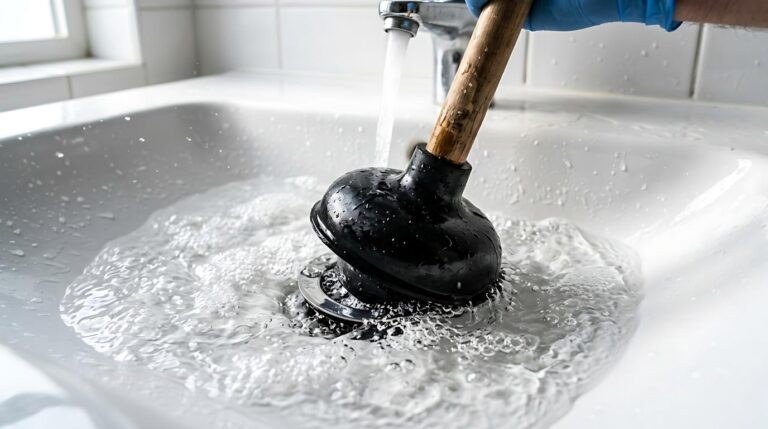
The plain cup plunger is the dome shape meant for sinks and tubs, distinct from the flanged shape made for toilets, and it remains the finest first tool in the house. It works by alternating pressure and suction, pushing water down and pulling it back so a loose plug of hair, soap, and grease is rocked free. Technique matters more than force. The basin needs enough water to cover the cup fully, because water carries the pressure while air simply compresses and wastes the effort you put into each stroke.
Seal the overflow opening with a wet rag before starting. Without that seal, every push escapes upward through the overflow instead of travelling down the drain, and the plunger feels useless for reasons that have nothing to do with its design. Press the cup flat around the opening, work it with firm and steady strokes, and finish with a sharp pull away. Then run hot water and watch how it leaves. A basin that empties at a healthy speed has told you the line is clear for now.
Repeat the attempt a few times before judging it a failure, since some plugs shift gradually. Keep your face away from the basin while working, especially if anyone poured a chemical cleaner in earlier, because standing water may splash back carrying that residue. Guidance on clearing drains without harsh chemicals and similar household references often starts with this humble tool for a reason. It costs nothing to try, it risks nothing in the pipes, and it settles a large share of slow sinks within minutes of honest effort.
Fizzing Powders and Kettles, Judged Within Honest Limits
Baking soda followed by vinegar produces a cheerful fizz, and that reaction does loosen light soap film clinging to pipe walls. As monthly maintenance for a basin that still drains, the pairing earns its place. It freshens the opening, softens early buildup, and asks nothing dangerous of the plumbing. Follow it with very hot water from the tap or a kettle, keeping the flush hot rather than fiercely boiling where plastic joints are involved, since extreme heat can stress those fittings over time.
Candour matters here. The fizz cannot dissolve a solid mat of hair, and it will not melt a plug of hardened grease sitting deeper in the line. Expecting it to rescue a fully blocked sink leads to repeated doses, wasted afternoons, and a basin still holding grey water at bedtime. Judge the method by the right standard. It is a broom, not a crowbar. Used regularly while a drain still runs, it delays the day a real blockage forms, and that quiet prevention is its true value.
Stoppers and Traps Where Hair and Grease Actually Gather
In a bathroom basin, the blockage usually sits on the pop-up stopper itself or within the first short stretch of pipe below it. Hair wraps around that fitting, soap binds it into a mat, and the narrowing gathers more with every wash. Many stoppers lift straight out, while others unscrew with a short turn. Pull the fitting free, clear the tangle away by hand, rinse the parts, and refit them. This step costs nothing at all, needs no purchase, and resolves a surprising share of slow bathroom drains on its own.
Kitchens gather their trouble lower down, in the curved trap beneath the sink. That bend exists to hold a water seal against sewer gas and to catch debris before it travels deeper, and grease and food collect exactly there. Place a bucket underneath, loosen the slip nuts by hand, and lower the trap carefully into the bucket. Empty it, scrub it clean, check the washers, and refit it hand tight plus a small extra turn. Run water and watch the joints for drips before putting the cleaning bottles back.
A look at the plumbing trap entry on Wikipedia beforehand helps you respect what that simple bend does for the whole house. Wear gloves, keep a towel ready, and take a photograph before loosening anything if the arrangement looks complicated, so the refit follows the original order. A trap cleared properly removes the blockage entirely rather than relocating it. When the water then runs freely, you have proof in front of you, not a hopeful guess based on a bottle’s label.
A Hand Auger for Blockages Beyond Reach of Fingers
Some plugs sit too deep for a plunger or a trap cleaning to touch. A hand-cranked auger answers that problem. Its flexible cable feeds into the drain while you turn the handle, travelling around bends until it meets resistance. At that point, keep turning gently. The tip either chews through the mass or hooks it, so drawing the cable back slowly can pull a wad of hair and sludge out into your bucket. Work patiently, since forcing the cable can kink it or scratch delicate finishes around the opening.
Gloves and eye protection matter throughout this job. The cable returns covered in whatever has been living in the pipe, and if chemical cleaner was poured in earlier, the standing water may still carry a caustic bite. Rinse the cable as it emerges, lay it on newspaper or an old towel, and clean your tools before storing them. A second slow pass often clears residue the first pass loosened, and a long hot flush afterwards carries the small fragments safely away down the line.
Living Cultures That Digest Buildup Slowly Overnight
Enzyme and bacteria based maintainers are the one pour-in product most plumbers accept without complaint. They carry living cultures that digest organic buildup slowly, working overnight along the pipe walls where grease and soap collect. They do not roar through a blockage, and they should never be sold to you as an emergency rescue. Their gift is prevention. Used on a draining but vulnerable line, they thin the layer that would otherwise harden into next season’s stoppage.
Patience defines the method. The cultures need time and warmth, and they need a pipe free of harsh chemicals that would kill them on contact. A household that poured caustic cleaner in the morning should wait well beyond that day before expecting living products to survive in the line. Follow the maker’s timing, run the treatment last thing at night, and let the pipe rest undisturbed until morning. Repeated gentle use suits older plumbing particularly well, since it avoids both heat and pressure extremes.
Think of these maintainers as part of a rhythm rather than a cure. Strainers at the openings, a monthly fizzing treatment for light film, an enzyme dose for the deeper walls, and prompt plunging at the first sign of slowness all support one another. The same pattern shows up plainly in the plunger entry on Wikipedia as well. The methods that protect pipes best are the ones that work gradually and mechanically, respecting the system instead of attacking it and hoping the plumbing forgives the assault.
Signs the Problem Sits Deeper Than One Fixture
A single slow basin usually means a local plug. A pattern across the house means something larger. When several drains misbehave together, when a toilet gurgles as a sink empties, or when sewage smells rise from openings that should smell of nothing, the blockage likely sits in the main line. Roots invading a joint, a collapsed section, or a heavy plug far from any fixture can all produce that picture, and none of them yields to a cup plunger wielded in one bathroom.
Water appearing where it should never appear is another clear signal. A floor drain backing up during laundry, or a shower filling while the washing machine empties, shows the system pushing back at its lowest points. Stop adding water to the system when you see that behaviour. Continued use can turn a plumbing fault into a floor, wall, and belongings disaster in a single afternoon.
Calling for help at this stage is not defeat. It is the correct tool for a problem whose location you cannot reach and whose cause you cannot see. Professionals bring cameras, powered augers, and the experience to tell a root from a collapse. The money spent then protects the far larger sums tied up in floors and foundations. A householder who has patiently tried the local methods first can also describe exactly what was attempted, which saves diagnostic time and earns a more accurate remedy.
The Order Worth Trying Before Anyone Reaches for Chemicals
Facing a blocked sink tonight, work through a simple order. Begin with the stopper, lifting it out and clearing whatever clings to it by hand. Next, reach for the cup plunger, seal the overflow, and give pressure and suction a fair trial. If the sink still crawls, set a bucket below and open the trap, scrubbing out the grease and food gathered there. Only after those steps should a hand auger travel deeper, feeding slowly until it meets and breaks the mass or hooks it for removal.
Leave fizzing powders and living cultures for their proper role, the maintenance that follows a successful clearing. Once water runs freely again, a gentle treatment and a new set of habits protect the result. Fit a strainer. Wipe grease from pans before washing. Treat the drain kindly for a month and watch how it behaves. That sequence, pressure, access, reach, then prevention, solves most household blockages without a single harsh bottle entering the cupboard beneath the sink at all.
The harsh bottle can stay on the shop shelf. Its heat, fumes, and appetite for old pipework buy a narrow channel at best, while the methods above remove the actual obstruction and teach you where your own plumbing gathers trouble. That knowledge pays forward for years. Every slow drain afterwards will be read calmly, matched to its likely resting place, and answered with the least force that does the whole job properly and safely.


One comment