
A door that needs a shoulder shove each morning is usually begging for a tightened screw or a shaved edge, not a full replacement. Running a short checklist of causes separates a tiny repair from a structural warning. Work through five checks in order. First, note whether the sticking follows the seasons or stays constant through the year. Second, look for rub marks, shiny patches, and cracked paint along the edges. Third, test every hinge screw for looseness. Fourth, measure the gaps around the closed door and compare them side to side. Fifth, scan nearby walls and other doors for shared symptoms. Each check points toward a matching repair, and most doors surrender to the first three.
Sticking Door Checklist Covering Hinges, Humidity, and Frame Movement
Seasonal timing sits at the top of the list because it narrows the field so quickly. A door that binds in muggy months and swings freely once heating dries the indoor air is reacting to moisture in the timber, and the detailed seasonal picture in fixing a door that sticks in summer shows how that pattern builds and fades. Timber takes in moisture from humid air and expands across its grain, and even slight swelling closes the narrow clearance that a well fitted door depends on. Doors near bathrooms and kitchens meet steam daily and swell sooner than doors in dry halls, while exterior doors face weather on one face and heated air on the other.
Hinges come second on the checklist. Open the door halfway and lift the handle gently. Any play at the hinges, any visible shifting where the leaves meet the frame, tells you the door is hanging from loose screws rather than from solid fixing. Frame movement comes third. Walk the nearby rooms and test other doors and windows, run an eye along skirting and ceiling lines, and look for fresh cracks in plaster near the frame corners. One sticking door is a door problem. Several sticking doors arriving together, with cracks for company, suggest the building itself has shifted, and that changes the response completely.
Reading Rub Marks and Gaps to Locate the Exact Binding Point
The door records its own diagnosis on its edges. Fresh rub marks, polished wood where paint has worn thin, and paint transferred onto the frame all mark the precise spot where contact happens. Ease the door shut while watching the meeting edges, then slide a thin card around the closed perimeter. Where the card grips hard, clearance has vanished. Where it slips freely, room remains. An even gap along the hinge side with a gap that narrows near the upper latch corner signals sag, while swelling tends to grip along one long edge or across a wide band of the latch edge.
Mark the tight zone with pencil before taking the door down or touching a tool to the wood. That mark disciplines the repair, because wood removed from the wrong edge cannot be put back, and many doors have been ruined by eager planing at a spot that was never touching. Test the latch as well. A latch bolt that scrapes its strike plate or needs the door lifted to engage confirms downward sag rather than swelling, and it directs attention back to the hinges before any edge work begins. Photograph the gaps beside a ruler laid along the frame if you want a record to compare after the repair.
Tightening Hinges and Driving Longer Screws Into the Framing
Begin with a screwdriver that fits the screw heads properly, and drive every hinge screw snug in turn, working from the top hinge downward. Screws that turn without gripping have stripped their holes in the jamb. Cure those by removing one screw at a time, packing the hole with a glued wooden matchstick or a golf tee trimmed flush, and driving the screw again once the glue has set. Replace screws one by one so the hinge never hangs unsupported, and keep the door propped or wedged while the work goes on so its weight cannot tear a weakened fixing free.
The single most effective repair for a sagging door swaps one short factory screw from the top hinge for a far longer screw that passes through the jamb and bites into the framing timber behind it. Short screws often grip only the thin jamb, while a long screw draws the whole jamb back toward the framing and lifts the latch side as it tightens. The basic hardware behind that fix is simple, and the Wikipedia explanation of hinge types and mechanics describes how leaves, knuckles, and pins share the load of a swinging door. Drive the long screw steadily and watch the upper latch side gap close as the jamb pulls across. Stop once the door hangs true, because excessive force can split an old jamb or pull the frame out of square in the opposite direction.
Planing or Sanding Swollen Edges Without Weakening the Door
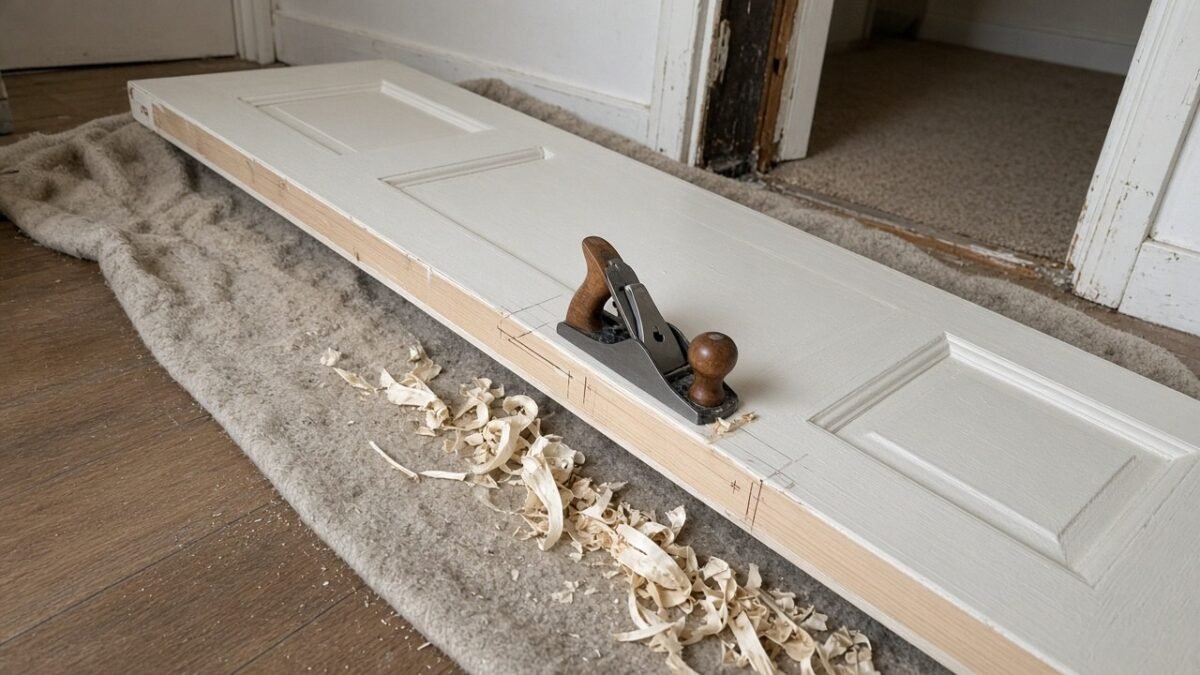
Reserve edge trimming for doors whose hinges sit tight and whose binding still follows the marked rub zone. Take the door off its hinges only if working in place feels awkward, support it firmly, and remove wood in small passes with a sharp block plane or coarse abrasive wrapped around a flat block. Test fit after every pass or two. Swelling that closes a gap sounds dramatic at the shoulder, yet the excess usually amounts to very little material, and removing too much leaves a door that rattles in its frame once dry winter air shrinks the timber again.
Understanding why the wood moved helps you judge how much to remove. The Wikipedia background on wood warping and moisture movement explains how timber swells and shrinks unevenly across its grain as moisture levels change, which is why a door can cup, bow, or simply grow wider through a humid season. Seal any freshly planed or sanded edge with paint or varnish matching the rest of the door, because bare wood drinks moisture faster than finished wood and will swell sooner next season. That sealing step is skipped constantly and matters more than the trimming itself for keeping the repair alive. Ease the sharp arris left by the plane with fine abrasive so the edge reads as part of the door rather than as a repair scar.
Signs That Settling Foundations Need Professional Assessment Instead
Certain patterns remove the job from the workbench entirely. Several doors and windows sticking at once, cracks that run diagonally from frame corners, sloping floors that roll a loose marble, and gaps opening between skirting and floor all point toward movement in the structure rather than in any single door. Seasonal soil changes, leaking drains washing support away, and tree roots drawing moisture from clay ground can each move a foundation slowly, and planing doors against a moving frame only chases symptoms while the cause continues.
Bring in a structural professional when those signs gather, and bring dated notes. Record when each door began sticking, photograph cracks beside a coin for scale, and repeat the photographs through the seasons to show whether cracks open and close or grow steadily. That record helps an assessor separate harmless seasonal movement from progressive settlement far faster than memory alone. Until that picture is clear, limit door work to hinge tightening, which harms nothing, and leave edges unplaned so the doors remain honest witnesses to whatever the building is doing.
Comparing Repair Effort Against the Price of Full Replacement
Set the two paths side by side. The repair path asks for a screwdriver, perhaps one long screw, an hour of careful work, and a coat of finish on a trimmed edge. It preserves a door that already suits the house, matches its neighbors, and carries whatever character age has given it. The replacement path asks for a new door, new fitting labour, hinges and latch work, disposal of the old door, and finishing across a large fresh surface, with older or unusual openings often needing alteration before a standard door will fit at all. Against that list, repair wins whenever the door itself remains sound.
Replacement earns its place in narrower circumstances. A door split along its stiles, rotted at the foot, warped into a twist that no planing can flatten, or damaged around the latch beyond solid repair has given its service. A door in a frame that an assessor has cleared as stable, yet still far out of square, may also suit replacement and reframing better than repeated trimming. Everything else, the seasonal bind, the sagging top hinge, the single rubbed edge, belongs to the repair column. Answer the worth question that way and the shoulder shove usually ends within an afternoon, with the original door still hanging where it has always hung.
Timing deserves a place in that comparison as well. Trimming a swollen edge at the peak of a humid spell invites overcutting, because the door sits at its largest exactly then. Where the bind annoys without locking anyone in or out, waiting for drier weather and remeasuring the gaps gives a truer picture of how much wood, if any, truly needs to leave the edge. Hinge work carries no such timing risk and can proceed in any season, which is another reason it leads the repair order. A door cured by screws alone in summer will often swing cleanly through the following winter with no trimming at all.
Keep a short written record once the door moves freely again. Note which screws were replaced, which edge was trimmed, and how the gaps measured on the day the work finished. That note turns next year into a comparison rather than a fresh mystery, since returning symptoms can be matched against the earlier pattern in minutes. If the same edge binds again despite sealed wood and tight hinges, the note also strengthens the case for a closer look at moisture sources near that doorway, such as a leaking pipe, a steamy room with weak ventilation, or rainwater reaching an exterior frame. Small records, faithfully kept, are what separate a house that gets repaired once from a house that gets repaired every summer.
One last habit protects every repair described here. Teach the household to lift slightly by the handle rather than shoving with a shoulder whenever a door feels reluctant during a humid spell, because repeated force bends hinges, loosens screws, and converts a seasonal tightness into lasting damage. Gentle handling keeps a sound door sound, and it preserves the clearances that careful measuring and trimming worked to restore.


One comment