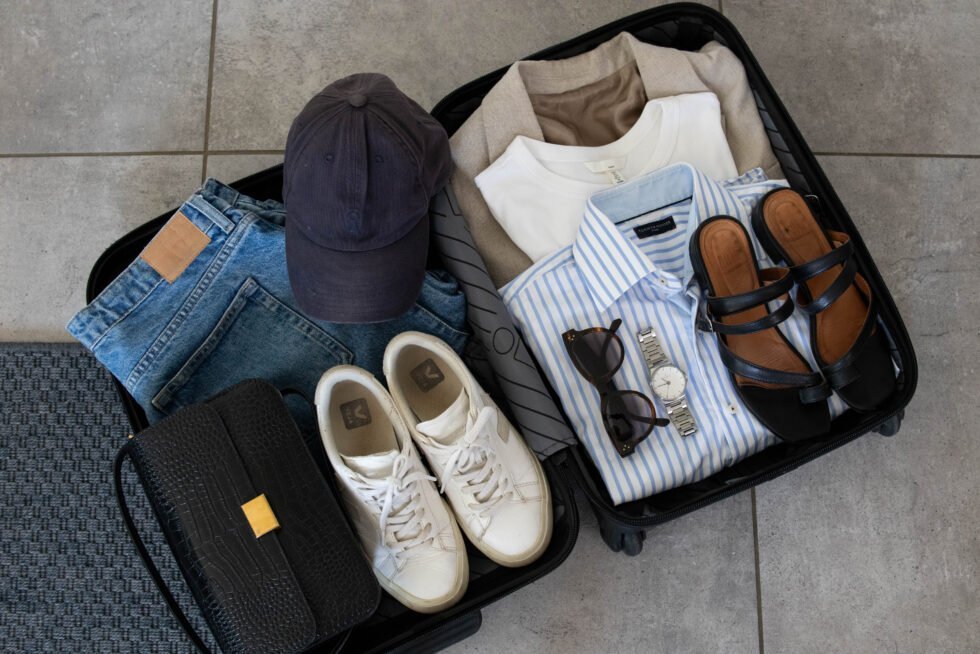
The carry-on-only traveler has an unfair reputation: people picture wrinkled t-shirts, one pair of shoes, and the same outfit in every photo. In reality, the best-dressed people in the departure lounge are often the ones with the smallest bags, because traveling light forces a discipline that big suitcases let you avoid — every item is chosen, everything matches, and fabrics are picked for performance rather than habit. A standard carry-on holds roughly 35–45 liters, which is genuinely enough for a week or more of looking sharp, if you pack a system instead of a pile.
This guide covers the wardrobe math, the fabrics that survive a suitcase, and the packing methods that deliver you to dinner looking like you brought a steamer trunk.
Quick Answer
To travel carry-on only and still dress well, build a capsule wardrobe in one color family (navy, black, or grey plus one accent), choose wrinkle-resistant fabrics — merino wool, wool blends, and technical synthetics — pack two pairs of shoes maximum (wear the bulkier), and use the 3-3-3 formula: roughly three tops, three bottoms, and three layering or statement pieces that all mix and match. Roll soft items, fold structured ones, hang everything in the bathroom during a hot shower on arrival, and lean on accessories — a scarf, watch, or jacket — to make repeated outfits look different.
The Math: Why a Carry-On Is Enough
A week of outfits does not require seven outfits. It requires enough combinations that no one, including you, notices repetition:
- 3 bottoms x 4 tops = 12 combinations before layers or accessories enter the picture
- One blazer or structured jacket instantly upgrades every combination it touches
- Nobody at your destination has seen any of these clothes before, and nobody is tracking your repeats
Airlines generally allow a carry-on around 22 x 14 x 9 inches plus a personal item. That personal item is your secret weapon: a large tote or backpack that swallows shoes, toiletries, and a spare outfit, bringing your total capacity close to a medium checked suitcase.
Build the Capsule: The Color Rule
The entire system stands or falls on color discipline. Pick a base of one dark neutral — black, navy, or charcoal — and build everything around it:
- Every top must work with every bottom; if an item only matches one partner, it stays home
- Add one accent color you enjoy (burgundy, olive, cream) for variety without chaos
- Patterns are fine if their base color sits in your palette; a striped shirt in your neutrals is a multiplier, not a risk
- Metallics and jewelry tones should be consistent — all gold or all silver accessories simplify every decision
A Sample 7-Day Carry-On Wardrobe (Cool Weather)
- Wear on the plane: dark jeans or trousers, merino sweater, blazer or travel jacket, heaviest shoes (boots or substantial sneakers)
- Packed bottoms: one tailored trouser, one versatile skirt or second pant
- Packed tops: four — two merino or knit tops, one button-up in a wrinkle-resistant blend, one elevated t-shirt or silk-style top for evenings
- One dress that dresses up or down, if that is your style — a knit midi in your base color is the hardest-working garment in travel
- Sleepwear, underwear for the trip length (quick-dry fabrics let you wash and rotate fewer), one workout set if you will actually use it
- Accessories: one scarf (warmth, polish, and a photo-refreshing pop), minimal jewelry, a belt that works with everything
This fits a standard carry-on with room to spare, covers a business meeting and a nice dinner, and never repeats an exact outfit.
Fabric Is Destiny
What your clothes are made of matters more than how many there are.
The Winners
- Merino wool: the carry-on champion. Naturally temperature-regulating, odor-resistant enough to rewear multiple times, and it hangs out wrinkles overnight. Merino t-shirts, sweaters, and even blazers justify their price in saved space.
- Wool and synthetic blends in trousers and blazers: spring back from packing, look tailored straight off the plane.
- Technical travel fabrics (nylon or polyester blends designed for travel): feather-light, quick-drying for sink laundry, nearly unwrinklable.
- Knit dresses and tops: knits roll without creasing and forgive a long day in a bag.
The Troublemakers
- Linen: gorgeous for exactly eleven minutes, then a crease map of everywhere it has been. If you must, choose linen blends and embrace the deliberately rumpled look.
- Pure cotton button-ups and heavy denim: bulky, slow to dry, wrinkle-prone. One pair of jeans worn on the plane is the sensible limit.
- Anything that needs ironing to look acceptable and anything you would be devastated to lose or spill on.
All liquids for grooming must still respect the TSA 3-1-1 liquids rule — containers at or under 3.4 ounces in one quart-size bag — which is another nudge toward solid alternatives: solid shampoo, solid perfume, and stick deodorant take no space in the liquids bag at all.
Packing Method: Protect the Look
1. Roll knits and casual items; rolling compresses and suits wrinkle-forgiving fabrics.
2. Fold structured pieces (blazers, button-ups) along their existing creases, ideally inside-out, and place them on top so they are compressed least; a single sheet of tissue or a dry-cleaning bag between layers reduces friction wrinkles.
3. Use packing cubes by category — tops, bottoms, small items — so retrieving one piece does not explode the whole bag.
4. Stuff shoes with socks and belts, place shoes heel-to-toe along the bag’s edges.
5. Wear the outfit that wrinkles least well in transit if it is bulky: the blazer travels best on your body.
On arrival, hang the next day’s outfit in the bathroom while you shower — the steam relaxes most travel wrinkles. A palm-sized travel steamer or a wrinkle-release spray handles the rest.
Sink Laundry: The Force Multiplier
Trips longer than a week become easy once you accept five minutes of laundry every few days. Merino and technical fabrics wash in a sink with a drop of hotel shampoo, roll dry in a towel, and hang dry overnight — bone dry by morning in most hotel rooms. This is how carry-on travelers do two-week trips: pack for five days, wash twice. If your route involves a rental adventure where laundry is scarce, the same pack-for-five logic applies — our beginner’s guide to renting an RV for the first time makes the same point about planning space before you hit the road.
Common Mistakes That Ruin the Look
- Packing outfits instead of ingredients. Five complete, separate outfits cannot mix; a capsule can. Ingredients beat outfits every time.
- Too many shoes. Shoes eat a third of a carry-on fast. Two pairs total (one worn) is the rule; three is the absolute ceiling, and the third must be flat.
- Bringing “options” for imaginary events. The gala you might attend and the hike you might take do not get wardrobe space. Pack for the itinerary you have.
- Ignoring the personal item. A too-small personal item wastes half your legal capacity; choose one that nearly maxes the allowed dimensions.
- All statement pieces, no basics. Three loud prints that match nothing are worse than one quiet palette worn well.
Conclusion
Dressing well from a carry-on is not about sacrifice — it is about choosing a color family and letting it compound, picking fabrics that forgive packing, and packing ingredients that combine into more outfits than days. You will move faster, lose nothing to baggage claim, and arrive looking deliberate. The travelers dragging steamer trunks are not better dressed than you. They are just carrying more of the wrong things.
FAQ
How many outfits can realistically fit in a carry-on?
Using a capsule approach, a standard carry-on plus personal item comfortably holds 10–14 days of combinations for most travelers: three bottoms, four to five tops, one to two layers, a dress or blazer, and two pairs of shoes, especially with merino and technical fabrics that rewear well.
What is the best shoe strategy for carry-on travel?
Wear your bulkiest pair in transit and pack one versatile second pair that covers the opposite use case — walkable shoes plus a dressier pair, for example. Choose shoes in your base color so they work with every outfit, and never pack a pair that serves only one outfit.
How do I keep a blazer or dress shirt from wrinkling?
Travel in the blazer if you can — your body is the best garment bag. If packing it, turn it inside out, fold along natural seams, place it on top of the bag, and hang it in a steamy bathroom on arrival. Wool-blend fabrics recover far better than cotton or linen.
Can I do a business trip carry-on only?
Absolutely — it is the classic use case. A navy or charcoal suit worn in transit (jacket on you, trousers packed or worn), two wrinkle-resistant shirts rotated, one knit top for casual moments, and a single pair of dress shoes covers most three-to-five-day business trips, with a steamer or hotel pressing service for backup.