Japan has an expensive reputation that scares a lot of Americans out of going at all. The reality is more interesting: Japan can be pricey, but it’s one of the most predictable travel budgets in the world. Trains run to the minute, convenience store food is genuinely good, and a huge share of the best experiences — shrines, neighborhoods, mountain trails — cost nothing. What blows up a Japan budget is almost never Japan itself; it’s a handful of avoidable choices.
This guide lays out realistic 2026 numbers for a one-to-two-week trip, where the money goes, and the specific levers that cut costs without cutting the trip down to a joyless exercise in saving.
Quick Answer
A realistic Japan budget is $100–$150 per day for a careful budget traveler, $180–$280 per day mid-range, excluding international airfare. A 10-day trip typically lands at $1,500–$2,800 on the ground. The big three costs are accommodation ($50–$120 per night), intercity transport (the 7-day Japan Rail Pass now costs around ¥50,000, roughly $330), and food ($30–$60 per day if you mix convenience stores, noodle shops, and one nice meal). Japan rewards planning: booked-ahead hotels, a rail strategy matched to your route, and free sightseeing keep costs controlled.
Start With the Costs That Don’t Move
Flights and Timing
From the US West Coast, economy fares to Tokyo run $700–$1,100 in shoulder season; from the East Coast, $900–$1,400. Cherry blossom season (late March–April) and Golden Week push both fares and hotel prices up sharply. The cheapest windows are mid-January to early March and the June rainy season. Shifting a trip by three weeks can save more than every other tip in this article combined.
Accommodation: Your Biggest Lever
- Business hotels (APA, Toyoko Inn, and similar chains): $55–$110 per night, small but spotless, often with breakfast. Booking 2–3 months ahead on the chain’s own site usually beats aggregator prices.
- Hostels and capsule hotels: $25–$45 per night. Modern Japanese hostels are exceptionally clean and quiet.
- Ryokan (traditional inns): $120–$250 per person including two meals. Treat one night as a splurge experience, not your default.
- Location beats luxury: staying one or two stations from the trendiest district often cuts 30% off the room rate while adding five minutes to your day.
A 10-night trip at an $85 average is $850 — the single largest line item, and the one most within your control. If the planning itself feels overwhelming, that’s normal; travelers who get anxious about big trips often find that fixing the budget early removes most of the stress, a theme our guide on traveling with anxiety covers in more depth.
Transport: Do the Rail Pass Math Honestly
The Japan Rail Pass changed fundamentally in 2023: the 7-day ordinary pass rose to ¥50,000 (about $330). It is no longer an automatic buy. Run the numbers on your actual route:
- Tokyo–Kyoto round trip on the shinkansen: about ¥28,000–¥29,000 — less than the pass alone
- Tokyo–Kyoto–Hiroshima–Tokyo: roughly ¥40,000+ in individual tickets, still under the 7-day pass unless you add more legs
- The pass only wins on fast-paced itineraries covering three or more long-distance legs within the validity window
Alternatives that often beat it: regional passes (the JR Kansai-Hiroshima Area Pass, for example, is far cheaper), highway buses for Tokyo–Kyoto at $25–$45 overnight, and one budget-domestic flight. The official Japan Rail Pass site lists current prices and regional options — check there rather than relying on older blog posts, since prices and rules changed recently.
Within cities, budget $5–$8 per day for subways and buses, ideally on a rechargeable IC card (Suica or Pasmo in Tokyo, Icoca in Kansai). Taxis in Japan are expensive — a 20-minute ride can cost $25+ — and almost never necessary given the transit network.
Food: Where Japan Is Secretly Cheap
Japan may be the best country in the world for eating well on a budget, because cheap food there is not a compromise:
- Convenience stores (konbini): a genuinely satisfying breakfast of onigiri, yogurt, and coffee runs $4–$6. Lawsons, FamilyMart, and 7-Eleven Japan are in a different league from US convenience stores.
- Noodle and rice-bowl chains: a gyudon beef bowl costs $3.50–$5; a bowl of ramen at a good local shop, $7–$11.
- Conveyor-belt sushi and teishoku set meals: $10–$16 for lunch sets that would cost $20+ at dinner.
- Department store basements (depachika) mark prepared food down 20–50% in the last hour before closing — an easy, high-quality dinner strategy.
Budget $35–$55 per day eating very well this way, with room for one splurge meal: a quality sushi lunch ($40–$70) or wagyu dinner. Note that lunch is the budget traveler’s fine-dining slot in Japan — the same restaurant’s lunch course is often half the dinner price. The Japan National Tourism Organization site is a good starting point for regional food and seasonal event planning.
A Realistic 10-Day Budget
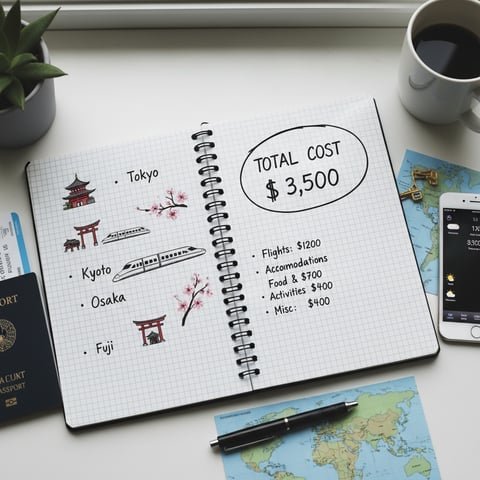
- Accommodation (business hotels, booked ahead): $850
- Transport (IC cards, one Tokyo–Kyoto shinkansen round trip, airport transfers): $420
- Food and drink: $480
- Attractions (a few paid temples/museums at $4–$10 each, one day trip): $120
- Shopping and souvenirs: $150
- SIM/eSIM data and misc: $60
Total: about $2,080, plus international airfare. A hostel-based version of the same trip comes in near $1,400; a version with two ryokan nights and premium dining lands near $3,200. All three are “doing Japan properly” — the difference is comfort choices, not access to the country.
Common Mistakes That Blow a Japan Budget
- Buying the rail pass out of habit. Post-2023 pricing means most Tokyo–Kyoto-only itineraries lose money on it. Price your actual legs first.
- Staying in a different city every night. Each move adds transport cost and a lost half-day. Base in Tokyo and Kyoto/Osaka and day-trip out.
- Eating near major stations and sights by default. Walking five minutes into a side street typically cuts meal prices by a third.
- Over-shopping early. Souvenirs bought in week one get carried for the whole trip; do major shopping in your final city, and remember the tax-free threshold (¥5,500 at participating stores) consolidates purchases.
- Skipping free Japan. Shrines like Fushimi Inari, neighborhood wandering in Yanaka or Shimokitazawa, observation decks in government buildings (Tokyo Metropolitan Government Building is free) — the no-cost list is world-class.
Conclusion
Japan doesn’t require blowing your savings; it requires deciding where your money goes before the trip decides for you. Fix accommodation early, do honest rail math, eat the way locals eat at lunch, and let the country’s extraordinary free sights carry the itinerary. A 10-day trip around $2,000 on the ground is not a stripped-down compromise — for most travelers, it’s the sweet spot.
FAQ
How much cash do I need in Japan?
Less than its reputation suggests, but more than zero. Cards and IC cards cover most spending in cities, yet small shrines, rural buses, and some ramen ticket machines still prefer cash. Carrying ¥10,000–¥20,000 ($70–$140) at a time is a practical rhythm.
Is the Japan Rail Pass still worth it in 2026?
Only for fast itineraries with three or more long shinkansen legs inside the validity window. For a standard Tokyo–Kyoto–Osaka trip, individual tickets or a regional pass are usually cheaper since the 2023 price increase.
What is the cheapest way to eat well in Japan?
Build the day around convenience store breakfasts, chain rice bowls or noodle shops, and lunch set meals at good restaurants (half their dinner price). Add department-store basement markdowns in the evening for quality food at a discount.
How far ahead should I book Japan hotels?
Two to three months ahead for cherry blossom and autumn foliage seasons; four to six weeks is usually fine otherwise. Business hotel chains often release their best rates on their own booking sites first.