
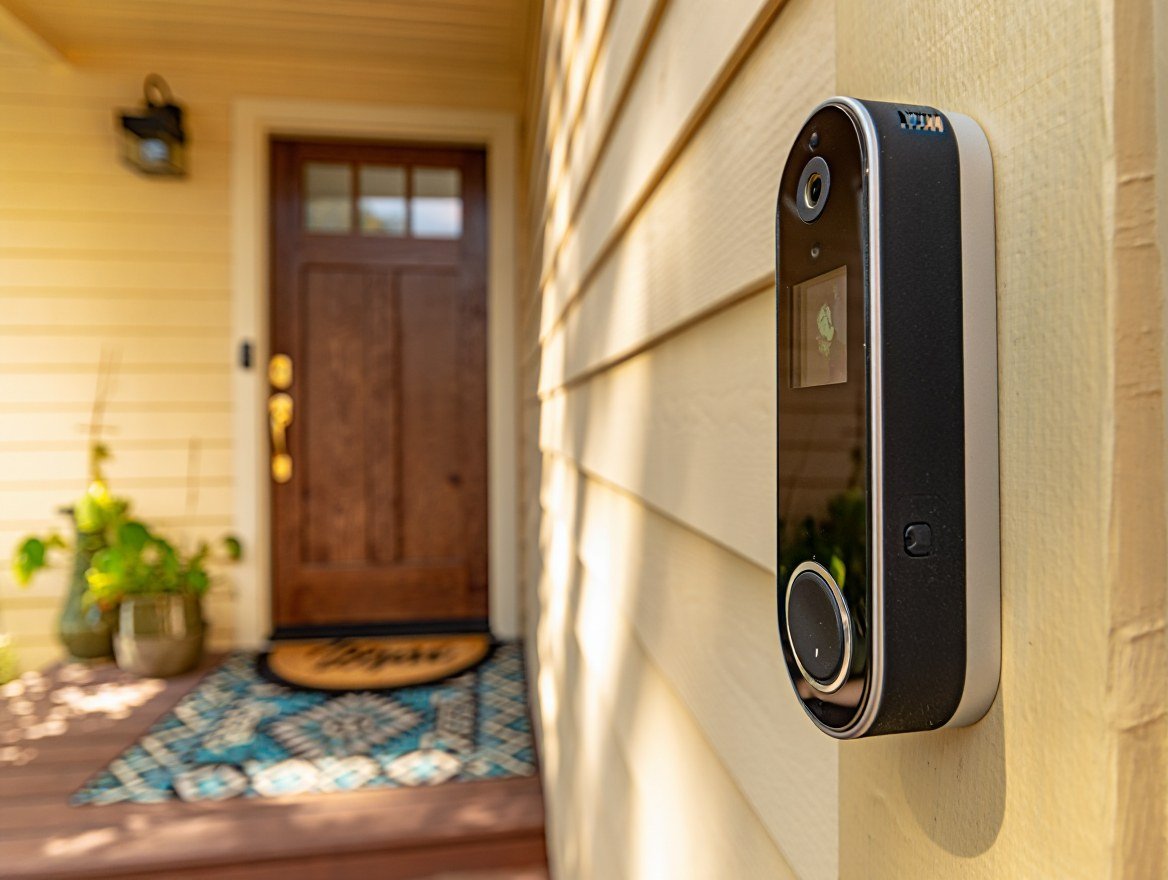
Two homes can pay wildly different totals for the same doorstep camera, because wiring already in the wall and who holds the screwdriver change everything. Comparing device styles and fitting routes side by side exposes the sensible spend. A video doorbell does several jobs at once. It watches the step, senses movement, lets a resident speak to a caller from a phone in another room or another town, and keeps short recordings of who came and went. Those abilities sit in nearly every model on the shelf, from the plainest battery unit to the most polished wired one. What changes the bill is rarely the camera itself. It is the power supply behind the wall, the presence or absence of older bell wiring, the choice between fitting it personally or paying a tradesperson, and the monthly plan that may follow the household for years. Looking at those parts separately, in a calm order, prevents the common surprise of a cheap device turning into an expensive system, or an expensive device turning out to be the cheaper long term answer.
Battery Models, Wired Models, and Hybrid Doorbells Compared Directly
Battery models are the simplest starting point. They mount on a bracket, draw power from a rechargeable cell inside the casing, and connect to the home network without any cable running through the wall. Fitting can be a short job with a drill, a level, and the screws in the box. Their weakness is attention. The cell needs recharging at intervals, and that interval shrinks when the door faces a busy street, when delivery traffic is heavy, or when cold weather drains the battery faster. A home that receives constant motion alerts may find itself removing the unit for charging far more often than the packaging suggested. Wired models take the opposite bargain. They draw steady power through existing bell wiring from a small transformer, so there is nothing to recharge and the camera can stay awake for richer recording features, such as longer clips or continuous capture on some models. The catch is that the wiring has to exist, carry enough power, and be in sound condition. Hybrid models try to soften both compromises. They can run from a battery while also accepting a wired connection that trickle charges the cell or takes over power duties, giving a household a route to start simply and upgrade the power arrangement later. Prices across these families spread widely, with plain models starting at around fifty, mid range models sitting between one hundred and one hundred eighty, and premium models reaching toward two hundred fifty. Paying more usually buys sharper video, smarter detection that can tell a person from a swaying branch, wider views of parcels left on the step, and better night pictures, rather than a completely different basic function.
What Professional Fitting Adds Beyond Mounting the Device Itself
Self fitting costs nothing beyond time and perhaps a drill bit, and for a battery model on a flat wall it is often genuinely straightforward. The bracket goes up, the unit clips on, the application walks through connection, and the doorstep is covered. Professional fitting commonly adds between one hundred and two hundred to the bill, and that fee buys more than four screws in a wall. A fitter checks whether existing wiring is live, whether the transformer supplies enough power for a camera that draws more than an old mechanical bell ever did, and whether the chime inside will still sound properly once a smart device joins the circuit. Where no wiring exists, a professional can run a new cable neatly, fit a transformer, and position the device at a height and angle that actually captures faces rather than foreheads. There is also accountability. If the unit loses power a week later, the householder has someone to call. The honest weighing is simple. Pay for fitting when wiring is involved, when the wall is awkward stone or thick render, when ladders or drilling through masonry feel unsafe, or when an older transformer clearly needs replacing. Save the fee when the chosen model is battery powered, the mounting surface is friendly, and the household is comfortable with basic tools and application setup. What should never happen is paying a professional rate for a battery unit that needed nothing but a bracket, unless mobility or time makes that help worthwhile on its own terms.
Existing Chime Wiring and Transformer Capacity Checks That Matter
Older bell wiring is the hidden asset in many homes. A house built with a mechanical chime often already has a cable running from a transformer to the front door, and that cable can turn a wired doorbell from a project into an afternoon task. Checking it takes care rather than guesswork. Switch off the relevant circuit before touching any conductor, look for frayed insulation or loose terminals at the chime, and confirm that the transformer rating suits the doorbell maker requirements, since an underpowered transformer can cause buzzing, weak chimes, missed recordings, or a unit that restarts whenever someone presses the button. Homes with no wiring at all face a clearer decision, and anyone considering fitting doorbell wiring from scratch should weigh that one time effort against years of battery charging. Background reading helps here in two directions. An overview of smart doorbell devices and how they operate explains the camera, sensing, and application side of the system, while background on doorbell circuits and traditional chimes covers the older wiring arrangement that many smart units still depend on. If the transformer is buried, undersized, or absent, battery power stops being a compromise and becomes the sensible engineering answer. Renters in particular should treat existing wiring as a bonus rather than a project, because altering fixed wiring in someone else home rarely makes sense.
Subscription Storage Plans and What Free Tiers Leave Out
The purchase price is only the opening chapter of the cost story. Most brands offer a free tier that covers live viewing, motion alerts, and perhaps a very short window of saved clips, or none at all. Paid storage plans generally run between nothing and about fifteen per month, depending on the brand, the number of cameras covered, and how long recordings are kept before being deleted. That monthly figure looks small beside the device price, which is exactly why it deserves attention. A plan at the middle of that range, held for several years, can quietly exceed the cost of the doorbell itself. What the payment actually buys is memory. Without storage, an alert that nobody saw at the time may leave no recording to review later, which matters after a missed parcel, a prowler report from a neighbour, or damage discovered in the morning. Paid tiers often add longer retention, richer notifications that describe what the camera thinks it saw, and the ability to share clips easily. Some brands soften the need for a plan by offering local storage on a hub or memory card inside the home, trading cloud convenience for a single purchase and a little more setup. The right question is not whether a plan is good or bad in the abstract. It is whether the household will genuinely review recordings, how long evidence needs to survive, and whether several cameras under one plan spread the cost more fairly. Reading the free tier limits before buying the device prevents the sharpest disappointment, which is discovering that a headline feature lives behind a monthly payment.
Total Ownership Cost Across the Opening Years of Use
Adding the parts together gives a clearer picture than any headline price. At the lean end, a plain battery model bought for around fifty to one hundred, fitted at home, and used on a free tier can keep the whole opening period close to the purchase price, apart from charging time and perhaps a spare battery for convenience. In the middle, a better camera between one hundred fifty and two hundred fifty, self fitted onto healthy existing wiring, with a modest storage plan, produces a steady and predictable total that many owners will judge fair for daily use. At the upper end, a premium wired model, professional fitting between one hundred and two hundred, a transformer upgrade, and a top tier storage plan held for years can carry the overall spend well beyond what the box price hinted at, without any single charge feeling unreasonable at the moment it appeared. None of these totals is automatically foolish. A busy home on a dark street may value continuous recording and professional reliability far more than a quiet flat with a sheltered door. The discipline that matters is counting the whole arrangement before buying: device, fitting, wiring work, storage, and likely battery or accessory replacements across the opening years. Broad ranges are the honest way to frame those totals, because brands, regions, and house wiring vary too much for any precise promise to survive contact with a real front door.
A Recommendation Matched to Renters, Owners, and Busy Households
Renters should start with a battery model, mounted with the least invasive fixing the landlord allows, and should test the free tier before paying for storage. The whole system can leave with them, and no wiring decision needs permission. Owners with sound existing bell wiring get the strongest long term value from a wired or hybrid model, because the one time wiring advantage keeps paying back in reliability and richer recording, and professional fitting is worth its fee when the transformer or chime needs attention. Owners without wiring should pause before commissioning new cable runs purely for a doorbell. If other electrical work is already planned, adding doorbell wiring during that visit can be economical, but as a standalone project it often tips a modest gadget into a major expense, and a good battery model will serve perfectly well meanwhile. Busy households, the ones most likely to ignore a flat battery warning, should favour wired power or a hybrid with a wired feed, plus a storage plan sized to how often anyone actually reviews footage. Households that rarely receive parcels and face a quiet path can save confidently at the plain end of the range. The sensible spend, in the end, is the one matched to the wiring in the wall, the traffic at the door, and the attention the household will honestly give the device after the novelty fades.
One last check before any money changes hands: stand at the door with a phone in hand, confirm the wireless signal is strong at that exact spot, and look at the view a camera would get at face height. A weak signal or a view blocked by a porch pillar can spoil any model, whatever its price, and discovering that before purchase costs nothing at all.


2 comments