
Dips that puddle after rain and humps that the mower scalps turn an ordinary yard into a constant annoyance, and many owners make the surface worse before they make it better. Seeing the usual errors clearly first points toward a weekend of work that actually holds. Levelling rewards patience more than muscle, because grass forgives thin, repeated help and resents sudden burial, and the ground itself keeps settling long after the tools go away.
Thick Single Layers, Fine Play Sand, and Other Lawn Levelling Errors
The heaviest error arrives in a wheelbarrow. Tipping one thick layer of mix into a hollow feels decisive, yet living grass buried beneath it loses light, yellows, and thins, leaving a bare patch shaped exactly like the dip it was meant to cure. Turf recovers by growing up through material, and it can only climb through a shallow covering before its stored energy runs out. A single deep application swaps an uneven lawn for a patchy one, and the owner then reseeds ground that was perfectly healthy a week earlier.
Material choice fails almost as often as depth. Fine rounded sand, the sort sold for play areas, packs into a hard, dense layer once it wets and dries, shedding water instead of accepting it and giving roots a surface closer to pavement than soil. Rain then runs across the dressed area and pools at its edge, moving the puddle rather than removing it. Coarse washed sand behaves entirely differently, staying open and granular, which is why the grade of sand matters as much as the quantity spread.
Skipping preparation wastes good material too. Mix spread over long, unmown grass sits on leaves rather than soil, bridges across hollows instead of filling them, and washes into drifts at the first heavy shower. Scalping the lawn short, raking out thatch, and marking the true low spots while the surface sits exposed costs an hour and decides whether the dressing lands where the ground actually dips or merely where the grass happened to look uneven from the kitchen window.
Levelling Over Dormant Turf or Waterlogged Soil During Wrong Seasons
Dormant grass cannot climb. Dressing a lawn while it sleeps through winter cold or summer drought lays material over plants with no growth in them, so the layer sits untouched for months, migrating with rain and foot traffic until the pattern that emerges in spring bears little relation to the careful work of autumn. Levelling belongs to the growing part of the year, when shoots push upward within days and knit the dressing into the surface before weather can rearrange it.
Waterlogged soil punishes work even more directly. Pressure from feet, barrows, and rollers squeezes saturated ground into dense layers, crushing the pore spaces that roots and rainwater need to travel through. The surface may look smooth on the day, yet the compacted band beneath slows drainage for seasons, and grass above it stays thin and yellow because its roots cannot breathe or descend. Waiting until soil crumbles in the hand rather than smearing buys a lasting result for the price of a few dry days.
A simple squeeze test reads the ground honestly before any barrow rolls. A handful of soil pressed in the fist should hold together loosely, then break apart when poked; soil that ribbons out like paste or glistens with free water is telling the owner to walk away. Footprints that fill with water, or a spade that emerges wearing a skin of mud, deliver the same verdict without any test at all.
Frost and heat extremes argue for patience as well. Frozen ground refuses a rake and shatters turf crowns underfoot, while a lawn under heat stress diverts every resource toward survival and has nothing spare for growing through a dressing. Owners watching a calendar rather than the grass itself often pick the free weekend instead of the right one, and the difference between those two dates decides whether the dressing vanishes into new growth or sits on the surface until it washes away.
Ignoring Drainage Falls That Send Rainwater Toward House Foundations
A level lawn is not a flat one, and confusing the two creates the most expensive error of all. Finished ground should fall gently away from buildings so rainwater drains outward across the surface instead of gathering against walls. Levelling work that fills the natural slope near a house, or worse, tips it inward, delivers every storm directly to the foundation, where damp finds mortar joints, seeps toward basements, and softens the very soil the wall stands on.
Reading the existing falls takes little equipment. Watching where water travels during a downpour, or running a hose at the top of a slope and following the flow, reveals the drainage pattern more honestly than any eyeball judgement from the patio. String lines stretched between stakes show the same truth in dry weather, exposing high crowns that shed water sideways and saddles where it collects. Levelling that respects those lines smooths the surface while preserving the direction water already wants to travel.
Deep problems need honest naming at this point. Topdressing corrects shallow unevenness measured in a thin skin of material, while hollows deep enough to twist an ankle, and slopes genuinely running toward the house, call for soil moved, added, or removed in a fuller regrading job. Dressing over a deep hollow season after season merely feeds mix into a settling pocket, and the surface keeps sinking because the cause lies below the reach of any surface layer.
Downpipes and paved edges complicate the falls further. A roof discharging beside a wall can overwhelm a correct slope during a storm, carving a channel through fresh dressing and delivering the runoff straight to the foundations the slope was built to protect. Extending a downpipe outlet, adding a shallow swale, or giving paved runoff a gravel strip to die in keeps volumes within what the surface fall can carry away calmly.
Thin Layer Topdressing With Coarse Sand and Screened Topsoil Blends
The correct approach begins with judging depth honestly across the whole lawn. Shallow dips that grass can climb through receive topdressing, deeper defects get marked for regrading, and the two treatments proceed separately rather than blending into a hopeful average. Mowing short and raking the surface open exposes the true contours, and a long straight board laid across suspect areas shows exactly where the ground falls away beneath it and by how much.
Material for dressing blends coarse washed sand with screened topsoil in proportions matched to the job. Sand alone levels precisely and resists compaction, suiting shallow corrections on established turf, while added topsoil brings body and some nourishment where fills run slightly deeper or the existing soil is hungry. Spreading happens in thin passes with a shovel and the back of a rake, working mix off the grass leaves and down to the soil line, then brushing or dragging a mat across the surface so blades stand back up through the layer.
Water settles the dressing into place. A thorough soaking after spreading washes particles into the hollows, exposes any spots that stayed high, and brings soil and mix into contact so roots can bridge the two. Grass tips should remain visible across the whole dressed area when the work finishes; anywhere the surface looks like bare beach rather than lawn has received too much, and the excess comes back off with a rake the same day rather than after it has killed the grass beneath.
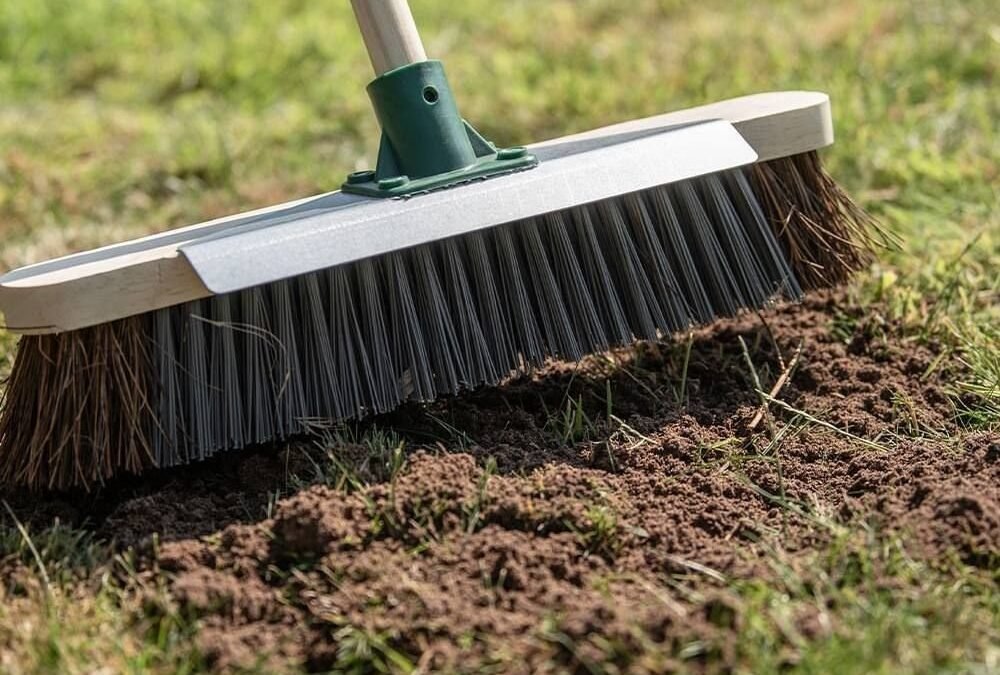
Working in strips keeps the spreading honest. Dressing one marked band at a time, then standing back to compare it against its neighbours, prevents the slow drift toward heavier coats that tired arms produce without noticing. A wide levelling lute or a stiff broom dragged in two directions levels better than a rake alone, because the straight edge rides across high spots and drops its load into the lows it passes over.
Seasonal Timing Matched to Cool Season and Warm Season Grasses
Cool season lawns, built from grasses that thrive in mild weather, recover best when dressed as growth resumes in spring or during early autumn, with early autumn often kinder because soil stays warm while air cools and weeds press less hard. Warm season lawns follow the opposite calendar, responding best in late spring and early summer while growing vigorously, when runners and shoots close over dressing within a short span and the surface knits before any summer storm can test it.
Matching the calendar to the grass type matters more than matching it to personal convenience. A dressing laid at the opening of strong growth disappears into the lawn, while the same work performed as growth winds down leaves mix exposed through months of rain. Owners unsure which family their lawn belongs to can judge by behaviour: grass that greens early and sulks in heat leans cool season, while grass that sleeps brown through winter and surges when heat arrives leans warm season.
Seed and feed, where needed, ride along with the timing rather than fighting it. Bare patches exposed by levelling accept seed into the fresh dressing, where moisture and soil contact suit germination, and a light feed supports the climb through the layer without forcing soft growth. Heavy feeding straight before dressing, by contrast, pushes lush leaves that the dressing then buries and rots, so restraint in the weeks before the work protects the turf the owner is trying to save.
Repeat Light Dressings, Aeration, and Watching for Fresh Dips
Settling continues after any levelling job, so small fresh dips appearing across the following seasons are normal rather than a verdict on the work. Prompt light refills, repeated thinly rather than saved up into one heavy correction, keep the surface true while grass stays healthy throughout. A yard levelled this way often improves across two or three cycles, each pass shallower than the last. Owners who find the wider routine of mowing, aerating, and seasonal care appealing sometimes turn that skill outward, and starting a lawn care business shows how regular lawn work becomes paid rounds for neighbours who would rather hire help. Underneath every repeat dressing, lawn turf growth habits, mowing response, and seasonal care patterns explain why grass knits through thin layers and why aeration holes relieve the compaction that feet and mowers rebuild each year. Choosing refill material draws on topsoil composition, screening grades, and soil building behaviour as well, because a screened blend with coarse sand keeps the surface open while pure fine material would seal it. Walking the lawn after heavy rain, bucket of mix in hand, and tending each fresh hollow while it stays shallow turns maintenance into minutes instead of another full weekend.


