
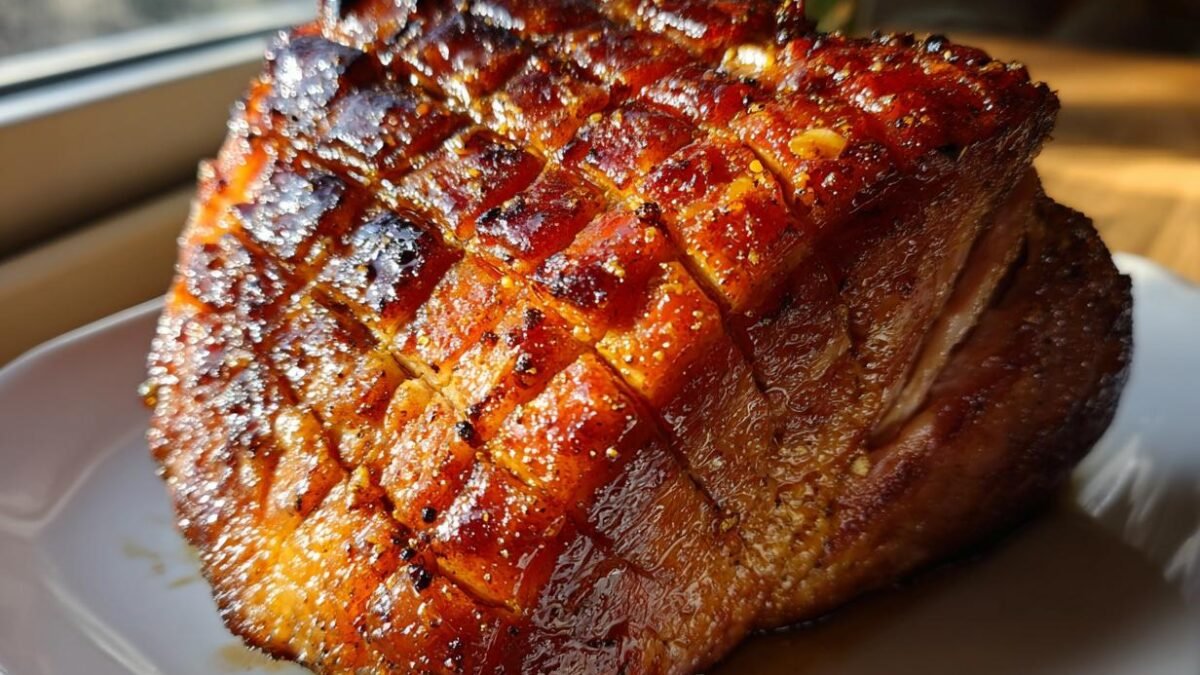
A big ham looks intimidating until you remember the packing plant already cooked most versions sold for holidays. Your real job narrows to gentle reheating, a glossy coating near the end, and resting the meat so slices stay moist when carved. Size plays a part in the calm as well, since a ham forgives a loose schedule better than almost any other centrepiece. It waits in a low oven without drying quickly, it slices neatly for a crowd, and its leftovers carry meals for days. The decisions that matter come early. Choosing the right cut for the table, understanding whether the ham in hand arrived cooked or raw, and planning the glaze timing will determine nearly everything about the meal that follows.
Spiral Cut, Bone In, or Boneless Ham for Your Table
Three forms dominate holiday ordering, and each suits a different host. A spiral cut ham arrives sliced in one continuous ribbon around the bone, so serving becomes a matter of lifting slices away with a fork. The pre slicing brings convenience, yet those cut faces also lose moisture faster in the oven, which means tighter wrapping and a slightly gentler warm through. A traditional bone in ham, unsliced, keeps its juices behind an uncut surface and carves into handsome thick slices, at the cost of real knife work at the table. A boneless ham, formed and pressed into a tidy oval, slices with total ease and wastes nothing, though its texture runs more uniform and deli like, and it lacks a bone for later cooking.
Gentle heat for sliced pork rewards the same patience shown when cooking perfect bacon at home, where rendering slowly protects texture far better than blasting a pan. Ham selection follows a similar logic of matching method to cut rather than chasing a single best answer. Yield guides the size to buy. Plan on roughly two to three servings per pound from a bone in ham, since the bone and trimming take their share, while boneless gives closer to four or five servings per pound. A first time host feeding a moderate table usually lands happiest with a spiral cut bone in ham of moderate size, large enough to present well, small enough to warm evenly, and already sliced for stress free serving. That is the unambiguous pick when confidence matters more than carving theatre.
Labels deserve a careful read before money changes hands. Most holiday hams sold in the United States arrive fully cooked and need only reheating, and the wrapper will say so plainly. A fresh ham is a different purchase altogether, raw pork from the hind leg that must be cooked through like any other roast. Country hams and some specialty cured hams follow their own rules, sometimes needing soaking to tame their salt. For a wider picture of cuts and regional styles, Wikipedia presents a ham overview covering cuts and curing traditions that places each label in context. Knowing which tradition a ham belongs to explains its salt level, its smoke, and whether its surface wants a sweet glaze or a plain one.
Warming a Precooked Holiday Ham Without Drying the Slices
Reheating a cooked ham is an exercise in restraint. Set the oven near three hundred and twenty five degrees Fahrenheit, set the ham in a roasting pan with its cut face downward, and pour in a splash of liquid, choosing among apple juice, broth, or plain water, so the lower slices steam gently rather than bake dry. Cover the whole pan loosely but completely with foil, tenting it so the foil does not press the surface bare. A spiral cut ham warms at roughly ten minutes per pound under this treatment, reaching serving warmth while its interior stays juicy. Larger unsliced hams may need a little longer per pound, and a thermometer removes the guessing.
Temperature targets keep the meal both safe and pleasant. Guidance from the United States Department of Agriculture treats reheated precooked ham as ready at one hundred forty degrees Fahrenheit when a thermometer rests in the thickest part away from bone. Fresh ham follows a stricter path. For raw pork of this kind, federal guidance sets the safe finish at a reading of one hundred and forty five degrees Fahrenheit, followed by a pause of at least three minutes before any carving begins. Phrased as a kitchen rule, let the fresh ham climb until the dial shows one hundred and forty five degrees Fahrenheit, then leave it alone briefly so heat settles evenly through the joint. Boneless and spiral forms of precooked ham scorch at their edges when the oven runs hot, so resist raising the temperature to save time. Low, covered, and patient wins every comparison.
Drying starts long before the oven for many hams, in the way they are handled beforehand. Bringing the wrapped ham out of the refrigerator a short while before heating takes the deep chill off its centre, so the outside does not overcook while the middle warms. Basting during reheating does less than folklore claims, since opened ovens lose heat and moisture escapes with each peek. Trust the foil, the pan liquid, and the thermometer instead. If the ham emerges slightly ahead of the rest of the meal, it holds well wrapped in its foil at a warm room temperature for a short spell, or back in a very low oven, without meaningful loss.
Brown Sugar and Mustard Glaze for Holiday Ham
A classic glaze needs only brown sugar, mustard, and a liquid to bind them, yet its timing decides its success. Stir brown sugar with a spoonful of Dijon or yellow mustard and enough pineapple juice, orange juice, or plain water to form a thick paste that spreads rather than pours. Honey or maple syrup can replace part of the sugar, and a pinch of ground clove, cinnamon, or smoked paprika deepens the flavour without announcing itself. The cured surface beneath the glaze carries its own history, and the Wikipedia survey of curing in food preservation explains how salt, time, and sometimes smoke built the savoury depth that a sweet coating now balances. Sweet against salt is the whole point of glazing, which is why heavily presweetened hams need a lighter hand.
Glaze applied too early scorches. Sugars darken quickly under sustained heat and turn bitter long before a large ham warms through, so the coating belongs to the final twenty to thirty minutes of reheating and no earlier. Pull the foil back, brush on a first thin coat, and return the ham uncovered so the surface sets and shines. A second and even a third thin coat, brushed on at intervals during that final window, builds a lacquered gloss that one thick coat never achieves, because thin layers set before they slide off. Watch the edges of spiral slices near the end, since their exposed corners caramelise fastest and can cross from mahogany to burnt while the centre still looks pale.
Score an unsliced ham before glazing and the coating gains both grip and looks. Cut shallow diamonds through the surface fat, stud the intersections with whole cloves if the household enjoys them, and let the glaze pool in the cuts. The fat bastes the meat as it renders under the sweet shell. Whatever glaze remains in the bowl can simmer briefly on the stove into a sauce for the table, though it should boil properly if it touched the partially warmed ham through the brush.
Carving a Bone In Holiday Ham Cleanly
Resting comes before carving, always. A whole ham rested for fifteen to twenty minutes after leaving the oven keeps its juices inside the meat, where resting lets fibres relax and reabsorb liquid that carving too early would spill across the board. Tent the ham loosely with foil during the rest so it stays warm without steaming its glazed surface soft. Use the pause to finish side dishes and warm the serving platter, since sliced ham cools quickly once cut.
For an unsliced bone in ham, set the joint on a board with the bone angled for a steady grip, then cut a wedge from the thinner side to expose a flat face. Slice downward toward the bone in even strokes, following the natural seams where muscles separate, then slide the knife flat against the bone so the slices release in a neat stack. Work around the bone in sections rather than chasing one perfect slab. A long, flexible slicing knife with a granton edge releases each slice cleanly, and a carving fork steadies without piercing the best pieces repeatedly. Spiral cut hams need only gentle encouragement, lifting slices away from the bone with a fork and cutting through the few points where they still cling.
Arrange slices on the warm platter in overlapping rows, spooning a little of the pan liquid or extra glaze over them to restore shine. Serve promptly. If service must wait, cover the platter and hold it in a low oven, accepting a small loss of gloss as the fair price for a meal that lets the host sit down too.
Storing Holiday Ham Leftovers and Using the Bone
Leftovers reward the same prompt attention as the main meal. Refrigerate sliced ham within a couple of hours of serving, wrapped tightly or sealed in containers so the cut surfaces do not dry or pick up other flavours. Cooked ham keeps in the refrigerator for three to four days at proper cold, long enough for sandwiches, omelettes, fried rice, and a pot of soup. For longer keeping, slices freeze well for one to two months when wrapped in portions suited to future meals, with as much air pressed out as the wrapping allows. Thaw frozen slices overnight in the refrigerator and use them cooked into dishes where gentle reheating will not dry them further.
Save the bone, which many cooks rate as the finest part of the purchase once the holiday ends. A ham bone simmered with split peas produces a thick soup that needs little seasoning beyond what the bone provides, and the same bone enriches seasoned beans, collard greens, or a lentil pot. Freeze the bone if soup day lies weeks away, wrapped well against freezer burn. Any meat still clinging to it after simmering can be picked off and folded back into the pot. Between the easy reheating, the forgiving glaze, and a bone that starts a second meal, a holiday ham earns its reputation as the calmest centrepiece a host can choose.

One comment