A first family campout succeeds long before the tent goes up, in the borrowing, booking, and kitchen prep handled calmly at home during the weeks ahead. That is genuinely good news for nervous parents, because it means the trip is won at the kitchen table rather than at the mercy of weather, tired children, or a forgotten bag. Work through the undertaking in phases, each one small and manageable, and the night itself becomes the easiest part of the whole project.
Families who have handled first big road trip planning before will recognise the rhythm here. Big adventures reward people who decide the important things early, write them down, and leave room for improvisation only where improvisation is fun. Camping with children follows the same law, with the added comfort that your first attempt can be short, close, and deliberately gentle.
Phase One: Pick a Forgiving Campground Close to Home
Begin by choosing comfort over scenery. A developed campground with washing facilities, drinking water on tap, marked pitches, and a small shop forgives nearly every beginner oversight, from a forgotten towel to a child who needs a proper toilet at midnight. State parks earn their popularity with new families for good reason. Pitches can be reserved in advance, staff patrol the grounds, and the facilities are looked after, which removes the low level anxiety that ruins an otherwise pleasant evening.
Distance matters more than beauty at this stage. A site within an easy drive of home transforms the worst case scenario into a minor tale: if storms roll in or a toddler becomes inconsolable, packing up and sleeping in your own beds is a decision, not a defeat. Popular grounds fill quickly for summer weekends, so reserve early through official channels. The Recreation.gov reservation service for federal campgrounds lets families compare amenities pitch by pitch, and filtering for showers and proper toilets keeps a first trip gentle.
Private campgrounds sit at the other end of the same choice, usually costing more and offering extras such as pools and organised activities. Either style serves a beginner well. What matters is that the ground is established, the pitch is bookable, and the drive is short. Wilderness can wait for a later chapter of family life.
Phase Two: Borrow Gear and Learn the Sleep System
Resist buying a full kit for a trip that has not happened yet. Friends, neighbours, and local lending schemes hold garages full of camping equipment that emerges twice a year, and most owners are delighted to lend it. Borrowing also teaches you what your family actually enjoys before money changes hands. A tent that feels luxurious to a hiking couple may feel cramped and complicated to parents managing a wriggling preschooler by torchlight.
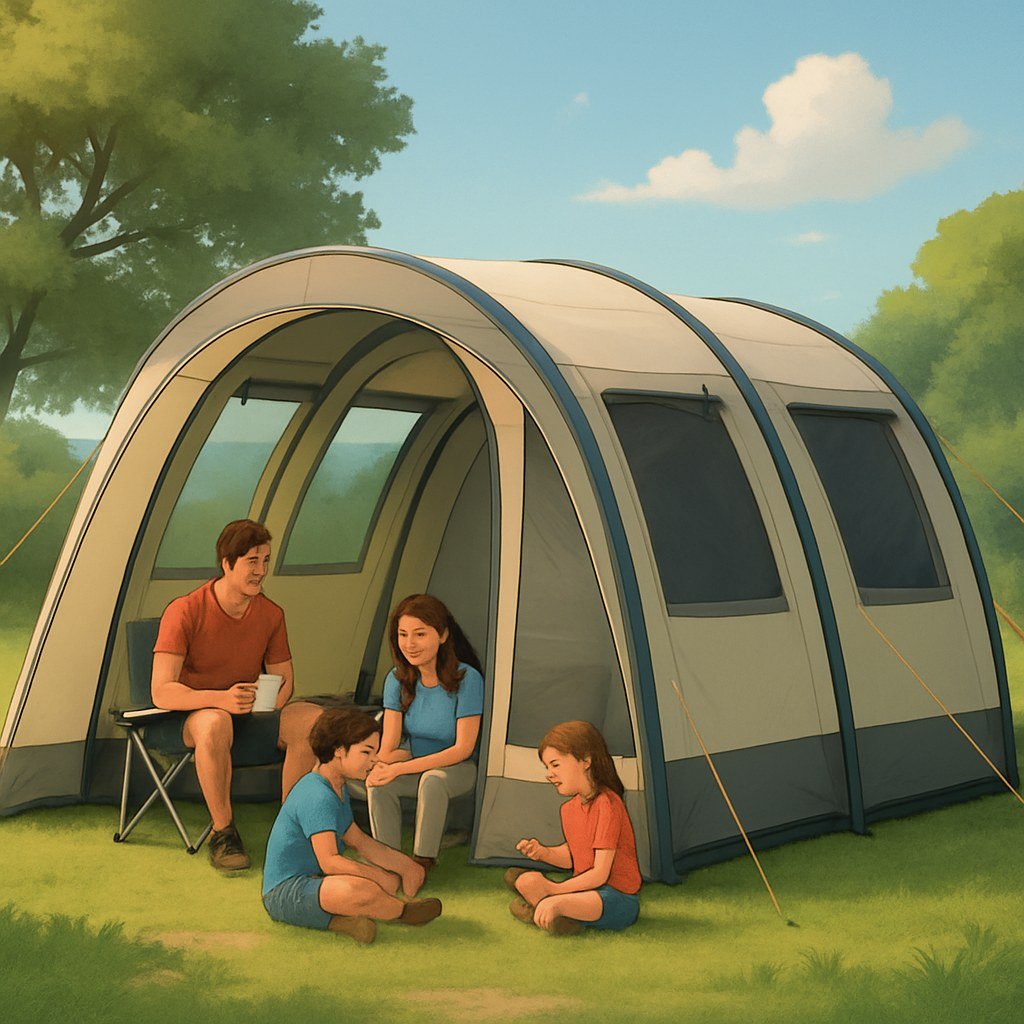
Sleep deserves the closest attention, because tired children unravel trips faster than any other factor. Choose a tent rated to hold more people than your group contains, so bags, clothes, and small bodies all fit without a nightly wrestling match. Understand that warmth and comfort come largely from what lies beneath the sleeper. A decent pad insulates against cold ground and smooths out roots and stones far more effectively than a thick bag alone. Practise the whole arrangement at home first: pitch the tent in the garden if space allows, or at least unroll the pads and bags in the living room and let the children sleep in them for a night. Familiar gear in a strange place feels like an adventure. Strange gear in a strange place can feel like an ambush.
Pack clothing for a full change after the inevitable spill, plus warm layers for the hour after sunset, when temperatures drop faster than newcomers expect. Head torches for everyone, including the smallest walker, turn night time trips to the toilet block into a game rather than a grievance. Keep one bag as the family command centre holding torches, wipes, and medicines, so nobody unpacks the whole car in the dark.
Phase Three: Prep Food at Home So Camp Cooking Stays Easy
Camp cooking succeeds when most of the work happened earlier in a real kitchen. Chop vegetables at home and seal them in containers. Mix marinades around meat before it ever meets the cool box. Stir batter for morning pancakes into a bottle that only needs shaking and pouring. Every task completed at the counter at home is a task removed from a wobbly camp table while hungry children circle like small, polite wolves.
Build the menu around forgiving food. Foil packet dinners, where seasoned ingredients steam together over the fire, tolerate distraction and uneven heat beautifully. Breakfasts should be simple enough to produce before coffee has fully worked its wonders. Snacks deserve their own generous bag, because children experience outdoor hunger at a scale that surprises parents, and a steady supply of familiar nibbles prevents most late afternoon collapses. Perishable food belongs in a properly cold cool box, opened as rarely as discipline allows, and hands need washing before meals with the same seriousness as at home, even when the sink is a tap across the field.
Bring more drinking water than instinct suggests, even where taps are provided, and a familiar cup for each child. Food on a first trip is not about demonstrating outdoor skill. It is about keeping everyone fed, warm, and cheerful with the least possible friction, so that memories attach to the firelight rather than to a parent stress cooking in the dark.
Phase Four: Arrival, Boundaries, and Setting Up Together
Arrive with daylight to spare, because pitching a tent at dusk with tired children is how first trips earn their horror stories. Walk the pitch together before unloading. Show the children exactly where the family territory ends: the tent, the table, the fire ring, and no further without a grown up. Clear boundaries, set kindly and early, prevent the constant low level vigilance that exhausts parents, and children generally respect lines they helped to draw.
Give every child a job scaled to their size. Small hands can carry pegs, hold a torch steady, or arrange the sleeping bags in the order of their choosing. Involvement converts waiting time into participation, and a child who helped build the camp feels ownership over its rules. Set the sleeping area up first, while energy is fresh, so that bedtime later requires nothing more than pyjamas, teeth, and a story.
Scout the practical geography together: the toilet block, the water tap, the path back to your pitch, and a memorable landmark for orientation. Agree on a buddy habit for any after dark wandering, with nobody drifting off alone. These small systems sound fussy written down, yet on the night they feel like nothing at all.
Phase Five: A Daily Rhythm of Adventure and Downtime
Children experience a campground as a small country built exactly to their scale, and the days fill themselves when parents resist scheduling every hour. Plan around anchor points instead: a morning wander while the air is cool, a lazy middle of the day near the tent, and the fire as the evening gathering place. A short hike taken early avoids both heat and crowds, and leaves the afternoon free for the unstructured pottering that children remember most fondly.
Carry a few quiet amusements for the lulls: cards, a magnifying glass, a notebook for lists of birds. Boredom outdoors tends to ferment into invention rather than complaint when screens stay packed away. The National Park Service pages on frontcountry camping capture this spirit well, presenting developed campground stays as an accessible pleasure built around simple comforts rather than endurance.
Protect sleep as fiercely on the second day as the first. A late fire is a treat, yet overtired children pay for it by morning with interest. Keep bedtime rituals recognisable, dim the torches, and let the day close gently.
Phase Six: Fire, Wildlife, and Weather Safety Habits
Most camp risks shrink dramatically under a handful of steady habits. Around the fire, agree that only adults tend flames, children sit on their own logs or chairs at a respectful distance, and nobody runs through the fire area for any reason. Keep water within reach whenever a fire burns, and drown it properly at night rather than trusting ash to behave. Burns and falls account for a large share of camp mishaps, and both decline when the fire zone has rules everybody can recite.
Food discipline doubles as wildlife discipline. Store every scented item, from snacks to toothpaste, inside the vehicle or in the lockers many grounds provide, and never inside the sleeping tent. Animals that learn to visit camps lose their fear and their welcome quickly, and a night time visitor rustling through a tent is the sort of memory nobody wants a child to keep. Apply repellent as the evening settles, then run a calm tick check as part of the bedtime routine, treating it as ordinary grooming rather than an alarming inspection.
Weather completes the trio. Check the forecast before leaving and again on arrival, pitch away from low ground where water gathers, and treat a severe warning as a command rather than a challenge. Morning walks ahead of afternoon storms keep the best hours of the day usable even when the sky has plans of its own.
Phase Seven: Knowing When to Pack Up Early
Sometimes the bravest and kindest decision is to drive home. Dangerous weather, a child who becomes ill or hurt, a tent that fails in rain, or a family simply too exhausted to enjoy another night all justify an early departure without a shred of shame. Children take their emotional cues from their parents on this point. Presented calmly as a sensible change of plan, an early finish becomes part of the adventure story rather than its failure.
Leaving early also protects the future of the hobby. A miserable night endured out of stubbornness can put a child off tents for years, while a short trip ended kindly leaves everyone willing to try again soon after.
Phase Eight: Turning One Good Night Into a Growing Habit
After a successful first night, build gradually. A full weekend comes next, then perhaps a second site a little further from home, then longer stays once the family systems run themselves. Keep a running list of what worked and what was forgotten, and let that list shape the next trip. Buy slowly, replacing borrowed items only where experience has proven the need.
The deepest reward arrives quietly. Children who camp grow comfortable outdoors, tolerant of weather, and proud of small responsibilities carried well. Parents gain evenings around a fire with nowhere else to be. Start small, borrow freely, prepare generously, and let one good night do its persuasive work on the whole family.