
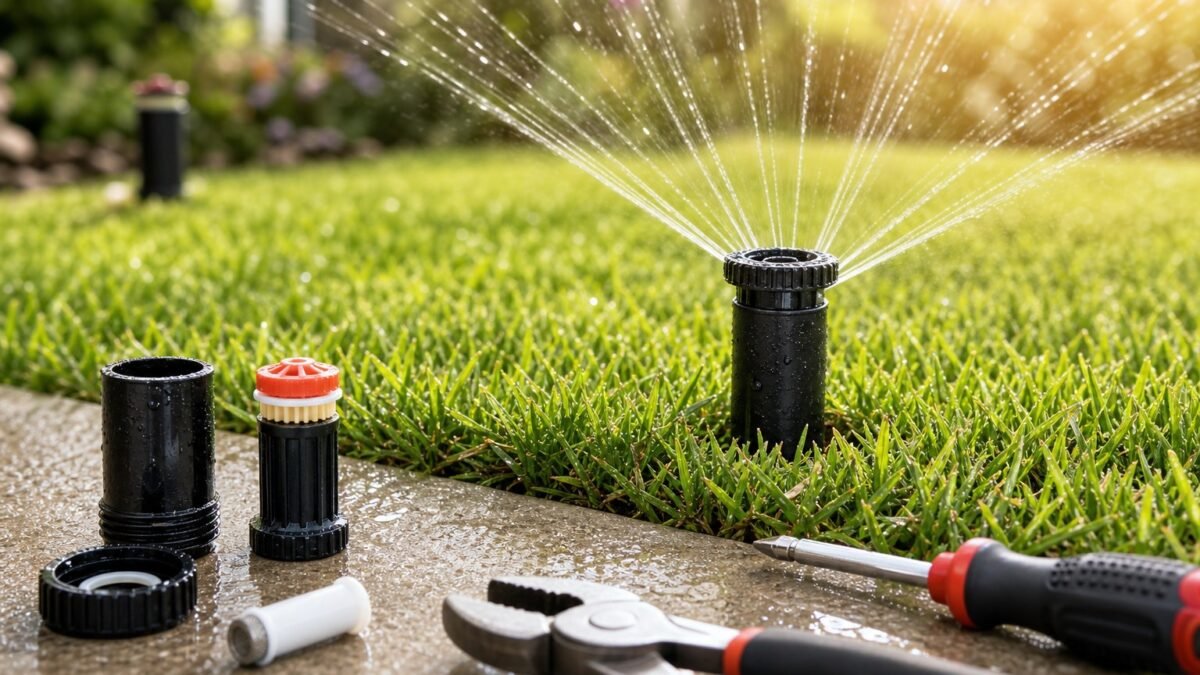
A snapped sprinkler head invites a fast swap, yet the rushed version often waters pavements, starves turf, or fails again within weeks. Comparing repair routes alongside the classic errors shows where a few careful minutes save a whole zone. A head rarely fails alone, either: the riser beneath it may be cracked, the nozzle pattern may never have suited the corner it waters, and the zone may carry other tired fittings that a proper audit would catch on the same visit.
Like for Like Swap Versus Full Head and Riser Renewal
The simplest route replaces only the damaged head with an identical unit, same brand family, same pop up height, same nozzle range. That route suits a head clipped by a mower or split by a stray boot, where the riser below stayed sound and the original specification genuinely matched the planting. Work stays brief, the zone returns to service quickly, and nothing about coverage changes, which matters when the lawn was thriving before the breakage and only the hardware failed.
Renewing the head together with its riser costs a little more effort and answers a different situation. Risers crack below ground where nobody sees the damage, threads wear oval after repeated swaps, and older fittings often sit at heights modern mowing patterns punish. Digging slightly wider, cutting out the tired riser, and building the joint again from sound plastic gives the new head a straight, sealed seat. Where two or more heads on a zone show age cracks, renewing risers during one digging session beats returning to the same trench across a whole summer.
Choosing between the routes comes down to evidence gathered during removal. A riser that emerges clean, round, and firmly threaded supports the simple swap, while grit packed inside the threads, a leaning stem, or a hairline split along the riser wall argues for renewal. Taking the damaged head along to the supplier settles most doubts at the counter, because nozzle ranges, thread sizes, and pop up heights vary between brands and even between series wearing the same badge.
Effort also differs in ways that matter on a hot afternoon. A bare head swap can finish before the trench dries out, while riser renewal adds digging, cutting, and a short wait while the new joint settles into alignment. That extra labour buys access, though: with the ground open, the elbow below and the lateral pipe beyond it can be inspected for splits and root pressure, faults that no surface swap would ever reveal.
Seven Countable Sprinkler Errors From Shutoff to Zone Audit
Seven distinct mistakes account for nearly every swap that disappoints, and each one stays easy to avoid once named plainly. They run in working order, from the moment hands approach the broken fitting to the moment the repaired zone either proves itself or does not.
Mistake one — leaving the zone pressurised while the old head comes off. Water still sitting under pressure in the line erupts the moment threads release, blasting grit into the open pipe and soaking the worker. Shutting the zone down at the controller and bleeding pressure through a neighbouring head takes moments and keeps the whole repair dry, calm, and clean from the opening turn onward.
Mistake two — letting soil fall into the open riser while digging around the broken fitting. Loose earth drops straight down the exposed pipe and later migrates into filters and nozzles, where a single grain can distort a spray fan. Packing a wad of cloth or tape over the opening the moment the old head lifts away keeps the line sealed against everything the trench throws at it.
Mistake three — fitting a mismatched head type because the replacement looked close enough on the shelf. Fixed spray bodies and rotating heads deliver water at very different rates, so a rotor dropped among sprays drowns its corner while the wider turf still thirsts, or a spray among rotors floods a narrow strip. Matching family, throw, and application rate to the heads already sharing the valve keeps the zone balanced.
Mistake four — setting the head above or below ground level once seated. A cap sitting proud invites mower blades and boot heels, while a cap buried below the soil line chokes the pop up stem with dirt and tilts the spray fan into the turf. The cap belongs flush with the finished soil surface, checked by eye along the ground plane before the trench closes.
Mistake five — leaving arc and pattern unadjusted after the water returns. A fresh head usually ships set wide, throwing water across paths, walls, and windows until somebody walks the zone and dials the arc to the planting it serves. Radius and direction need the same attention, since a pattern that overshoots onto paving wastes water on every single cycle the timer runs.
Mistake six — forcing or cross threading the head onto its riser during fitting. Plastic threads deform quietly when a head starts at an angle and gets muscled down anyway, and the joint then seeps underground where the leak hides for weeks. A head that resists the opening turns should come off and start again square, seating by hand until the final snug turn.
Mistake seven — skipping the full zone run afterwards and trusting the repair on sight alone. Only a complete cycle under pressure reveals a tilted fan, a weeping joint, a nozzle throwing short, or a head that fails to retract. Watching every fitting on the valve work through its pattern, bucket or towel in hand, turns guesswork into proof before the tools go back in the shed.
Spray Bodies and Rotors Compared for Throw and Application Rate
Fixed spray bodies throw a fan of water across a modest radius and lay that water down quickly, which suits narrow beds, small lawn panels, and corners near paving. Rotors sweep a single stream back and forth across a far longer throw, applying water slowly enough for soil to absorb it, which suits broad open turf. Because the two families drink from a shared valve at such different rates, designers keep them on separate zones, and a repair that respects that separation protects the watering balance the system was built around.
Coverage planning aims at overlap, with spacing arranged so each throw reaches the neighbouring head and every patch receives water from more than one fitting. Dry crescents appear wherever throws fall short of one another, and no nozzle adjustment cures a spacing gap. Gardeners reshaping planting beside irrigated turf meet the same geometry from the other side, and building a raised garden bed step by step shows how bed edges, soil height, and corner placement get planned on paper first, which helps keep new beds clear of spray fans and rotor sweeps alike.
Pressure quietly governs both families. Spray fans atomise and drift when pressure runs high, laying a fog that wind carries onto paving, while rotors under weak pressure dribble short of their rated throw and pool water near their bases. Many bodies accept pressure regulating stems or caps, and fitting one during a repair steadies the pattern far better than compensating with longer run times on the controller.
Matching Nozzle Pattern, Arc, and Pop Up Height to the Spot
Nozzle choice decides where water actually lands. Quarter, half, and full circle inserts serve corners, edges, and open centres respectively, while adjustable arc nozzles cover the awkward angles in between. Throw distance follows nozzle size and line pressure together, so a nozzle rated beyond the pressure available throws short and lumpy. Background reading on irrigation sprinkler types, nozzle designs, and operating principles sets out how spray and rotor mechanisms differ internally, which clarifies why pattern parts rarely interchange between families even when threads happen to match.
Pop up height deserves the same care as pattern. Short stems suit closely mown lawns, while taller stems clear longer grass and low planting without the fan clipping leaves on its way up. A stem that rises too little drags its spray through turf tips and leaves a scorched ring of dry grass around a green centre, a signature worth recognising during the zone audit because the cure is a taller body rather than more watering time.
Filters deserve a glance while the nozzle is out. Most heads carry a small basket filter beneath the nozzle that traps sand and scale before either can choke the pattern, and a basket rinsed clean under a tap restores flow that looked like failing pressure. Replacing a basket costs almost nothing, yet a clogged one left in place will keep distorting the fan no matter how carefully the arc gets set.
Hand Tight Threading and Tape That Protect Plastic Risers
Plastic riser threads reward patience and punish force. Thread sealing tape wrapped neatly around the male threads discourages seepage at the joint and, just as usefully, helps the head unscrew cleanly years later when the next replacement arrives. The head itself should wind down by hand through nearly its whole travel, meeting firm resistance only near the seat, and a short final snug with fingers or a gentle tool turn finishes the joint without straining the riser wall.
A brief flush belongs between removal and fitting. With the old head off and the opening guarded, a short burst of water through the line carries grit and shavings out of the pipe before the new filter and nozzle go in. Skipping that flush traps debris behind a fresh filter, where it narrows flow from the very first cycle and mimics a faulty head, sending the repairer hunting for a fault that was loaded into the line during the repair itself.
Recommendation for Most Lawns After Running the Whole Zone
For most lawns the sound route pairs a like for like head with a renewed riser whenever the old riser shows any doubt, followed by patient adjustment and a complete zone run watched from start to finish. That combination costs one wider trench and a few extra minutes, and it removes the two failures that bring repairers back, namely hidden riser cracks and unadjusted patterns. Seasonal audits extend the same logic, and the WaterSense guidance on outdoor water use and sprinkler upkeep explains how a single leaking or misdirected head can waste a surprising volume across a watering season, which makes a twice yearly walk around the zones while they run one of the cheapest water saving habits a household can adopt. A repaired head that waters its patch evenly, retracts cleanly, and leaves paving dry has earned its place, and the zone can go back to its timer with confidence.


2 comments