
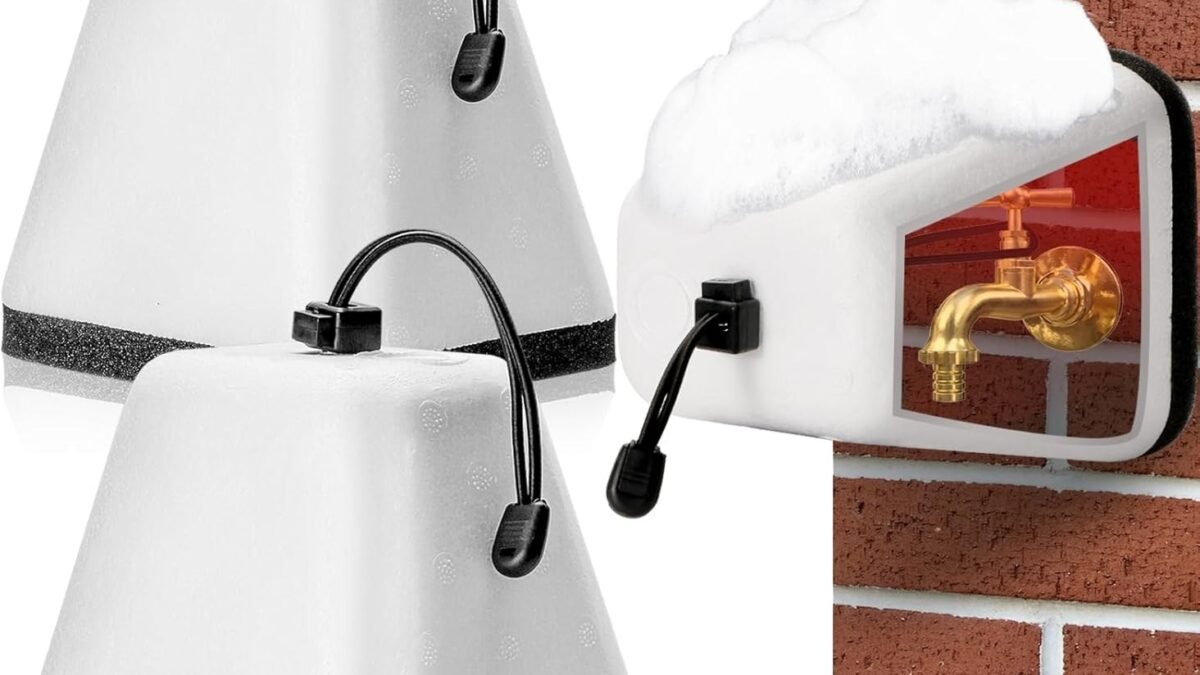
A foam cover slipped over an outside tap looks like winter protection, yet trapped water deeper in the wall can still split a pipe. Starting from the errors that cause bursts shows why draining matters more than covering. Autumn offers a short window for this work, well before the first hard freeze settles in, and the whole routine rewards calm sequencing rather than rushed effort on a bitter evening. A tap that enters winter empty and open rarely causes trouble, while a tap that enters winter full and sealed carries risk through every cold night until spring.
Winterising Errors That Leave Outside Taps Ready to Burst
The most damaging habit involves trusting a cover to do work that only draining can do. A foam dome slows heat loss from the metal fitting and softens the effect of a brief cold snap, yet the water sitting behind that fitting stays exposed to prolonged freezing air travelling through the wall cavity. Once ice forms inside a sealed length of pipe, expansion presses outward with nowhere useful to go, and the wall of the pipe gives way along a split that may stay invisible for months. Owners often discover the failure only when water returns in spring and escapes through the hidden opening into insulation, timber, and plaster.
A second error involves shutting an indoor valve and assuming the job ends there. Closing the supply stops fresh water arriving, but the section between that valve and the outside tap remains full unless someone opens the tap and lets gravity empty the run. That trapped column matters more than the fitting on the wall outside, because the vulnerable stretch often sits inside the building fabric where a split soaks materials quietly. A third error involves insulating a pipe that still holds water. Sleeves and wraps buy time during mild frost, and they help exposed runs in unheated spaces, yet insulation alone cannot rescue a full pipe through a sustained freeze because cold eventually reaches the water regardless of wrapping thickness.
Timing errors complete the pattern. Waiting until a freeze warning appears on a forecast leaves the work to frozen fingers, stiff hoses, and valves that resist turning after a year untouched. Leaving the task until deep winter also raises the chance that water inside the line has already frozen once, weakening the pipe before any cover goes on. Working in mild autumn weather allows unhurried checks, gives stiff valves patient attention, and leaves room to source a replacement washer or cap before shops become the only option during an emergency.
Why a Connected Hose Defeats Even a Well Fitted Cover
A hose left attached through winter holds water against the tap and blocks the natural escape route that draining depends upon. Even a hose that feels empty retains pockets of water along its length, and a nozzle or spray gun at the far end seals those pockets in place. Splitters and watering timers create the same trap in miniature, holding a small volume directly behind the fitting where cold bites hardest. Removing every attachment ranks among the simplest protective steps available, yet garages and sheds fill each autumn with hoses that stayed connected out of habit rather than decision.
Freeze proof fittings suffer most from this oversight because their entire design assumes a clear barrel after shutoff. With nothing attached, residual water runs out by gravity and the barrel stands empty. With a hose attached, water stays trapped inside that barrel for the whole season, and the fitting behaves no better than an ordinary tap despite its longer body and interior seat. Coiling a disconnected hose, draining it fully, and storing it under cover also extends its working life, since ice inside a stored hose degrades its lining and invites leaks at couplings when pressure returns.
Finding the Indoor Isolation Valve and Bleeder Cap
Most outside taps draw from a branch line with its own shutoff somewhere along the indoor run, commonly in a basement, a crawl space, or a utility area near a boiler or water heater. Following the pipe inward from the point where it passes through the wall usually leads to that valve, sometimes within a short distance and sometimes after the branch crosses a ceiling void. Handles vary widely, from round wheels that turn many times to levers that move through a quarter turn, and older wheels may need gentle persuasion after standing unused since the previous autumn.
Many shutoffs carry a small drain fitting on the side of the valve body, often a knurled cap covering a tiny outlet that releases water from the isolated section. That bleeder matters because opening the outside tap alone may not empty a run that dips or levels along its path. Positioning a bucket beneath the bleeder before loosening the cap prevents a spill across the floor, and keeping a cloth nearby handles the dribble that follows. Homes without a dedicated shutoff for the outside branch need a different plan, since draining then depends on broader supply control, and adding a valve during warmer months solves the problem permanently for future winters.
Draining the Vulnerable Pipe Run and Leaving Taps Open
Sound draining follows a calm order that prose describes easily and hands remember after a single season. Shut the indoor valve firmly, walk outside, and open the tap fully so air enters and water begins moving toward the low opening. Return indoors and loosen the bleeder cap slowly, allowing the trapped section to empty into a waiting bucket rather than across a floor. Water may arrive in pulses as air replaces it along the run, and patience matters more than force at this stage, because a rushed cap removal can spray the surrounding area.
Once flow reduces to an occasional drip, replace the bleeder cap loosely enough to guard against debris while still permitting any remaining moisture an escape path, following local practice for the fitting involved. Leave the outside tap open through winter rather than closed, because an open tap gives any residual water or melting ice room to expand without building pressure against a sealed outlet. A small amount of movement inside the line then causes no harm, and the pipe rests empty until spring. Marking the shutoff with a tag or note prevents another household member from reopening the supply midwinter for a car wash or a patio rinse, which would refill the run silently and undo the entire routine.
Properties with several outside taps benefit from handling every fitting during a single circuit, working from the highest outlet toward the lowest so drained water never refills a finished run. Photographing each valve location with a phone, and noting which wheel or lever belongs to which tap, removes guesswork for anyone sharing the task in later years and shortens the whole routine considerably.
Exterior taps without interior shutoffs, found on some older properties, rely on covers plus pipe insulation as a partial defence and deserve priority attention during severe cold. Letting such a tap drip slowly during an extreme snap keeps water moving and reduces freezing risk for a short emergency period, although draining through a proper valve remains far more reliable as a standing method. Recording which fittings the property has, and where each valve sits, turns next autumn into a brief circuit of familiar stops instead of a fresh search through dark corners.
Freeze Proof Sillcocks and How Their Care Differs
A freeze proof sillcock places its sealing seat deep inside the heated portion of the wall, connected to the outside handle by a long stem. Turning the handle closes the seat indoors, and the barrel between seat and outlet slopes gently downward so water leaves by gravity once attachments come off. Because standing water never remains near the cold exterior surface, the fitting tolerates winter far better than a standard tap whose seat sits close to the outside air. Correct installation angle matters, since a barrel fitted level or tilted the wrong way retains a pool that freezing can still damage.
Care for these fittings centres on detachment and inspection rather than draining through a valve. Every hose, timer, and splitter must come away before freezing weather, without exception, because trapped water in the barrel defeats the slope entirely. Checking that water stops cleanly when the handle closes also matters, since a worn washer at the interior seat lets a slow seep refill the barrel across winter. A cover over the outside flange adds a modest extra layer against wind driven cold, but it ranks as a finishing touch on a sound fitting rather than a substitute for detachment and a free draining barrel.
Spring Restart Checks for Hidden Splits and Slow Drips
Spring recommissioning deserves the same patience as autumn draining, because a split hidden inside a wall announces itself only when pressure returns. Close the outside tap, close the bleeder cap fully, and reopen the indoor valve slowly while listening for hissing or unexpected flow sounds within the wall. Ask another person to watch the outside fitting and the surrounding ground while pressure builds, and inspect indoor walls, ceilings below the run, and any cupboard backing onto the pipe path for damp patches or fresh staining.
Open the tap outside and let water run until the flow clears and steadies, then close it and watch the outlet for a lingering drip that continues long after handle pressure stops. A tap that weeps steadily at the spout or around the stem points toward washer or seal wear rather than freeze damage, and readers facing that nuisance can work through beginner friendly leaking faucet repair to judge whether the repair suits a careful home attempt. Damp that appears indoors during the test tells a more serious story, and shutting the valve again promptly limits soaking while a plumber locates the split behind the surface.
Seasonal preparation sits within a broader body of household winter knowledge, and readers wanting the wider picture around buildings, heating, and pipework can consult winterisation of buildings and pipes background covering how whole properties are readied for cold months. Complementary public advice appears in winter weather preparation guidance for households describing steps families can take before storms, power interruptions, and prolonged freezes arrive. Combining that background with a drained, open, and clearly tagged outside tap gives a property its strongest simple defence, repeated each autumn with very little time or expense involved.


One comment