
Cafe quality flavour at home rarely depends on an expensive machine hiding on the counter, and far more on fresh beans, even grinding, and water at the right heat. Comparing a handful of affordable brewing routes shows where modest spending genuinely changes the cup. The honest pattern across every method below is that beans and grinding decide most of the flavour, the brewer decides the style, and technique decides whether a given setup reaches anywhere near its potential on an ordinary weekday morning.
Burr Grinders, Blade Grinders, and Pre Ground Beans Compared Honestly
Grinding sits at the top of the spending order because extraction punishes uneven particles. Burr grinders crush beans between abrasive surfaces into fairly even grounds, so water moves through the whole dose at a similar pace and the cup tastes balanced. Blade grinders chop by impact, producing dust and chunks side by side in the same handful; the dust over extracts into bitterness while the chunks under extract into sour thinness, and both faults arrive in the cup together however carefully the remaining stages are handled.
Pre ground beans remove the grinder bill entirely and still disappoint for a structural reason: grinding exposes a vast surface to air, and the aromatic compounds that make coffee taste alive escape from that surface within a short span. A bag ground at the roaster may brew pleasantly on its first morning and taste flat by the end of the week, even stored sealed and cool. Buying whole beans and grinding per brew keeps those compounds locked inside the bean until the moment water is ready for them.
Hand burr grinders occupy the sensible middle ground for small households. They cost far less than motorised burr models, grind quietly enough for early mornings, and handle one or two cups of beans with a minute or so of cranking. Households brewing large pots daily may tire of the cranking and reasonably choose a motorised burr unit instead, while blade grinders, already owned, still serve for spices and leave coffee to better tools. The comparison lands clearly: even grinding from any burr design beats uneven grinding from any blade design, every single brew.
Pour Over Drippers, French Press Pots, and Basic Drip Machines
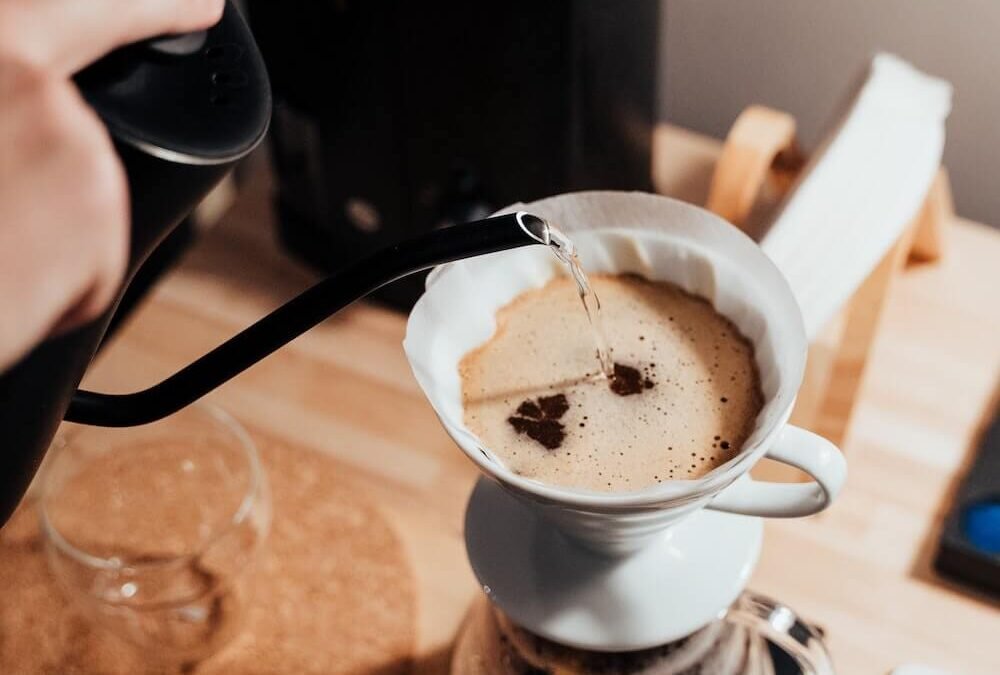
Pour over drippers ask for attention and repay it with clarity. Water passes through a bed of grounds held in a paper filter, and the paper traps oils and fine particles, yielding a clean tasting cup where distinct flavours separate easily. The brewer controls the pour by hand, so results vary until the motion becomes habit, yet that same control lets a careful brewer adjust flow mid brew. Drippers themselves cost very little, use no power, and rinse clean in seconds, though they brew one or two cups at a time.
French press pots take the opposite philosophy. Grounds steep directly in the water for the full brew, then a mesh plunger separates them at pouring, and because no paper intervenes, oils and fine particles reach the cup and build a heavier body with a rounder, softer flavour. The method forgives uneven pouring entirely and asks only for a timer and a coarse grind, though it leaves sediment in the final mouthful and suits drinkers who enjoy weight in the cup more than sparkle.
Basic drip machines trade control for convenience. A machine heats water, showers it over a basket of grounds, and keeps a pot warm while the household gets dressed, which earns its counter space in busy homes. Weakness lives in the heating: inexpensive machines often deliver water cooler than ideal or distribute it unevenly across the basket, so part of the dose over extracts while the rest barely wets. With fresh beans, a burr grinder, and a sensible dose, a modest drip machine still brews honestly enjoyable pots, and for multi cup households it may be the only route that survives weekday reality.
Bean Freshness, Roast Dates, and Sensible Buying for Home Brewers
Beans taste best in the weeks shortly after roasting, so the roast date printed on a bag matters more than any branding on its front. Buying smaller bags more often keeps the household inside that window, while a giant bag bought for value spends its second half ageing on the shelf. Whole beans keep far better than ground, and an airtight container away from heat, light, and the steam of the kettle preserves what freshness the bag arrived with. Roasters selling locally or by post with dated bags make the habit easy to keep.
Home brewing culture rewards this kind of modest, repeatable project, and households that enjoy tending one fermentation or brew often enjoy another, since brewing kombucha at home on a budget follows the same rhythm of simple equipment, fresh ingredients, patience, and small adjustments logged across batches. Wider reading on coffee origins, roasting stages, and how beans develop flavour deepens the buying judgement further, because understanding what roasting does to a bean explains why freshness windows exist at all and why very dark roasts mask origin character behind roast character.
Sensible buying also means matching roast level to method with a light hand. Lighter roasts keep delicate flavours that pour over brewing displays well, while medium roasts forgive more and suit immersion and drip methods where body matters. Grinding a small amount and brewing it before committing the whole bag protects against a mismatch, and keeping brief notes on which beans pleased which method turns future purchases from guesses into continuations of evidence the household gathered itself.
Ratio, Water Heat, and Grind Size as Flavour Adjustment Dials
Three variables tune any brewer without new spending. Proportion comes first: a widely used starting point is around one part coffee to sixteen parts water by weight, measured on an ordinary kitchen scale, then adjusted stronger or weaker to taste across the following brews. Scoops vary too much between beans and grinders to hold a recipe together, while weighed doses repeat exactly, which turns one good cup into a method instead of an accident nobody can reproduce on demand.
Water heat comes second. Water just below boiling, roughly between one hundred ninety five and two hundred five degrees Fahrenheit, extracts sweetness without scalding the grounds, while fully boiling water poured carelessly can drag harsh flavours out of the dose. A kettle rested briefly after boiling lands in that band without any thermometer, and pre warming the brewer with a rinse keeps the slurry from losing heat to cold ceramic or glass during the opening moments of the brew.
Grind size comes third and interacts with contact time. Finer grounds expose more surface and extract faster, suiting short pour over brews, while coarser grounds suit the long steep of a French press, where fine particles would over extract and slip through the mesh into the cup. Sour, thin flavour generally signals under extraction and asks for a finer grind or hotter water, while bitter, drying flavour signals over extraction and asks for the opposite correction, changed one dial at a time so the cause stays identifiable.
Moka Pots and Hand Frothers for Milk Drinks Without Espresso Machines
Moka pots brew strong, concentrated coffee on a stovetop by pushing steam pressure up through a bed of grounds, producing a cup with intensity that stands up to milk gracefully. The method rewards medium fine grounds, gentle heat, and removal from the stove the moment the stream turns pale, because lingering heat burns the final portion and flattens the whole pot. A moka pot will not make true espresso, yet it anchors milk drinks convincingly at a fraction of machine cost and stores in a cupboard corner.
Hand frothers close the gap between black coffee and a cafe style drink. A small battery whisk foams warmed milk in a jug within moments, and a French press doubles as a frothing vessel when its plunger pumps air through warm milk repeatedly. Milk warmed gently, without boiling, foams more stably and tastes sweeter, and pouring the foam over moka pot coffee or strong drip coffee produces a drink close enough to cafe style that most households stop missing the shop version on ordinary days.
Expectations keep this corner of the kitchen honest. Frothed milk from a whisk carries larger bubbles and less silk than steamed milk from a machine wand, and moka coffee lacks the pressurised crema of pumped espresso. Judged as drinks in their own right rather than imitations, though, both deliver warmth, strength, and comfort, and they extend a modest setup into weekend territory without another appliance competing for counter space or cleaning time.
A Recommendation for the Cheapest Setup That Tastes Genuinely Good
The smallest setup that tastes genuinely good pairs a hand burr grinder with one simple brewer and a kitchen scale the household may already own. Between the brewers, the French press asks the least technique and forgives the most, and studying the French press brewing method, steeping times, and plunger separation shows why a coarse grind, water just off the boil, and a patient steep produce a full, sweet cup with almost no skill barrier at the start. Drinkers who prefer clean flavours can swap the press for a pour over dripper at similar cost and accept a little more morning attention as the price of clarity.
Spending order matters more than spending total. Beans first, bought little and often with a roast date attached; grinding second, even and fresh for each brew; the brewer third, chosen for the style of cup the household actually enjoys; and extras like frothers only after the daily cup already satisfies. Cold water extraction over many hours offers a bonus route in warm months, steeping coarse grounds overnight into a smooth concentrate with lower perceived acidity that dilutes over ice, and it needs nothing beyond a jar, a sieve, and the same beans and scale already in the kitchen.
Kept honestly, that modest arrangement outperforms an expensive machine fed on stale pre ground beans every single morning, because freshness and even extraction outweigh hardware prestige in the cup. Households can grow the setup later, adding a pour over dripper beside the press or a moka pot for milk drinks, yet nothing in the starting kit becomes obsolete when those additions arrive. Good coffee at home turns out to be a habit of small accuracies, repeated daily, rather than a purchase made once.

One comment