
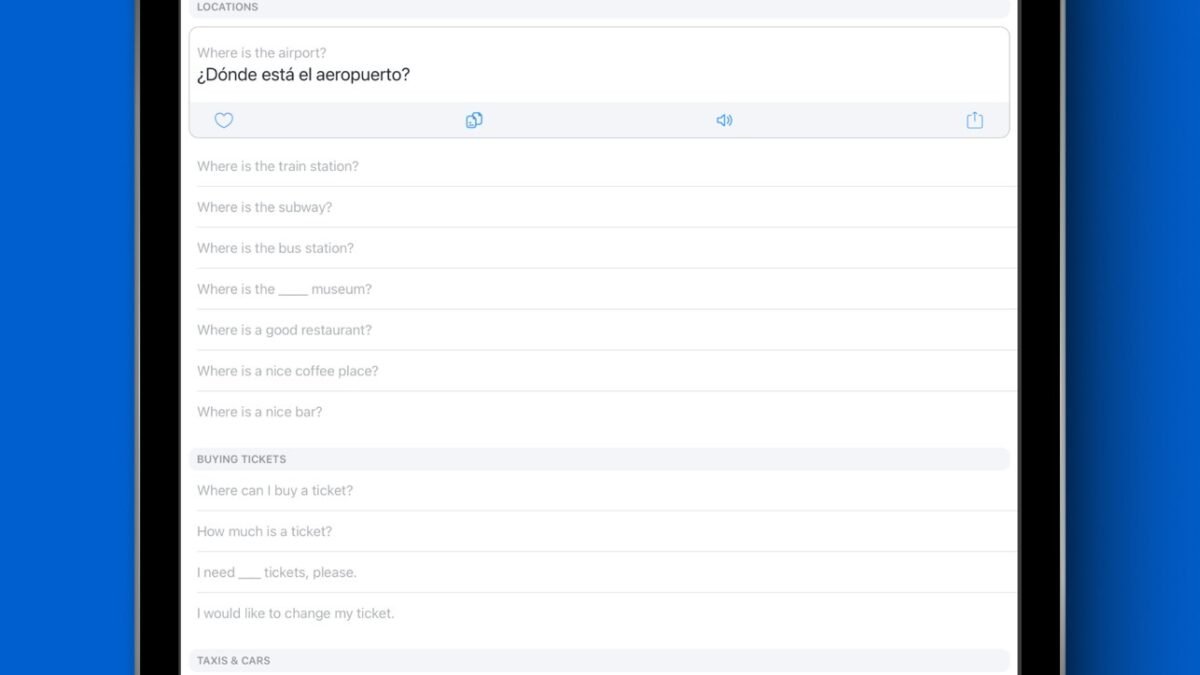
You will not become fluent before a holiday, and fluency was never the point. A handful of courteous words changes how strangers respond to you, softening transactions and opening conversations that translation screens rarely start. Pronunciation matters more than a long vocabulary, and confidence grows quickly with daily repetition. Even imperfect attempts signal respect for the people whose home you are visiting.
Tools and Reference Cards to Prepare Before You Study
Keep the toolkit deliberately small. A pocket notebook, a set of cards you can shuffle, a phone for listening to spoken examples, and one reliable reference for checking meanings cover nearly everything a short trip requires. Large collections of apps and books create an illusion of progress while spreading attention thin, and the traveller who uses two tools daily will outlearn the traveller who owns ten and opens none.
Prepare for the moments when screens fail and signals vanish. Anyone planning around language barriers abroad and rural communication learns quickly that away from large cities and tourist centres, translation help grows scarce and gestures carry more weight. Paper cards survive dead batteries, bright sunlight, and dropped connections, and a handwritten phrase can be shown silently in a quiet place where speaking aloud feels awkward or even rude.
Build the cards around situations rather than grammar chapters. One card for greetings, one for food, one for directions, one for money, and one for help gives you a set that mirrors the day you will actually live. Write the phrase large, add a rough pronunciation hint in your own spelling, and keep the translation beneath it. Cards written by your own hand are remembered better than printed lists, because the writing itself is the first round of study.
Decide the size of the ambition now and hold to it. A small set of phrases spoken clearly and warmly serves a traveller better than a large set spoken hesitantly and wrong. Aim to greet, thank, order, ask the way, handle simple money exchanges, and ask for help, and let everything else be bonus. That limited promise is achievable for almost anyone, and keeping it builds the confidence that carries learning further once the trip begins.
Step One: Master Greetings, Courtesy, and Simple Replies
Begin where every encounter begins. Hello, good morning, goodbye, please, thank you, excuse me, and sorry form the frame around all other exchanges, and locals judge effort by these words first. Learn the versions used at different times of day where the language makes that distinction, and practise pairing each greeting with a smile and unhurried delivery, since courtesy travels through manner as much as through vocabulary.
Many languages use formal and informal forms of address, so the appropriate version of a greeting or thank you can depend on age, status, and setting. Learn the formal version first wherever a choice exists, because politeness aimed slightly too high rarely offends, while familiarity aimed too early sometimes does. Shopkeepers, elders, and officials deserve the careful form, and younger people will often wave you toward the relaxed form themselves once they see you trying.
Add simple replies early, because conversations stall when you can open but cannot answer. Yes, no, I understand, I do not understand, and a gentle way of asking someone to repeat themselves keep an exchange alive instead of ending it in embarrassment. A phrase asking the other person to speak slowly buys you listening time, and a phrase admitting that you are learning the language invites patience from almost everyone you will meet.
Rehearse these courtesies until they leave your mouth without thought. They are the phrases you will use most often by far, dozens of times across a single day of travel, and fluency in twenty small words feels surprisingly like fluency in general. Drill them while walking, cooking, or waiting for a kettle, in short bursts spread through the day, because scattered repetition lodges words deeper than one long session of strained concentration.
Step Two: Add Food, Directions, Money, and Help Phrases
Food phrases earn their place at every meal. Learn to ask for a table, water, the bill, and dishes without ingredients you cannot eat, and to say that a meal was delicious, which pleases cooks everywhere. Numbers for prices and quantities belong here too, practised as sounds rather than written figures, so that a spoken price at a market stall lands in your ear as meaning instead of noise.
Directions language prevents the most stressful moments of travel. Left, right, straight ahead, near, far, and the names of places you must reach, such as the station, the hotel, and the pharmacy, form a practical cluster. Pair them with the question form for where something is, and practise pointing while you ask, because gesture plus a place name often succeeds even when the rest of the sentence collapses on the way out.
A printed collection still has a role alongside your cards. Reference works describe a phrase book as a collection of useful phrases in a foreign language, usually with translations, intended as an aid for travellers or learners, and the phrase book collections for travellers overview shows how those little books organise language by situation. Carry one for the situations you failed to predict, and treat it as a backup to memory rather than a substitute, because a phrase found slowly still beats no phrase at all.
Help phrases close the set, and they deserve calm rehearsal rather than hopeful improvisation. Learn to say that you are lost, that you need a doctor, that something hurts, and that you would like someone to call for assistance. Practise them at home in a steady voice, because phrases learned calmly surface more reliably under stress. Write the address of where you are staying on a card as well, so any driver or passerby can read it directly.
Step Three: Practise Sounds Aloud Until They Feel Natural
Pronunciation decides whether your careful phrases actually work. Listening to native speakers and repeating sounds aloud is a widely used method for improving pronunciation before travel, and it outperforms silent reading by a wide margin, because a word seen and a word said are stored differently in the mind. Find spoken examples of your exact phrase list, play them slowly, and copy the rhythm and melody of the sentence, not only the individual sounds inside it.
Record yourself and listen back without mercy. The gap between how you sound in your own head and how you sound on a recording is where improvement lives. Compare one phrase at a time, adjust the stress or the vowel that drifts, and record again. Short daily rounds of this honest listening do more for clarity than hours of new vocabulary, and locals will reward the effort by understanding you the first time instead of the third.
Practise at conversational speed once accuracy settles. Travel phrases are spoken to busy people in noisy streets, markets, and stations, so they must survive real conditions rather than quiet rooms. Say them while walking, say them slightly louder, say them to a patient friend who answers back. Building the phrases into your body through movement and repetition turns them into reflexes, and reflexes are what remain available when nerves arrive at a foreign ticket desk.
Accept approximation with good humour. Some sounds may never sit comfortably in your mouth before the trip, and a near version delivered warmly usually succeeds where a perfect version delivered in a whisper fails. Volume, eye contact, and patience carry meaning alongside the words themselves. The goal is to be understood and welcomed, not to pass an examination, and every traveller who remembers that ordering speaks more bravely and learns faster as a result.
Step Four: Keep Learning Gently Once You Arrive
Arrival turns the whole place into a classroom. Use your phrases from the first hour, on the first driver, shopkeeper, and neighbour you meet, because real replies teach faster than any recording. People will correct you kindly, slow down, and offer the local version of what you attempted, and each small exchange adds a word or smooths a sound. Carry the notebook, and write new phrases down the moment they are given to you.
Understand that what you are doing has a name and a shape. Scholars describe second language acquisition as the process by which people learn a language in addition to their native language or languages, and the second language acquisition process overview explains how that learning unfolds through exposure and use. Knowing that confusion and plateaus are normal stages of the process protects your morale, since a hard day with the language means the learning is working, not failing.
Keep the daily habit small enough to survive a holiday. Review the cards over breakfast, add one or two phrases the day seems to demand, and retire phrases you no longer need. Watch how people greet each other, how they thank, and how they soften requests, and copy the pattern rather than the dictionary where the two differ. Language lives in habits of politeness as much as in words, and travellers who copy habits sound natural sooner.
Leave with the learning intact and growing. Thank people who helped you, in their own words, before you go, and keep the cards somewhere they will be found before the next journey rather than buried in a drawer. Even a short trip leaves most travellers with sounds, courtesies, and small exchanges that stay for life, and the next visit, to the same place or another with a kindred tongue, begins from warmth instead of zero.
None of this asks for talent in the way language learning is often advertised. It asks for a small list chosen with care, sounds practised out loud until they feel ordinary, courtesy placed ahead of cleverness, and the patience to be corrected by strangers who are usually glad to help. Travellers who accept that bargain find doors opening in markets, stations, and village shops that no screen ever quite unlocks, and they carry home a skill that keeps warming long after the bags are unpacked and the photographs have faded from the phone.


One comment