Boots promise polish and practicality in a single purchase, yet small mismatches in hem length, leather finish or sole weight can tilt an otherwise tidy outfit toward sloppy, which is why pairing them well is mostly geometry and formality rather than taste.
Which Boot Styles Suit Smarter Outfits?
For smarter outfits, start with shape. A boot that sits close to the ankle, with a clean toe and a sole that does not shout for attention, will sit happily under tailored trousers and most tidy chinos. A chunky sole, a tall shaft, or heavy outdoor styling pulls the eye downward and makes the rest of the outfit fight for balance. Neither kind is better in itself. They simply belong to different levels of formality, and mixing levels without noticing is where most pairings go wrong.
Think of formality as a ladder you climb one rung at a time. Polished leather with a slim profile sits near the top. Soft suede and a rounder toe sit lower. Thick treads and rugged details sit lower still, next to workwear and weekend denim. A smart outfit rarely survives a boot from the bottom rung, while a relaxed outfit can look overdressed with a boot from the very top. Matching rungs, or staying within one step of them, keeps the whole look calm.
Presentation choices like this are rarely about clothes alone. Independent workers who meet clients in person make similar judgements about tone and timing in other parts of the job, and learning about firing a bad client politely belongs to that same wider skill of staying professional without becoming stiff. Boots work the same way. They should support the impression you intend, quietly, rather than announcing themselves as the main event.
Colour helps the ladder make sense. Dark brown and black remain the most flexible shades for smarter wear, because they echo the colours already common in tailored clothing. If you own only one smart pair, choose the pair that disappears gracefully under trousers rather than the pair that demands to be noticed.
How Should Trousers and Jeans Meet the Boot?
The meeting point between hem and boot decides whether a pairing looks planned or accidental. With tailored trousers, the hem should rest lightly across the boot top or end just above it, without pooling in folds. Too much cloth bunched at the ankle reads as careless, however fine the trousers are. Too short a hem, showing a wide gap of sock or skin with every step, reads as a mistake in the other direction unless the cropped look is clearly deliberate and the rest of the outfit agrees.
Ankle boots forgive more than taller styles because there is less shaft for cloth to fight with. A slim trouser leg can fall straight over a close fitting boot and keep a clean line from knee to toe. A wider leg needs more care. It can swallow a slim boot entirely, leaving only the toe visible and the proportions puzzled. In that case a slightly firmer boot shape, or a hem wide enough to fall honestly over the shaft, restores the balance.
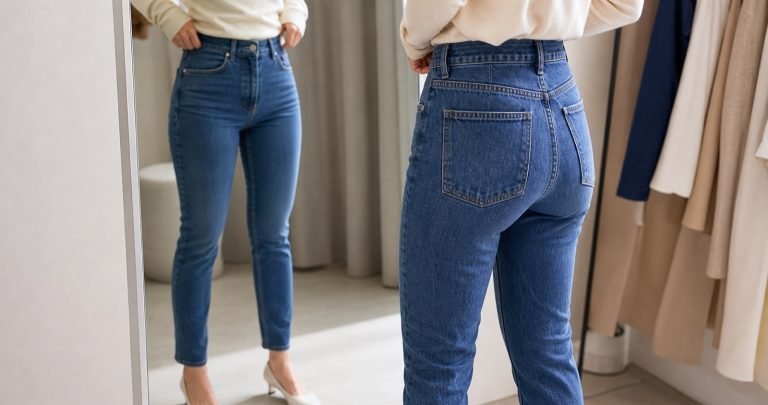
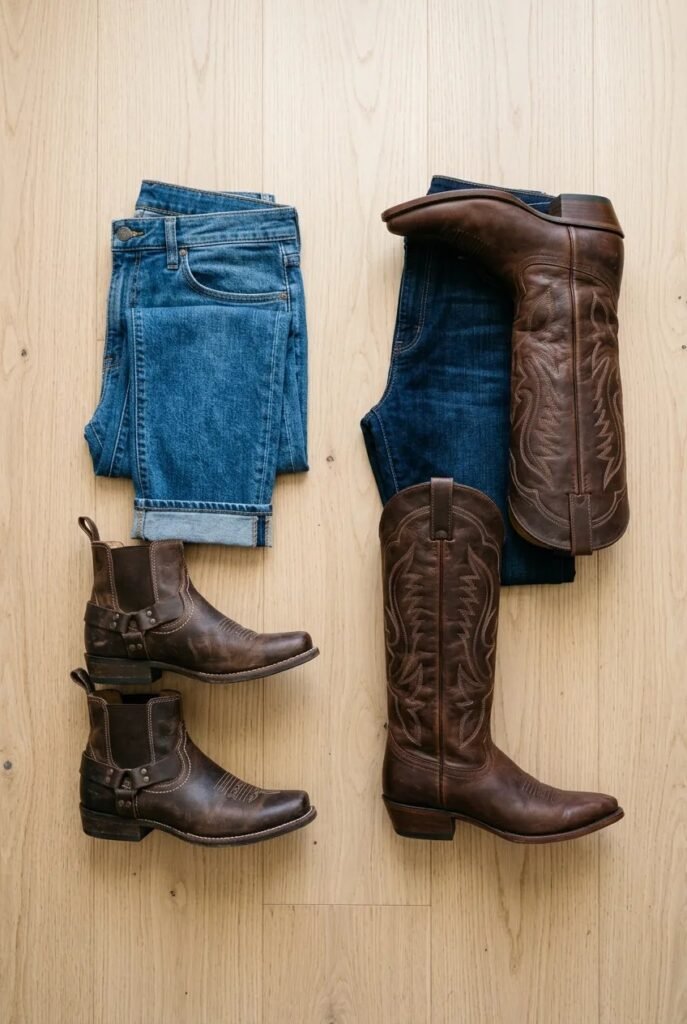
Jeans follow the same geometry with more freedom. Dark denim with a straight or gently tapered leg sits well over most ankle boots, the hem resting on the boot or stacking in one soft fold. Very skinny legs can look strained when they are forced over a bulky shaft, while very wide legs can hide the boot and waste its shape. Cuffs are a choice rather than a rule. A single neat turn can show the boot and shorten the visual leg a little, which suits relaxed outfits better than formal ones.
Whatever the cloth, check the pairing while standing and while seated, since trousers ride up when you sit. If the hem catches on the boot with every stride, the lengths are arguing, and one of them needs adjusting before the outfit leaves the house.
When Do Chelsea Boots Earn Their Place?
Chelsea boots earn their place when an outfit needs polish without fuss. They have no laces to loosen the line, no buckles competing for attention, and a smooth front that slides under a trouser hem without catching. That plainness is their strength. With a suit, with tailored trousers and a neat knit, or with dark denim and a tidy coat, they add height and finish while asking for almost nothing in return.
Reference material in the Wikipedia article on the Chelsea boot describes a close fitting ankle boot with elastic side panels, a profile sleek enough to sit beneath tailored trousers. Those elastic panels are more than a detail. They are what let the boot pull on quickly, hug the ankle closely, and keep the smooth outline that smarter outfits rely on. A Chelsea boot in polished leather sits near the top of the formality ladder for boots, while the same shape in suede steps down a rung and suits softer, less formal clothing.
Fit matters more here than with laced styles, because there is nothing to adjust. The boot should feel snug at the ankle without pinching, and the foot should not slide forward with each step. A loose Chelsea boot looks sloppy quickly, since the clean line depends on that close fit. Colour and finish should follow the outfit. A high shine can feel sharp with formal tailoring but harsh with relaxed cloth, while a softer finish bridges the gap between smart trousers and smart casual wear with less risk.
Reach for Chelsea boots when you want one decision to settle the footwear for the whole day. They move from office to evening without a costume change, provided the clothes stay on the smarter side of your wardrobe. Used in their natural territory, they are the closest thing boots offer to a safe answer.
What Makes Chukka Boots So Flexible?
Chukka boots sit in the useful middle. They are tidy enough for chinos, knitwear, and a relaxed jacket, yet easy enough for dark denim and a plain shirt. That middle position is what makes them flexible. They rarely look wrong, because they rarely claim to be either formal or rugged. For someone who dresses across that middle ground most days, a chukka can carry more outfits than any other boot in the cupboard.
The Wikipedia entry on the chukka boot covers a softer ankle boot with few eyelets, generally made in suede or leather, that reads more relaxed than its sleeker cousins. The short lacing and open construction give it that softer character. Suede versions lean furthest toward casual wear and pair naturally with textured cloth, cords, and denim. Smooth leather versions climb a little higher and can manage smarter trousers, though they still stop short of true formal dress.
That flexibility has limits worth respecting. A chukka under a formal suit usually undercuts the suit, because the boot reads relaxed while the tailoring reads precise. Very pale suede can also struggle in wet weather and shows marks easily, so it suits dry days and lighter duties. Within those limits, though, the chukka is forgiving. It tolerates a range of hem widths, works with or without a turned cuff, and asks little from everything else being worn beyond a shared sense of ease.
If the Chelsea boot is the safe answer for smart days, the chukka is the safe answer for everything just below them. One pair for the top of the ladder and one for the middle covers most occasions without crowding the cupboard.
Which Combinations Should You Avoid at Work?
Workplaces vary, and no list can replace reading your own office honestly. Still, some combinations fail almost everywhere that a tidy standard is expected. Heavy outdoor boots with visible treads under fine tailored trousers are the clearest example. The trousers promise care and the boots promise mud, and the eye believes both at once, which leaves the outfit looking undecided rather than relaxed.
Very distressed denim with smart boots creates the same clash in reverse. The boots try to lift the outfit while the denim pulls it back down, and neither wins. Pale, scuffed suede in a formal setting can do similar damage, not because suede is wrong, but because worn and dirty footwear reads as neglect in rooms where people notice shoes. Whatever style you choose for work, clean and cared for matters as much as the style itself. A polished modest boot will beat a neglected fine one in most professional settings.
Hem failures belong on the avoid list too. Trousers pooling over boots, hems caught half inside the shaft, or jeans stuffed untidily into tall boots all signal that the outfit was assembled without a mirror check. None of these takes long to fix. A hem at the right length, a straight fall of cloth, and boots that sit cleanly under or over the leg as intended will rescue pairings that looked hopeless at first glance.
Finally, avoid letting boots carry a message the rest of the outfit does not support. Statement footwear under an otherwise quiet work outfit pulls focus to your feet in every meeting. These are widely recognised conventions rather than orders from any particular employer, so treat them as a starting point and adjust for the culture you actually work in.
How Do You Match Leather Across an Outfit?
Leather matching is simpler than it is often made to sound. The old advice asks that boots, belt, and any watch strap share a colour family, and that advice still serves most outfits well. Black with black is the easiest pairing. Browns need a little more care, because a warm reddish brown beside a cool dark brown can look like a near miss, and near misses read worse than honest contrasts.
Finish matters alongside colour. A highly polished boot beside a rough, matte belt can look mismatched even when the shades agree. Aim for finishes that live in the same mood, either both sleek or both soft. Suede asks for the same courtesy. A suede boot with a suede or woven belt sits comfortably, while a mirror shine belt can fight it. Metals are more forgiving. A belt buckle does not need to match every other metal detail, despite what strict guides suggest, as long as nothing clashes loudly.
When in doubt, let the boots lead. Choose the boot the outfit needs first, then pick the belt that sits closest to it in colour and finish. If no belt comes close, a plain dark belt that keeps a low profile is safer than a bold one that introduces a new colour entirely.
Boots reward this kind of quiet attention because they anchor an outfit. They are low, heavy, and close to the ground, yet they set the formality for everything above them. Get the rung right, let the hem meet the shaft cleanly, keep work combinations honest, and bring the leathers into the same family, and the promise from the shop, polish and practicality together, finally holds true in the mirror.