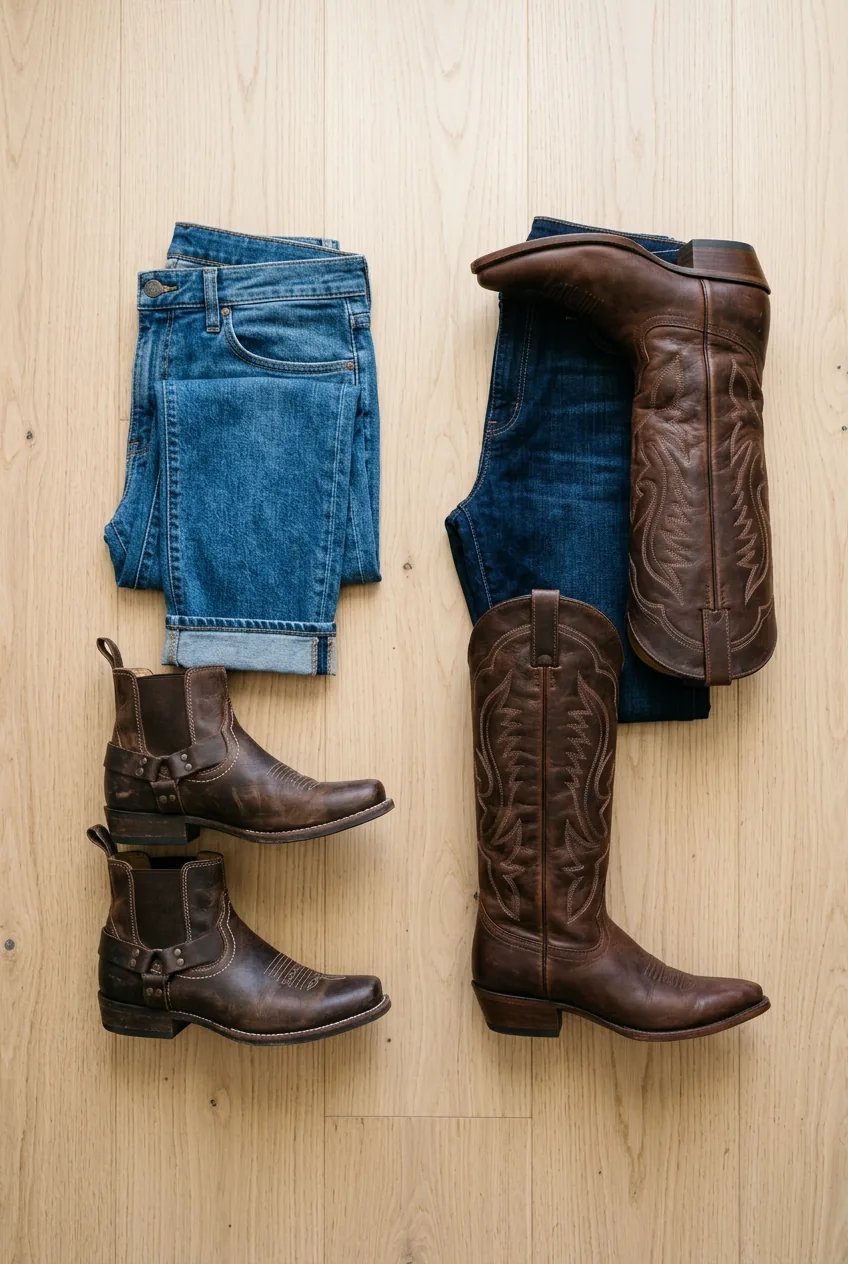
Denim shopping defeats confident people daily, not because bodies are inconsistent but because the number stitched inside the waistband answers to no shared standard, leaving the same legs labelled differently by every brand competing for attention on the rail.
Stop Trusting the Label Size Alone
The most common mistake happens before a leg even enters a fitting room. A shopper walks in holding a single number in mind, searches only for that number, and treats anything else as wrong by definition. That habit feels efficient, but it rests on a false promise. The label was never designed as a universal measurement. It is a shorthand each brand creates for its own pattern, its own fit model, and its own idea of who its customer is. Two pairs carrying the same label can be cut with different rises, different seat shaping, and different leg widths, and still both claim to be the same size.
Once that is understood, the whole errand changes tone. Instead of asking whether your body still matches an old number, you start asking whether this particular pair matches your body today. That shift removes a surprising amount of frustration. Bodies change slowly through the year. Weight moves, muscles change with work and walking, and comfort preferences shift too. A rigid loyalty to a past label turns those normal changes into a personal failure in harsh fitting room light. Judging fit honestly in good light at home helps, and even practical tasks at home reward clear sight over guesswork, much like learning about the biggest mistakes when installing a light fixture shows how small assumptions can mislead an otherwise simple job.
A better habit is to treat the label as a starting neighbourhood rather than an address. Pull the size you expect, then also pull the neighbours on either side when the shop allows it. Try them in order, without peeking at the tag first if you can manage it. Let the waistband, the seat, and the feel through the thigh speak before the number does. Many people discover that the pair they would have rejected on sight is the pair that actually sits well. The label can guide you to the right rail. It should never have the final word.
Measure Your Body Before Browsing
Measurements turn a vague hope into a portable fact. You need only a soft tape, a flat surface, and a few calm minutes at home. Start with the natural waist, which for jeans usually means the place where the waistband will actually sit, not the narrowest point of the torso unless the style is truly high in the rise. Wrap the tape level, keep it snug without digging in, and note the result in words or in a simple note on your phone. Then measure the hips at the fullest point, the inseam from the inner leg to where the hem should land, and, if you can, the thigh where it is fullest.
Repeat each measurement once, standing relaxed rather than holding your breath or pulling the tape tight to flatter the result. Honest numbers are the ones that help in the shop. If the two tries differ, take the reading that came from the more natural stance. Write the set down together, with the date, because a single loose figure floating in memory is easy to misremember.
For background on the garment itself, the Wikipedia overview of jeans traces denim trousers from sturdy workwear roots to a wardrobe staple now produced by countless makers, each cutting to its own pattern. That history explains the present mess rather well. Jeans were never born inside a single shared sizing system. They grew up across workplaces, regions, and fashion houses, and each maker kept its own habits. Your measurements are the one constant you carry from brand to brand, which is why they matter more than any printed label.
Measure over thin clothing, keep the tape flat rather than twisted, and keep any usual belt or boots in mind for length. None of this needs tailoring precision. It needs consistency, so the same method gives a fair comparison every time.
Read Each Brand Size Chart Carefully
Once your own numbers are settled, the brand chart becomes useful instead of decorative. Most brands publish a chart that matches their labels to waist, hip, and inseam measurements. Read across the row slowly. Check which body point the brand means by waist, because some charts use the natural waist while others use the lower point where a low rise will sit. A mismatch there explains many mysterious failures. The pair was not badly made. It was simply measured from a different starting point than your own tape used at home.
This is also the place where the drift of labels over time belongs. The Wikipedia article on vanity sizing documents how labels have shifted over the years, with larger garments gradually carrying smaller numbers. Read as a general tendency rather than an accusation against any one maker, it explains why an older pair in your drawer cannot be trusted as a guide to a new purchase. The old label belongs to an older moment in that quiet drift. Your tape belongs to today.
Pay attention to the details charts often tuck away. Some give a garment measurement, taken flat from the actual jeans, while others give a body measurement, meaning the size of the person the jeans are meant to fit. Those two kinds of figures are not interchangeable. A garment waist will usually read a little different from the body waist it suits, because fabric needs room to move, sit, and bend. If a chart does not say which kind it uses, treat its figures as a rough guide and lean harder on trying the pair on.
Fabric content belongs in this reading too. A rigid cloth with no stretch will hold the morning measurement all day, while a blend with stretch will ease as you move. Two pairs with identical chart figures can behave quite differently by evening, so read the chart and the fabric line together.
Judge Fit at the Waist and Seat
In the fitting room, judge the waist first. A good waistband sits close without digging, stays in place when you sit, and does not need a belt to perform its basic job. You should be able to slip a finger or two inside comfortably, but a wide gap at the back usually means the rise or the cut is wrong for your shape, even if the front looks tidy. Walk a few steps. Sit down fully. Bend as if tying a shoe. Jeans live most of their life in motion, so a standing pose in front of a mirror tells only part of the story.
Then judge the seat. Fabric that pulls hard across the back, with pockets straining outward, signals strain that will only grow more uncomfortable. Fabric that sags and folds in loose pouches signals the opposite problem, and that looseness rarely improves with wear. The seat should follow your shape smoothly, with the pockets lying flat and the middle seam sitting where it should without tugging to one side. Turn sideways and check the line from waist to hem as well. A good cut falls cleanly rather than clinging in one place and swinging in another.
Length comes last, because length is the easiest fault to fix. A tailor can shorten a hem neatly, but no simple alteration can rebuild a waist that twists or a seat that fights you. Put comfort at the waist and seat first, the leg shape second, and the exact hem third.
Allow for Stretch and Shrinkage Behaviour
Denim changes after you buy it, and allowing for that change is part of buying well. Stretch blends tend to ease with wear, especially at the waist and across the seat, where body heat and movement work on the fibres through the day. A pair that feels daring in the shop may feel right by the second wear, while a pair that feels perfect at first try may feel loose by the end of the week. If you are between sizes in a stretchy cloth, the smaller pair often settles better, provided the first fit is snug rather than painful. Pain is information. Snugness that still lets you sit, breathe, and climb stairs is a different matter.
Rigid denim behaves in the opposite spirit. It starts firm, softens slowly, and moulds itself to your habits over time. The waist may give a little, but it will not transform. With rigid cloth, buy the fit you need on the day, not the fit you hope the cloth will invent later. Check the care guidance before washing, because washing and drying can tighten a pair back up, sometimes enough to surprise you after a warm wash. Many wearers prefer a cool wash and air drying to keep the fit they settled into, turning the jeans inside out to protect the colour while they are at it.
Shrinkage matters most in length. An inseam that sits exactly right before the first wash may sit a touch shorter after it. If you are having a pair shortened, wash them once before the alteration, so the tailor works with the settled length. If a new pair feels borderline short, wash with care and avoid strong heat.
Keep Personal Notes for Future Orders
The final habit is the quietest and the most valuable. Keep a simple record of what worked. Note the brand, the style name, the label size you actually bought, and your measurements at the time. Add a plain line about fit: snug at the waist, roomy in the thigh, perfect length after washing, or whatever honest summary fits. Add the fabric blend if you have it, because that explains much of the behaviour you observed. Over time, this little archive becomes a personal size chart far more trustworthy than any general guide, because it is built from your body and your wardrobe alone.
Notes rescue online shopping in particular. Without a fitting room, your record is the closest thing to trying on. If a brand changes a style or adjusts a cut, your notes tell you what the old version did, so a difference stands out quickly. If you gain or lose a little weight, remeasure and add a fresh line rather than overwriting the old one.
Keep the record somewhere you will actually find it, whether that is a notes app, a card in the wardrobe, or a page at the back of a diary. Update it after each purchase, while the fitting room memory is still fresh. Denim shopping will probably never become perfectly predictable, because brands will go on cutting to their own patterns and labels will go on meaning different things in different shops. But a shopper armed with honest measurements, a read chart, a judged waist and seat, and a small book of hard won notes is no longer guessing. That shopper is comparing, and comparison is what turns a defeating errand into a manageable one.