Whole home decluttering collapses when every room becomes one enormous weekend project with no visible finish line. Small zones, short sessions and immediate exits for outgoing items keep energy intact and turn progress into something you can actually see each day.
Short Sessions and Zones Smaller Than Rooms
Treat the home as a map of small territories rather than a handful of huge rooms. A drawer is a territory. So is one shelf, the top of one cabinet, the floor of one wardrobe corner, or the basket that lives beside the sofa. Choose a territory small enough to finish inside a single sitting, set a gentle time boundary in words you say out loud, and stop when the boundary arrives even if the neighbouring shelf is begging for attention. Finishing is the fuel here. A completed drawer, photographed in your mind as you close it, does more for tomorrow’s motivation than a heroic afternoon that leaves three rooms looking ransacked.
Every session runs on the same simple sorting rhythm. Touch an item once and give it a destination straight away: stays in this zone, moves to the room where it truly belongs, leaves the house as a donation, or goes out as rubbish and recycling. Keep a bag for departures open beside you from the start, because decisions decay quickly when outgoing things linger in a hallway pile awaiting a second judgement. When the bag fills, carry it to the door, the car or the donation point the same day. Cleared space also changes what a home can be used for. Readers who have dreamed of earning a little from home often discover that one emptied corner is all a modest venture needs, and anyone wondering how to start a pet sitting business from a tidy base will find that calm, washable, uncluttered rooms are part of the preparation. Rest is part of the system, not a reward for finishing it. Tired hands make sentimental mistakes and ruthless errors in equal measure, so short sessions with honest pauses protect both your belongings and your mood.
Entryway and Bathroom for Early Momentum
Start where wins arrive quickly. The entryway greets you daily, so clearing it pays you back every single time you come home. Gather the shoes into pairs and keep only the current season within reach, relocating the rest or passing them on. Hooks and a small surface should hold keys, post and one bag, not a museum of every tote you own. Coats follow the same rule as shoes: everyday outerwear by the door, occasional pieces stored elsewhere. When the entrance stands clear, the whole home feels less chaotic before you have touched another room, and that early evidence makes the next session easier to begin.
The bathroom rewards effort just as quickly because its categories are small and mostly unsentimental. Work through medicines, cosmetics and cleaning supplies shelf by shelf, checking dates and discarding anything dried out, separated or long forgotten at the back. Duplicates can merge. Half used bottles of the same product become one bottle, and hotel style miniatures either enter active use or leave. Keep daily essentials grouped where wet hands can reach them, and give everything else a closed home so the basin surround stays bare. A clear bathroom counter is a small luxury you will use morning and night, and it quietly proves the method works before you face harder rooms.
Before the harder rooms begin, prepare the exits properly. Place one donation bag, one rubbish bag and one box for items belonging elsewhere where you can reach them without crossing the house. Note the nearest charity drop point and its opening times, and learn which day household recycling leaves your street, so finished sessions connect smoothly to real departures. A session that ends with full bags still sitting in the corner teaches the eye to ignore them, and within a week they become furniture. The discipline of carrying things out promptly sounds almost too small to matter, yet it is the hinge the whole method swings on, because visible departure is what convinces everyone in the home that the work is real and worth joining.
Kitchen Progress in Careful Stages
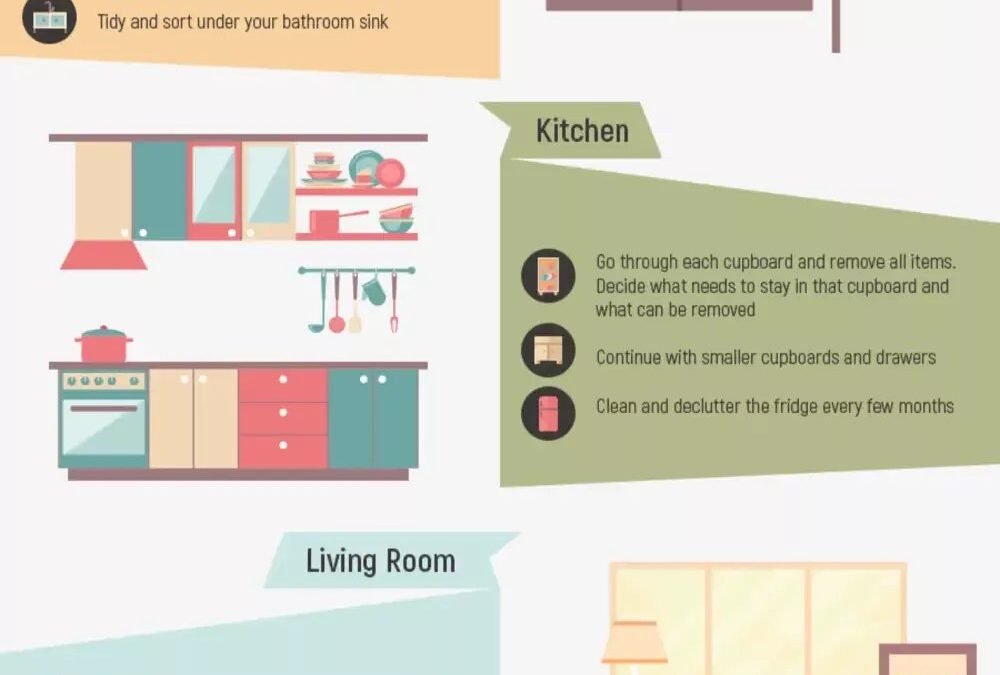
Kitchens punish rushed decluttering, because emptying every cupboard at once buries the cook in decisions and leaves nowhere to prepare food. Move in stages instead, one cupboard or one drawer per session, returning each stage to working order before the next begins. Begin with the obvious surplus: chipped mugs beyond household needs, duplicate utensils that jam the drawer, novelty gadgets bought for a single recipe and untouched since. Food storage containers deserve their own session. Match every tub with its lid, retire the warped and the orphaned, and keep a modest set that stacks neatly rather than a tumbling archive of every size ever acquired.
Pantry shelves come next, arranged so the oldest tins and packets sit at the front where they will actually be used. Group ingredients by the meals they serve rather than by the shape of their packaging, and a shopping list starts writing itself whenever a group runs thin. Gadgets that earn deep cupboard space should be heavy, awkward and genuinely used: the roasting tin, the preserving pan, the mixer that appears for celebrations. Lightweight items used daily belong within easy reach of the worktop. By the end of the kitchen stages, every drawer should open without a struggle and every surface should return to clear within minutes after cooking, which is the practical test that the room has truly changed.
Living Spaces Where Surfaces Tell the Truth
Living rooms hide clutter in plain sight because so much of it looks decorative. Count the objects resting on each table, shelf and mantel, then ask what each one is doing there. Remotes, coasters, current reading and one or two loved ornaments can justify themselves easily. Everything else is usually a traveller that stopped moving: post awaiting filing, toys far from their storage, craft supplies mid project with no session planned. Walk each traveller home, and notice how the room settles once horizontal surfaces hold only things connected to sitting, reading, talking and resting.
Sentiment knocks loudest in this room, so borrow a kinder sorting question. For readers drawn to a named philosophy, Wikipedia’s article on Marie Kondō sketches her familiar test of whether an object sparks joy, alongside her insistence that whatever stays deserves a settled home of its own. You need not adopt her whole approach to benefit from those twin ideas while sorting a bookshelf or a display cabinet. Keep the photograph frames you glance at with pleasure, and release the ones kept from obligation. Media collections shrink gracefully when you keep favourites in the room and box the rest for a trial period elsewhere. Seating should stay easy to reach and easy to leave, with throws folded into one basket rather than draped across every cushion. A living room that can be tidied in minutes invites people to actually live in it, which was always the point of clearing it.
Bedrooms, Wardrobes and Stored Clutter Last
Save bedrooms for later in the sequence, once your decision making has warmed up on easier territory. Work in rings, starting with what you see from the bed and moving outward to drawers and rails. Bedside drawers collect astonishing archaeology: old chargers, ticket stubs, lip balms, notebooks begun and abandoned. Empty one drawer fully, clean it, and return only what serves the hour before sleep and the minutes after waking. The wardrobe then gets its own honest session. Clothes that fit your present life and present body stay within reach. Pieces waiting for a different season move to the far end, and pieces waiting for a different life altogether can go to someone living that life now.
Stored clutter, the boxes in spare rooms and cupboards and lofts, comes last because it is the slowest and heaviest category. Labelled boxes transform the work, so sort storage by theme rather than by the year it was packed away. Decorations together, documents together, childhood keepsakes together. When a theme gathers in one place, duplicates reveal themselves and weak items become obvious beside strong ones. Keep storage containers uniform where you can, stack them with the heaviest at the bottom, and leave a written note inside the top box listing what the stack holds. Future you, searching before a holiday or a family event, will be grateful for a system that gives answers instead of mysteries. Paperwork deserves one firm rule inside this stage as well. Manuals for appliances you no longer own, warranties for discarded tools and instruction leaflets for toys long outgrown can all leave in a single satisfying bundle, while documents worth keeping gather in one labelled folder per person. Sentimental paper that surfaces here, such as school reports or old letters, should move to the keepsake sorting you plan separately rather than being judged tired at the end of a long day.
Keeping Cleared Ground From Filling Again
Cleared space exerts a strange pull. An empty shelf seems to request objects, and a spare drawer invites overflow from everywhere else. Resist by giving each cleared zone a declared job and letting that job refuse newcomers. The drawer by the bed serves sleep. The entrance surface serves arrivals and departures. When an item has no zone willing to claim it, the item itself is the problem, and it can leave with the next donation bag rather than squatting until it looks established. A simple household rhythm helps: whatever enters should displace something of similar size, so the total volume of belongings holds steady without anyone policing it.
Some households borrow a little philosophy to hold the line. Wikipedia’s entry on minimalism frames that outlook as a life arranged around fewer possessions, and you can take the spirit of it without signing up for bare walls or a counted wardrobe. Borrow only the habit of asking whether an object earns the space it occupies and the cleaning it demands. Monthly, walk the home with a bag and gather the drift: the freebie, the duplicate, the gadget already superseded. Quarterly, revisit one finished zone and repeat its session at a gentler depth. Decluttering done this way stops being a project with an ending and becomes ordinary housekeeping, light enough to sustain, and your rooms stay the way your short sessions made them.