
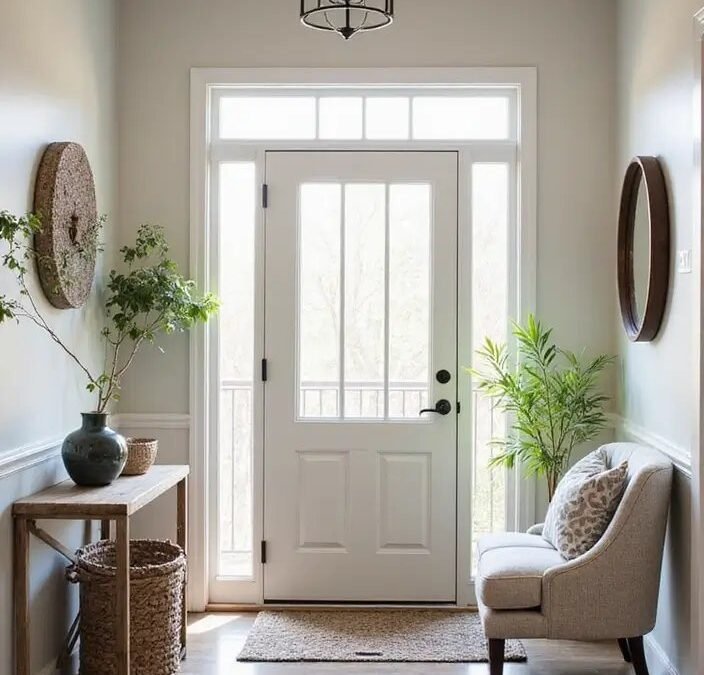
Guests form an impression before reaching the living room, and residents feel it every single arrival home. A doorway buried under scattered footwear, unopened post, and searching hands hunting lost keys tells a story nobody chose. Because this patch of floor is tiny, small corrections carry unusual weight: contained storage, warmer light, a mirror, somewhere to perch, and one pleasant scent can transform mood within a single afternoon of unhurried work.
Treat the entry as a working room with its own brief rather than a corridor that happens to hold belongings. It must absorb arrivals and departures smoothly, hide the untidy machinery of outdoor life, and offer one calm visual moment before the rest of the home begins. Every choice below serves one of those three duties, and anything serving none of them probably belongs in another room entirely. Smallness helps: with so little floor and wall to consider, each improvement shows at once.
A Landing Zone That Swallows Daily Clutter
Clutter at a doorway is rarely a character flaw; it is usually a missing destination. Keys land on the nearest surface because no deliberate surface was offered, post piles up because no tray or slot claims it, and bags colonise the floor because hooks and shelves were never assigned to them. Begin by standing at the door with your own arms full, exactly as you arrive each evening, and notice where everything in your hands naturally wants to go. Build the landing zone at that precise spot rather than where tidiness theory says it ought to be.
A narrow tray or shallow bowl beside the handle ends the daily hunt for keys, because habit forms fastest when the drop point sits directly in the path of entry. Post deserves its own vertical holder or slim basket, emptied on a chosen day each week before it becomes archaeology. Gloves, sunglasses, dog leads, and the other small travellers of daily life gather well in one lidded box or a row of identical baskets, each category visible at a glance and returned without thought. The governing rule is containment with lids and edges: piles spread, containers hold.
Footwear needs the firmest boundary of all, since shoes multiply silently and drift across whole floors when left unbounded. A boot tray with a raised lip catches grit and rain where it falls, while a low rack or the bottom shelf of a console keeps the current rotation off the walking line. Reserve the doorway for pairs in active use this week and move the rest to bedroom storage, because an entry that stores every shoe a household owns will always look defeated, whatever containers you buy for it.
Warm Light and a Mirror Beside the Door
Most entries are lit by a single ceiling fitting chosen for brightness rather than welcome, and its downward glare flattens faces, deepens shadows in corners, and makes even a tidy space feel institutional. Warmth matters more than power here. A bulb with a soft warm tone, shaded so the light spreads sideways instead of stabbing downward, changes the emotional temperature of an arrival more than any ornament. Where wiring allows, a small lamp on a console or shelf brings light to face height, which flatters everyone and turns the act of coming home into something gentler.
A mirror earns its place beside the door twice over. Practically, it offers the final glance before leaving, catching the collar, scarf, or smudge that would otherwise travel all day unnoticed. Visually, it lends borrowed light and depth to the narrowest hallway, bouncing daylight from distant windows into corners that never receive their own. Hang it where it reflects something worth seeing, a plant, artwork, or the lit rooms beyond, rather than aiming it straight at a blank wall or the cluttered side of the space it is meant to improve.
Combine the two thoughtfully and the effect multiplies. A lamp near a mirror doubles its own glow, evening arrivals feel staged rather than stumbled into, and guests receive a lit, welcoming face of the home before they have taken off their coats. Motion activated bulbs or a timer plug can spare you the fumbling search for a switch with full hands, a tiny convenience that residents appreciate far out of proportion to its cost or complexity. Avoid cool bluish light entirely in this zone; it belongs in workshops and surgeries, not thresholds.
Seating Hooks and Storage Fitted to Tight Corners
Somewhere to sit transforms the daily choreography of shoes. A slim bench, a sturdy stool, or even a well chosen chair gives children, older relatives, and anyone wrestling with laces a stable base, and it doubles as a resting place for bags while doors are unlocked and coats come off. In very tight corners, a fold down seat or a bench narrow enough to hug the wall preserves the walking line while still offering support. Choose a seat with storage inside or beneath it and the same footprint quietly swallows hats, scarves, and spare umbrellas.
Vertical thinking rescues the walls. A row of hooks at shoulder height carries coats and bags without the floor footprint of a stand, and a second lower row, where children or seated dressing matter, keeps smaller garments reachable. Hooks reward honesty about habits: people genuinely use them, while cupboards with doors often stand ignored beside a pile on a chair. The same small space thinking travels indoors, since refreshing the main sitting room on a modest budget applies identical logic once visitors move beyond the doorway, and a thoughtful living room redesign on a modest budget starts from the same discipline of fitting storage to real corners rather than wishing for bigger rooms.
The reference idea behind many such arrangements is old and practical. Reference writing on the mudroom and its purpose describes a small room or entryway where outdoor clothing and footwear come off before the rest of the house, keeping dirt at the threshold. A city flat may hold no such room, yet the principle scales down gracefully: one bench, one tray, and a disciplined hook rail reproduce the mudroom’s function inside a single square of hallway, provided everything has an assigned home and returns there.
Scent Sight and Texture in the Opening Seconds
Arrival is a sensory event before it is a visual one. The nose registers a home instantly, so the entry deserves a deliberate, gentle fragrance rather than the accidental perfume of damp coats and yesterday’s cooking. A reed diffuser on a shelf, a small bowl of dried botanicals, or a naturally scented candle lit when guests are due all work, provided the scent stays faint. Strong fragrance in a small space oppresses rather than welcomes, and residents grow blind to their own choices quickly, so rotate scents with the seasons and ask an honest friend whether the doorway smells fresh or merely perfumed.
Sight wants one composed moment. Choose a single focal point at eye level where a guest’s attention can rest: a framed print, a small shelf with a plant and a beloved object, or a painted door interior in a colour that makes the whole threshold feel intentional. Everything else in view should be quiet by comparison. Visual calm also depends on hiding the administrative layer of life, the chargers, unopened letters, spare batteries, and tangled leads, behind doors, inside boxes, or under the bench, because the eye reads scattered small objects as disorder even when each one is technically stored.
Texture softens what storage cannot hide. A runner or mat underfoot adds colour and pattern while trapping the dirt and moisture carried in from the street, protecting better floors deeper in the home; choose one that washes easily and lies flat so it never becomes a trip hazard in the very place people balance on one foot. Natural materials help too: a wooden bench, a woven basket, or a woollen throw over the seat introduces warmth that painted surfaces alone rarely achieve, and a hardy plant contributes a living softness that tolerates low light better than most people expect.
Seasonal rotation keeps the whole arrangement honest through the year. Winter demands room for heavier coats, scarves, and wet boots, so summer hats and sandals should retire to storage elsewhere rather than competing for the same hooks and tray space. Spring invites the reverse exchange, plus a harder look at umbrellas, gardening shoes, and sports kit that creep toward the door as days lengthen. Households that swap the entry wardrobe twice a year rarely face the slow squeeze that makes a once tidy threshold feel cramped, because the space is only ever asked to hold what the current season genuinely requires.
A Nightly Reset Keeping the Welcome Intact
Entryways decay by accumulation rather than disaster, which means a brief nightly reset outperforms any monthly blitz. Two unhurried minutes after the evening settles is enough: shoes paired and returned to their tray or rack, coats lifted onto hooks, post gathered into its holder, keys resting in their bowl, and the floor given a fast sweep or a shake of the mat outside the door. Done daily, the task never grows teeth, and the morning departure begins from order instead of archaeology.
Households keep the ritual alive by making it shared and visible. The reset belongs to whoever passes through last, or rotates by day, and children who hang their own bags at their own low hook learn the geography of home early. A small weekly addition protects the system: wipe the mirror, empty the tray of stray receipts and coins, wash or beat the mat, and evict anything that has migrated to the doorway without earning a permanent place there. Objects auditioning for entry storage should have to justify the honour, because threshold space is the scarcest storage in the home.
Seen whole, the welcoming entry is simply interior thinking concentrated into the smallest room of the house. Broader encyclopaedia coverage of interior design and indoor comfort treats the planning of indoor spaces as a balance of function, comfort, and visual appeal, and the doorway tests all three at once in a few strides. Get the landing zone, light, seating, scent, and nightly habit working together and the threshold stops apologising for the home beyond it. Instead it introduces that home properly, to guests arriving impressed and to residents arriving, every single day, relieved.


