
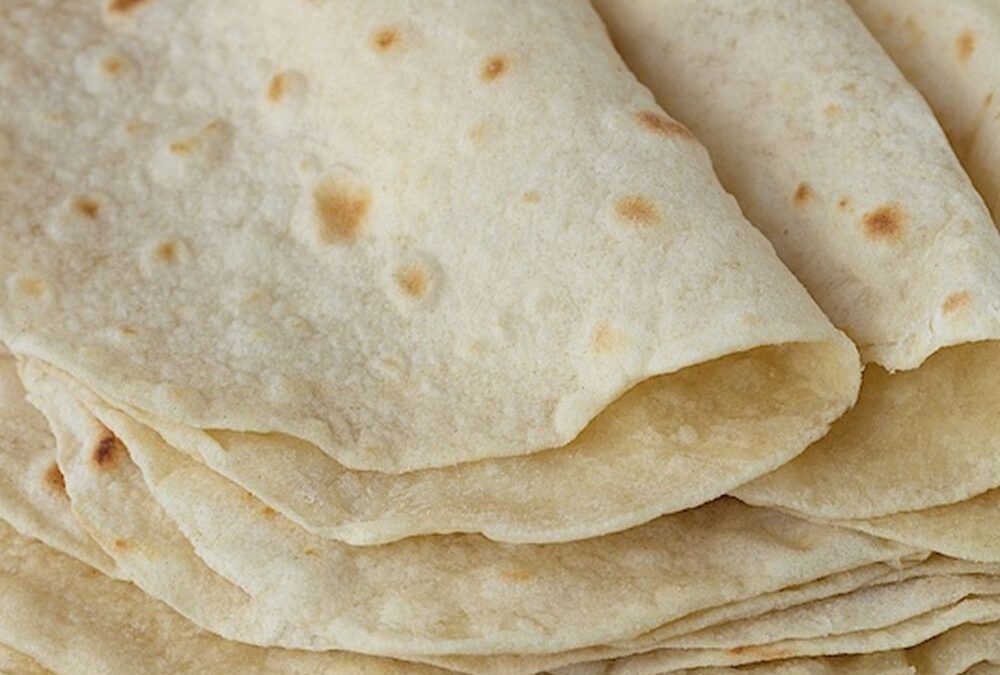
A warm tortilla lifted straight off a dry pan, blistered in spots and soft enough to fold without cracking, bears little resemblance to the stiff rounds sold in plastic sleeves. Flour and corn versions each ask for a short ingredient list, a rested dough and confident heat. Safety stays simple throughout: clean hands and surfaces around raw flour, and every round cooked through until it puffs and spots.
Flour Tortilla Dough Mixed, Kneaded and Rested
Start by whisking about two cups of all purpose flour with a pinch of salt and a small spoon of baking powder in a wide bowl, so the leavening spreads evenly instead of clumping in one corner. Work in roughly a third of a cup of lard, shortening, or a neutral oil, rubbing it through with your fingertips until the mixture looks like coarse crumbs with no large greasy lumps left. Pour in around three quarters of a cup of warm water, stir with a fork until a shaggy mass forms, then tip it onto a lightly dusted counter.
Knead for a few unhurried minutes, pushing the dough away with the heel of your hand, folding it back, and turning it as you go. It should turn smooth and elastic, holding together without sticking hard to the counter or tearing when you stretch a corner. If it clings, dust on flour a spoon at a time. If it feels dry and cracks at the edges, wet your hands and keep kneading so tiny amounts of water work in gradually. Portion the dough into even balls, set them on a tray, and cover them with a damp cloth or an upturned bowl for about thirty minutes. That pause lets the strands relax, which is why rested dough submits to a rolling pin while unrested dough keeps springing back.
While the dough rests, think about supper, because fresh rounds disappear fast once people smell them cooking. They wrap eggs at breakfast, cradle beans and rice at lunch, and at night they turn a fillet into tacos, especially when you are cooking salmon without drying it out and want a soft fold around crisp edged fish, slaw, and a squeeze of lime. The long history of the tortilla shows how regional habits shaped both traditions.
One safety habit belongs right here, mixed into the handling rather than saved for later. The FDA warns that raw flour can carry harmful bacteria such as E. coli, so nobody should taste the uncooked dough, and children helping in the kitchen are better given cooked rounds to fill. Wash your hands after mixing, wipe counters that caught dust, and rinse bowls and tools before they get used for anything ready to eat.
Rolling Flour Tortillas Thin Enough to Puff
Work with one ball at a time and leave the rest covered, because exposed dough dries at the surface and then resists shaping. Flatten a ball with your palm into a small disk, dust both sides lightly, and roll from the middle outward, lifting and turning the round a quarter turn between passes. Rolling in one direction alone stretches a round into an oval, while regular turns keep the shape circular and the thickness even. Aim for a round wide enough to look almost translucent at the edges when you lift it, without tearing holes that leak filling later.
Thickness is the decision that decides the puff. Leave a round too thick and the inside stays doughy while the surface spots, giving you a bready disk that cracks when folded. Roll it thin and even, and steam building inside has two delicate layers to separate instead of a heavy slab to lift. If edges keep shrinking back, the dough is telling you it needs a few more minutes under the cloth, not more force from the pin. Set the stubborn ones aside, roll the cooperative balls first, and come back to the rest once they have relaxed further.
Keep finished rounds under a clean towel as you work, and avoid stacking raw rounds directly on each other, where they can stick and tear when peeled apart. Heat your pan while you roll the last few, so shaping and cooking overlap.
Corn Tortilla Dough From Masa Harina and Warm Water
Corn tortillas begin with a different flour altogether. Masa harina is milled from corn that was soaked and cooked in an alkaline solution before drying, a treatment that changes the flavour, loosens the hulls, and lets the ground corn form a dough at all. Plain cornmeal cannot substitute, because it never went through that treatment and will only give you gritty crumbs that refuse to hold together. Anyone who wants the full story behind the treatment can follow how nixtamalization transforms dried corn and understand why the resulting flour behaves so differently from anything else in the baking aisle.
Stir about two cups of masa harina with a little salt in a bowl, then pour in roughly one and a half cups of warm water and mix until no dry pockets remain. Knead the dough briefly, just until it feels smooth and pliable, like firm modelling clay that holds a fingerprint without cracking around the edges of the print. Cover it and let it sit for about fifteen minutes so the flour hydrates fully, then test a small ball by flattening it between your palms. If the edges split into deep cracks, knead in warm water a spoon at a time until they smooth out. If the ball sticks to your skin, work in a dusting more masa harina.
Hydration drifts as the dough sits, because the flour keeps drinking water during the rest. Recheck the texture before pressing the full batch, keep the bowl covered between rounds, and never leave balls uncovered near a draught, where the outer ones dry first and later split on the pan instead of puffing.
Pressing Corn Tortillas and Cooking Them on a Hot Comal
Divide the rested dough into small balls and keep them under a damp cloth. Line a tortilla press with two pieces of plastic cut from a food bag, set a ball slightly off centre toward the hinge, and press firmly and evenly. Peel the plastic away gently, first from one side and then the other, supporting the thin round with your hand so it does not stretch or fold. Without a press, place the ball between the same plastic sheets and bear down with a heavy flat pan, rocking it once to spread the dough, until the round reaches around six inches across.
Heat a comal or heavy dry skillet until a flick of water skitters and vanishes almost at once. Lay a pressed round onto the hot surface without oil and leave it alone for the first stretch, until the edges look dry and the underside carries light spots. Turn it and cook the second side a little longer, then flip once more. On that final turn the trapped steam often balloons the whole round, which is the moment to lift it away rather than pressing the air out and toughening the surface. Corn rounds take a touch longer than flour ones, so judge by colour and puff rather than by a clock alone.
Move each finished tortilla straight into a folded towel or a covered container, stacking them as they come off the heat. The trapped warmth keeps them flexible, and a stack cools far more slowly than a single round left on a plate. Cook the flour rounds the same way, on the same dry surface, for roughly thirty to sixty seconds a side, turning when spots appear and the underside no longer looks pale and raw. Keep raw flour hygiene going through this stage too: hands and tools that touched dough get washed before they handle the cooked stack, so the finished food stays separate from the uncooked.
Reading the Puff That Signals a Finished Tortilla
The puff is steam doing visible work. Heat turns moisture inside the dough into vapour faster than it can escape, the vapour lifts the top layer away from the bottom, and the round swells for a few seconds before settling. A full balloon is satisfying, but even a partial lift across part of the surface tells you the heat and thickness were right. Brown spots on both sides and a round that bends without snapping complete the picture.
When a round refuses to lift, read the failure instead of blaming luck. A pale surface with no spots points to a pan that never got hot enough, so give the comal more time before the next round goes down. Cracks around the rim point back to dry corn dough, fixed with those spoonfuls of water worked in earlier. A thick middle points to uneven pressing or rolling. Flour rounds that blister in one patch only usually sat over a hot spot, which rotating the pan or moving the round once during cooking can even out.
A gentle press with a spatula can coax a hesitant round to swell, nudging steam toward the centre. Use a light touch and stop once it lifts, because hard pressing squeezes out the steam you need and can leave the tortilla leathery. Rounds that missed the puff still suit sauced or crisped dishes, where a perfect balloon matters far less than flavour.
Keeping Tortillas Soft and Storing Masa Harina Well
Softness after cooking is mostly about moisture and patience. Let the stack rest wrapped in its towel for a short while before serving, so steam redistributes through every layer, and keep the bundle closed between servings rather than fanned out on a plate where edges dry and curl. Leftover rounds should cool completely before they go into a sealed bag with excess air squeezed away, since sealing them warm traps condensation that can spoil the texture and shorten their keeping life.
Stored that way, cooked tortillas keep about three to four days at room temperature, around a week in the refrigerator, and up to about three months in the freezer with parchment slipped between rounds so they peel apart without tearing. Reheat them on a dry hot surface or directly over a low flame, turning once, until they soften and spot again. A microwave tends to leave them rubbery, so the pan that cooked them is also the kindest way to bring them back.
The dry goods need the same attention. An opened bag of masa harina stays reliable for roughly six months when it is sealed tightly and kept in a cool, dry cupboard away from the stove, and after that its binding strength fades, which is often why a familiar routine suddenly produces crumbly rounds. Pour it into a jar with a firm lid, note when you opened it, and buy a size you will actually finish. Flour dough balls also hold for a few days wrapped in the refrigerator, and they roll more willingly after that long rest, so mixing a day ahead can make a weeknight batch feel almost effortless.
One comment