A first Thanksgiving turkey brings understandable nerves, since the bird is large, the guests are hungry, and the timing feels unforgiving. In practice the method is plain roasting guided by a thermometer, and a rested bird forgives small errors gracefully. Planning the thaw and the roasting window days ahead turns the holiday centrepiece into one of the calmer jobs in the kitchen. Nothing on the day itself is technically hard. The whole project succeeds or fails on decisions taken earlier in the week, so work through those decisions in order and write the times down where everyone helping can see them.
Turkey Buying and Sizing Checklist for First Timers
Begin with the headcount. Plan on about one to one and a half pounds of whole turkey per guest, which covers the meal generously and leaves a sensible amount for sandwiches the next day. Eight guests point to a bird of roughly twelve to fourteen pounds, while a smaller table of four does well with eight to ten pounds. Birds far above sixteen pounds cook unevenly, with breast meat drying before the thighs finish, so a large crowd is better served by two smaller turkeys than by one giant.
Decide between fresh and frozen with the calendar in mind. A frozen bird costs less and keeps perfectly until its thaw begins, but it claims refrigerator space for days. A fresh bird skips thawing entirely, yet it must be bought within a day or two of cooking and cooked promptly. Either choice cooks the same way in the end. What matters is ordering or buying early, checking the wrapping for tears, and confirming the weight on the label matches the size the plan assumes before leaving the shop.
The bird is only one part of a holiday table, and hosts who want the wider meal to feel calm will appreciate hosting a dinner party without stress or last minute panic as a planning companion for the days around the cooking itself. Set the menu, assign side dishes to guests who offer, and decide serving dishes in advance. A turkey that emerges perfectly into a kitchen with no free platter and no plan for gravy still creates the scramble a checklist exists to prevent.
Background reading on the meat itself helps a first timer judge what the label promises, and Wikipedia’s overview of turkey meat, its cuts and its uses gives that wider picture in one place. Before the bird goes into the refrigerator, also check the oven. Remove racks that will not be used, confirm a roasting pan large enough sits in the cupboard, and make sure a reliable food thermometer is in the drawer with a fresh battery if it needs one. Discovering a missing thermometer on the day is an avoidable crisis.
Thawing a Thanksgiving Turkey on a Safe Schedule
Thaw in the refrigerator whenever time allows. Allow roughly one day of thawing for every four to five pounds of bird, so a twelve pound turkey needs about three days and a twenty pound turkey needs four to five days. Set the wrapped bird on a tray or in a shallow pan on the lowest shelf, where its juices cannot drip onto other food as it softens. Count backward from cooking day, write the start date down, and treat that date as firmly as the holiday itself.
Check progress a day before cooking. A fully thawed bird has no icy core in the cavity, its legs move freely at the joints, and the flesh gives slightly under a fingertip. If the centre still feels frozen, the cold water method can finish the job. Keep the bird in its sealed wrapping, submerge it fully in cold water, and allow about thirty minutes per pound, changing the water every thirty minutes so it stays properly cold throughout.
Never thaw a turkey on the counter at room temperature. The outer layers reach temperatures where bacteria multiply quickly while the centre remains frozen solid, and a bird that sat out all day cannot be made safe by roasting. Once a cold water thaw finishes, the turkey must be cooked immediately rather than returned to the refrigerator for another day. A refrigerator thawed bird, by contrast, keeps safely for a day or two before roasting, which gives a useful cushion when plans shift slightly.
On cooking morning, remove the bag of giblets from the main cavity and check the neck cavity as well, where a second bag sometimes hides. Finding either bag after roasting is a rite of passage best avoided. Save the neck and giblets for gravy or stock if the menu calls for them, and discard the paper or plastic wrapping promptly. Pat the skin dry all over with paper towels, since dry skin seasons more evenly and browns far better in the oven.
Seasoning, Brining and Trussing Checklist for Turkey
Choose a seasoning route and commit to it. A dry brine of salt, scattered over the skin and into the cavity a day or two ahead and left uncovered in the refrigerator, seasons the meat deeply and dries the skin for better browning. A wet brine in salted water works too, though it needs a large container and more refrigerator space. A plain salt and pepper rub applied just before roasting remains respectable for a first attempt, especially when time or space rules brining out entirely.
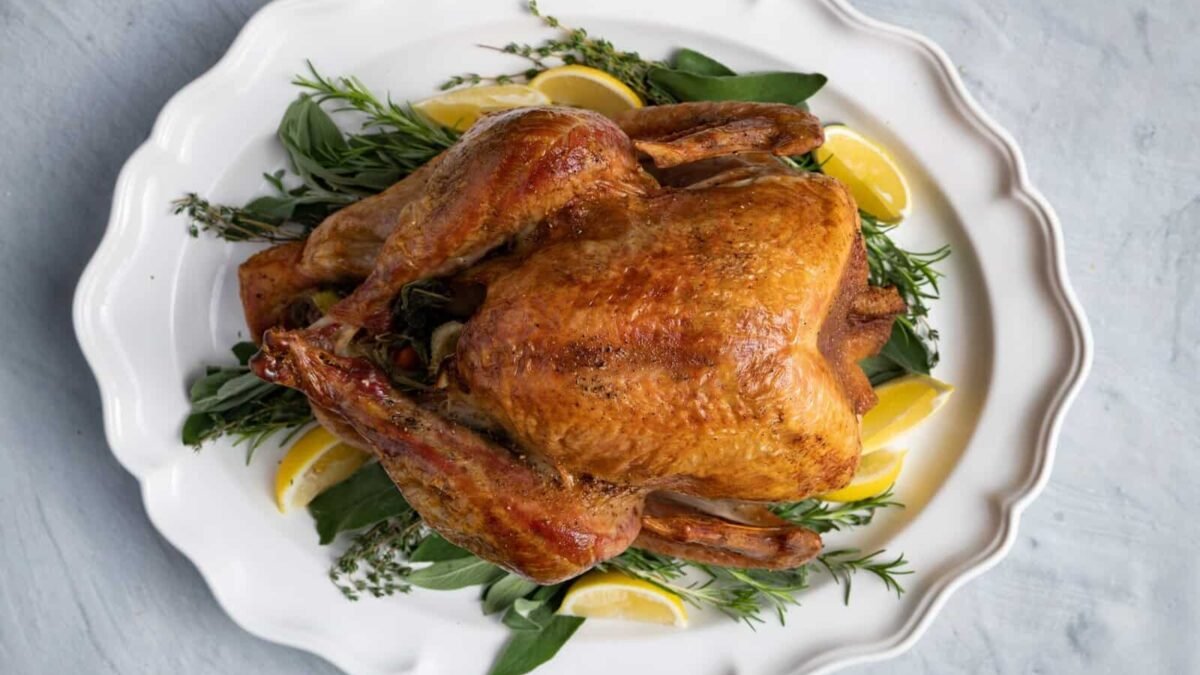
Work softened butter or oil over the skin before the bird goes in, and tuck herbs, a halved onion, or a lemon inside the cavity for aroma rather than stuffing. Aromatics perfume the meat gently and leave the cavity easy to check with a thermometer. Keep any bread dressing in its own dish in the oven instead, where it browns on top and reaches a safe temperature on its own schedule rather than lagging behind inside a slowly heating bird.
Trussing needs only a simple approach. Tuck the wing tips under the back so they do not scorch, and tie the legs together loosely with kitchen string so the bird holds a compact shape and cooks evenly. Tight, elaborate trussing slows heat reaching the inner thigh, which is the very spot that finishes last. Place the bird on a rack in the roasting pan with the breast facing upward, which lifts it clear of its own juices and lets hot air circulate underneath.
Let the prepared bird stand at room temperature only briefly while the oven heats, around half an hour, which takes the deep chill off the surface without entering unsafe territory. Confirm the oven rack sits in the lower third so the tall bird clears the top element, and give the oven a full preheat. An oven thermometer, if one is available, settles arguments about whether the dial tells the truth, since many home ovens run noticeably hot or cool.
Roasting the Thanksgiving Turkey to a Safe Temperature
Roast at three hundred twenty five degrees Fahrenheit, a moderate heat that cooks a large bird through before its skin burns or its breast dries. As a planning figure, allow roughly fifteen minutes per pound for an unstuffed bird, so a twelve pound turkey points to about three hours, while remembering that ovens, starting temperatures, and pan choices all nudge that estimate. Treat the clock as a scheduling aid for side dishes, never as the verdict on doneness.
The verdict belongs to the thermometer alone. Whole turkey is safely cooked when every part reaches one hundred sixty five degrees Fahrenheit, pushed deep into the thigh where the meat runs thickest, without touching bone, and checked again in the wing joint and in the deepest part of the breast. If any stuffing was cooked inside the bird, its centre must also read one hundred sixty five degrees Fahrenheit, which is one more reason a separate dish of dressing keeps the day simpler and safer.
Anyone wanting the principles behind the method, rather than a single bird’s timings, can consult Wikipedia’s account of roasting as a dry heat cooking method for how hot air, fat, and time interact in the oven. Those principles explain the practical rules of the day. If the skin browns too quickly, cover the breast loosely with foil and keep roasting. If one side colours faster than the other, rotate the pan once, calmly, rather than opening the oven again and again.
Basting is optional and often overrated. Each opening of the oven door drops the temperature and lengthens the total time, while the liquid mostly runs off the skin rather than soaking into the meat. A bird rubbed with butter and left in peace browns deeply on its own. Judge the final stretch by temperature readings taken at intervals as the target approaches, because the last stretch of cooking moves faster than the first, and a bird pulled promptly at temperature stays juicy while a forgotten extra half hour dries it.
Resting, Carving and Leftover Checklist for Turkey
Rest the cooked bird for at least twenty to thirty minutes before any carving begins. Move it to a warm platter, tent it loosely with foil, and leave it entirely alone. During cooking, juices concentrate near the surface under pressure, and slicing at once sends them spilling across the board. A proper rest lets moisture redistribute through the meat, and it frees the oven at exactly the moment when gravy, dressing, and vegetables all want its heat for their final minutes.
Carve in the kitchen rather than performing at the table on a first attempt. Remove each breast in a single piece by slicing down beside the breastbone, then cut that piece across the grain into even slices that stay moist and look generous. Take the legs and thighs apart where they join the body, slice the dark meat, and arrange everything on a warmed platter. Spoon a little warm pan juice or gravy over the sliced meat if it will sit for a few minutes before serving.
Serve, eat, and then handle what remains with the same care as the raw bird received. Refrigerate leftovers within two hours of serving, carving meat off the bones first so it chills quickly in shallow containers. Properly chilled turkey keeps for several days in the refrigerator and freezes well for soups, pies, and sandwiches later in the season. Stock from the carcass can simmer the next day, turning the frame, vegetable trimmings, and water into the base for a soup that stretches the holiday one meal further.
Finish with a short review while the day is still fresh. Note the bird’s weight, the thaw start date, the roasting time it actually took, and the temperatures reached, and keep that note with the holiday recipes. Next year’s first timer, who is simply this year’s cook with a better notebook, will find the whole project calmer still. A rested bird, a working thermometer, and dates counted backward remain the entire secret, such as it is.