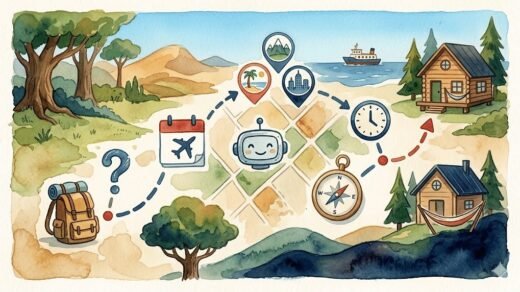
Paper maps and dog eared guidebooks once filled the weeks before a holiday, alongside lists scribbled on envelopes. An assistant now sketches a plausible route in moments, ordering neighbourhoods, pacing sightseeing, and leaving gaps for rest. Speed brings a quieter danger, because invented hotels and shuttered kitchens appear inside otherwise sensible plans. Travellers who treat machine drafts as scaffolding, then confirm each booking through trusted sources, keep the convenience while dodging the classic disappointments waiting at arrival.
A draft produced in seconds feels finished, and that polish is exactly what makes it risky. Names sound real, timings look tidy, and the whole plan reads like something a careful friend prepared. Yet the machine holds no live knowledge of bookings, closures, or current prices, so confidence on the page proves nothing about the world outside. A calmer way to work treats every suggestion as a pencil sketch. Pencil can be rubbed out, reshaped, and corrected without tears, and a route held lightly stays open to better ideas that appear during checking.
Phase One: Pinning Down Dates, Party, and Pace
Every workable route begins with fixed points that no software can guess on your behalf. Write down the exact days you can travel, the hours of any flights already booked, and the names of everyone coming along. A plan built for a wandering pair collapses when a grandparent, a toddler, or a friend with limited mobility joins the group, because steps, stairs, and late nights land differently on each person. Pace matters just as much. Some travellers happily stack museums from breakfast until dark, while others need slow mornings and early evenings to enjoy anything at all.
Anyone travelling alone faces the same blank page in a lonelier form, since nobody shares the deciding or the checking. Reading about planning a first solo trip without feeling overwhelmed helps a lone planner settle dates, group size, and daily rhythm before chasing routes, and those early choices protect every later stage. Solo or accompanied, settle a rough spending ceiling at this point too, expressed as a total for the whole break rather than a daily allowance that invites daily arguments. Note dietary needs, must see places, and hard limits such as school holidays or a wedding back home. When these anchors sit on paper, the assistant receives boundaries instead of a fog, and its draft starts closer to something usable.
Honesty during this opening phase saves pain later. If long walks hurt your knees, say so before the route fills with hillside old towns. If nobody in the party enjoys seafood, coastal restaurant lists waste precious space. Small truths, stated early, steer the whole design.
Write the anchors down where everyone travelling can see them, rather than holding them in one person memory. A shared note prevents the quiet drift where one planner assumes early starts while another expects lazy mornings, a mismatch that surfaces only when the alarm rings on the first day away. Agreement written plainly, in a handful of lines, becomes the yardstick every later suggestion gets measured against, and disputes during drafting shrink because the boundaries were settled while everyone was calm and nobody had fallen in love with a particular stop yet.
Phase Two: Asking for a Skeleton of Days
With boundaries set, ask for shape rather than detail. A useful request names the destination, the length of stay, the mix of busy and quiet days, and the neighborhoods that sound appealing, then asks for mornings, afternoons, and evenings in broad strokes. Resist the urge to demand named hotels or precise train times at this stage, because the machine fills such gaps with plausible inventions. What you want here is sequence and balance. Which area suits the first base, which sights cluster naturally together, and where a slower day should fall so tired legs recover before the journey home.
Read the returned skeleton with a sceptical eye. Days crammed with distant attractions at opposite ends of a city signal a plan drawn on a screen rather than walked on streets. Sensible drafts group nearby sights, leave travel legs short, and alternate heavy sightseeing with wandering, markets, or parks. Ask for changes in plain language, naming what feels rushed or dull, and let the machine rearrange the bones a few times. Each pass teaches you the geography better than any map studied alone, because judging a route forces attention onto distances and directions.
Keep the skeleton somewhere editable, such as a simple document you control, rather than trapped inside a chat window. As checks begin in the next phase, you will strike out failures and pencil in replacements, and a living document absorbs those edits without confusion about which version is current.
Follow up questions sharpen a weak skeleton quickly. If the draft marches the group across town twice in one day, ask for the same sights arranged by neighbourhood instead. If every evening ends with a formal dinner, request a street food night and a picnic supplies stop so the rhythm varies. Assistants respond well to concrete corrections, far better than to vague complaints about quality. Treat the exchange like briefing a keen but literal minded helper who knows geography from books yet has never walked a single street in the place, and whose confidence should never be mistaken for experience.
Phase Three: Checking Every Named Place Still Exists
Now the slow, essential work begins. Take every hotel, restaurant, museum, and tour named in the draft and search for it directly. A real place leaves traces everywhere, including a listing on a map, recent visitor reviews, a working website, and opening hours that match the day you plan to visit. A invented place leaves almost nothing, or a single suspicious mention repeated across scraped pages. Cross off anything you cannot confirm, without regret, because a gap in the plan beats a locked door at dusk in an unfamiliar town.
Printed companions earned trust for generations by gathering practical detail about lodging, food, and sights between two covers, and browsing the history and role of the guide book shows how that tradition grew long before screens existed. The lesson survives the change of format. Listings drift out of date in every medium, paper or digital, so the habit of confirming each venue through its own page or a current map listing matters more than the source that suggested it. Pay special attention to seasonal closures, weekly closing days, and temporary works, since museums and kitchens alike shut for stretches that a cheerful draft rarely mentions.
Booking follows checking, never the other way round. Reserve rooms and tables only through the venue itself or a booking service you already trust, and keep confirmation messages together in one folder. Any price quoted inside the original chat counts as a guess, because the assistant cannot see current rates, and treating guesses as quotes leads straight to budget shocks at checkout.
Phase Four: Swapping Stops Until the Route Breathes
A verified list still may not make a pleasant trip. This phase is about feel. Lay the days side by side and hunt for friction, such as backtracking across town, a market scheduled on its closing day, or three heavy lunches in a row. Swap stops between days, drop the weakest attraction in each cluster, and protect at least one unscheduled half day. Empty space is not wasted space on a holiday. It absorbs delays, bad weather, and the café you stumble upon and love, none of which a tight timetable can accommodate.
Wider reading helps here too, since how tourism shapes seasons and host places explains how travel for leisure and business bends around seasons, transport links, and the capacity of the places receiving visitors. That bigger picture explains why a famous square feels unbearable at midday in high season yet gentle at opening time in spring. Shifting a headline sight to an early slot, and moving a quiet garden visit to the crowded afternoon, can transform the same set of stops. Local rhythm matters as well, because shops, kitchens, and transport often follow patterns set by climate and custom rather than visitor wishes.
Invite the whole party to react at this point, while changes cost nothing. Children spot boredom risks adults miss, and a partner may confess that the celebrated gallery never interested them at all. A route everyone helped shape gathers goodwill that carries the group through the inevitable rained off afternoon.
Build one deliberate Plan B day while swapping stops, a wet weather alternative assembled from indoor sights near the base. Rain then becomes a variation rather than a crisis, and children especially relax when adults treat a grey morning as a designed option. Note also which attractions reward booking ahead and which welcome walk ins, marking the difference clearly on the plan. Timed entry sights sell out in busy months, while smaller collections often stay calm, and mixing the two kinds across each day keeps queues from swallowing the holiday whole. A route that breathes on paper usually breathes in person, with slack absorbing the small delays that no planning can prevent.
Phase Five: Saving an Offline Copy for the Road
Signals fail in tunnels, mountains, old town alleys, and foreign arrival halls, usually at the exact moment directions matter most. Save the finished plan somewhere the phone can reach without a connection, and keep screenshots of booking confirmations, addresses written in the local language, and map areas downloaded ahead of departure. A paper copy of the essentials, folded into a day bag, sounds old fashioned until a battery dies before the last train. Redundancy feels fussy at the kitchen table and priceless on a platform at midnight.
Share the offline pack with one person staying home as well. If a phone is lost, a copy held by family lets the trip continue while replacements get sorted, and an agreed check in routine gives everyone peace of mind. Include passport details stored securely, insurance information, and the address of your first night, since those are the facts officials and helpers ask for when plans unravel.
Once travelling, let the plan serve rather than command. A verified skeleton gives confidence to improvise, because the bones are sound even when a day bends around weather or whim. Travellers who build this way keep the speed of machine help, discard its inventions before departure, and arrive to find doors open, tables ready, and days shaped roughly as promised, which is all any honest plan can offer.