
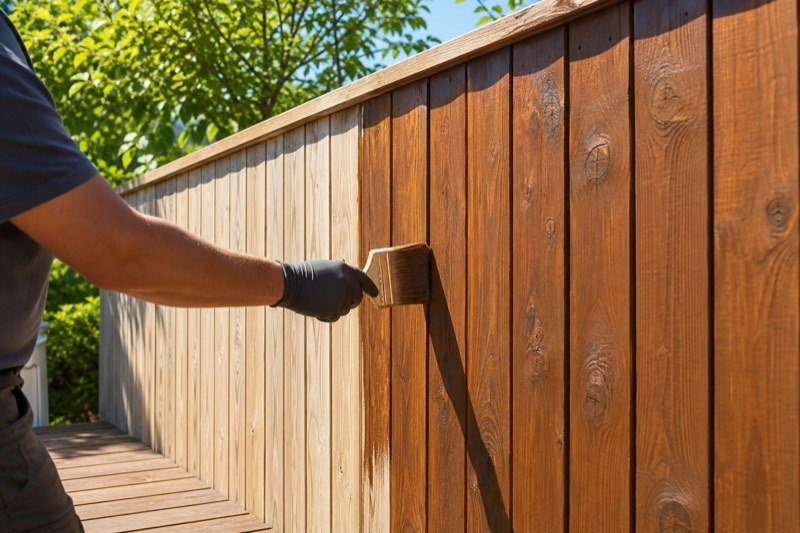
Fence boards turn silver grey because sun and rain strip away the oils that once kept the wood rich and water resistant. A fresh coat of stain brings the colour back and slows that weathering, and the job forgives small imperfections more kindly than most outdoor projects. Choosing well matters more than working fast. Stain is not one product but a family of them, ranging from a faint tint that barely changes new cedar to a solid coating that hides a decade of patchy weathering. The sections below weigh the real options against each other: how much pigment, which base chemistry, and which tool puts the finish on the boards.
Transparent, Semi-Transparent, and Solid Stains for Fence Boards
Opacity is the first decision, and it trades natural appearance against protection and forgiveness. Transparent stain carries the least pigment, so the grain, knots, and colour variation of the wood show through almost untouched. It flatters new or well kept fences, especially cedar and redwood, yet it also offers the shortest defense against sunlight, and it shows every flaw, water mark, and mismatched replacement board. Expect to recoat sooner with a transparent product than with any other type. Semi transparent stain sits in the middle ground that suits most fences: enough pigment to even out mild weathering and give the wood a unified tone, while the grain still reads clearly through the finish. Solid stain carries the most pigment and behaves almost like a thinned paint, hiding stains, repairs, and boards of different ages under one consistent colour. The trade is that solid finishes show wear as surface peeling sooner than penetrating ones and change the character of the wood the most. The distinction that drives the whole choice is how these products colour timber without hiding it entirely, laying pigment in and on the surface rather than forming the opaque skin that paint leaves behind.
Age of the fence should steer the pick as much as taste. A fence built within the last few seasons, with boards still close in tone, rewards a transparent or light semi transparent finish. A fence that has stood through many winters, carrying grey patches, dark water streaks near the ground, and a board or two replaced along the way, looks patchy under anything but a solid stain. Test the leading candidate on the back of a post or an offcut first, brushing it on in long strokes and applying paint coatings evenly across the sample, then view it dry, in shade and in sun, because wet stain in the can promises a colour the dried film rarely delivers exactly.
Oil Based Versus Water Based Formulas for Outdoor Fences
Base chemistry shapes how a stain enters the wood, how it ages, and how the cleanup goes afterward. Oil based formulas soak deeply into dry, thirsty timber, carrying pigment down into the surface fibers rather than leaving it all on top. They level smoothly, forgive slightly uneven application, and have a long record on weathered fences. Their costs are slower drying, a stronger smell during application, brushes that need solvent to clean, and a film that can feed mildew in damp shaded yards unless the product includes a mildewcide. Water based formulas have improved steadily and now rival oil on durability in many product lines. A fuller explanation of wood stain types and how pigment works in them helps when comparing labels across the two chemistries, since pigment load and vehicle together decide the finished look. They dry quickly, often allowing a second coat the same day, their color fades more evenly rather than darkening, the finished film resists mildew growth better, and brushes wash out with soap and water. Their weakness is a thinner soak into very dry or rough wood, so a weathered fence may drink the first coat unevenly and need that second coat to look uniform.
Local rules can settle the argument before preference gets a vote. Some regions restrict the solvents that oil based products release, narrowing what stores may sell, and disposal of solvent soaked rags needs care because piles of oily cloth can heat and ignite; lay them flat outdoors to dry or store them in a sealed metal container with water. Water based products simplify every one of those concerns. For a fence in deep shade that stays damp after rain, the mildew resistance of a water based film often outweighs the deeper penetration of oil, while for a sun baked, bone dry fence in an open yard, oil based penetration is hard to beat.
Brush, Roller, and Pump Sprayer Application Methods Weighed
Application method decides both the finish quality and how long the job takes. A brush gives the most control, works stain into cracks, end grain, and the gaps between boards, and wastes the least product. It is also the slowest route on a long fence, and brush marks can show in solid stains if the product begins drying mid board. A roller covers flat runs quickly and lays an even coat on smooth boards, though it struggles at board edges and rough sawn texture, and it still needs a brush following behind for the gaps. A pump sprayer is the fastest option by a wide margin on long, straight runs, floating stain into textured wood that a roller skips over, at the price of overspray onto plants, paths, and the neighbor’s side if wind picks up. Spraying alone leaves a thin, uneven film, so back brushing remains important: a partner, or the same worker alternating tools, brushes each sprayed section at once to work product into joints and rough texture and to break up puddles before they dry darker.
Many coating skills transfer directly from indoor work, and anyone who has learned to paint a room like a professional will recognize the core habits here: keep a wet edge, work in complete sections rather than stopping mid board, and cut in edges before filling the field. On a fence the sections are bays between posts, and finishing a full bay before moving on prevents lap marks where dried and fresh stain meet. Whichever method leads, keep the second in support: sprayer plus brush for speed and quality, roller plus brush for smaller yards where overspray would drift onto cars and windows.
Preparing Weathered Fence Wood So New Stain Bonds Properly
Preparation decides whether any of the choices above succeed. Stain cannot soak into wood sealed by dirt, algae, mildew, or the grey layer of dead fibers that sunlight creates when ultraviolet light breaks down lignin at the surface. Wash the fence with a garden sprayer and a wood cleaner, scrub stubborn patches using a stiff bristled brush, then rinse everything thoroughly. A pressure washer can speed the washing, held at a modest setting and a steady distance so the jet does not furrow soft wood. Let the fence dry for several warm days afterward, because stain over damp wood seals moisture in and peels or blotches as the wood dries beneath it. New pressure treated boards need their own patience: they often carry mill glaze and internal moisture from treatment that repel coatings, so a drying period comes first, judged with a simple water test. Sprinkle water on the board; if it beads and sits, the wood is not ready, and if it soaks in and darkens the surface, stain will soak in as well. Background reading on wood preservation methods and the science of decay explains why surface condition and moisture govern how long any protective treatment lasts. Sand or plane only shiny glazed spots rather than the whole fence, pull or set protruding nails, and replace boards that are soft or split through before coating anything.
Coverage planning prevents the classic mid fence disaster of running dry with one bay left and a store already closed. Read the coverage range on the can, measure the fence length and height honestly, and remember that rough, dry, weathered boards drink far more stain than the smooth new lumber those label figures assume. Buy with a margin for that thirst and for the second coat water based products often need on tired wood, keeping the receipt so an unopened can can go back. Note the product name, colour, and batch on a card kept with household records as well, because matching a maintenance coat years later is simple with that card and frustrating without it.
Weather Windows and Drying Behaviour After Fence Staining
Timing the work around weather protects all the effort spent choosing and preparing. Aim for a run of dry days with mild temperatures, since stain applied before rain can wash, spot, or dry with a cloudy film, and stain applied onto boards hot from full sun can dry on contact before it penetrates, leaving lap marks and weak protection. Morning application after dew has burned off, or late afternoon work in shade, gives the product time to soak in evenly. Shade matters section by section too, so following the shade around the yard keeps conditions consistent. After application, keep sprinklers off the fence, keep soil and mulch from being piled against wet boards, and expect full curing to take longer than surface drying; a fence can feel dry to the touch while the finish beneath is still hardening. Oil based coats generally need the longer wait before the yard returns to normal use, while water based coats free the space sooner, which can decide the schedule for homes with dogs that treat the fence line as a patrol route.
A Recommendation Matched to Typical Suburban Wooden Fences
For the typical suburban fence, meaning wooden boards a few years old, moderately weathered, in a yard with mixed sun and shade, one combination stands out. Choose a semi transparent stain, which restores even colour while letting the grain keep the fence looking like wood rather than paint, and pick the water based version for its quicker drying, easier cleanup, better mildew resistance in shaded stretches, and simpler compliance with local rules. Apply it with a pump sprayer where runs are long and open, back brushing every section immediately, and switch to brush alone near plants, patios, and boundaries. Wash and fully dry the fence first, run the water droplet test on any newer boards, and schedule the work inside a settled dry spell. A fence treated this way gains back its colour, sheds water properly again, and asks only for a maintenance coat when the finish next fades, rather than a rescue job after peeling and grey patches return.
Both sides of the fence deserve a thought before the first coat. Staining only the patio face leaves the outer face weathering at full speed, and boards cup sooner when one side is protected and the other bare, so agree access with the neighbor and coat both faces where allowed.


