A sauce can look silky in the pan and still disappoint at the table, sliding off pasta like soup one night and clinging in a heavy paste the next. Thickness is not a matter of adding powder until it behaves. Every thickener brings trade-offs in flavour, shine, reheating and tolerance for acid or long cooking, and every thinner dilutes seasoning as it loosens texture. Cornstarch acts fast but can break down, a roux tastes richer but needs care, and plain reduction deepens flavour while shrinking volume. The comparison below weighs the choices honestly and ends with a verdict for each direction.
Reading a Sauce Before Changing It
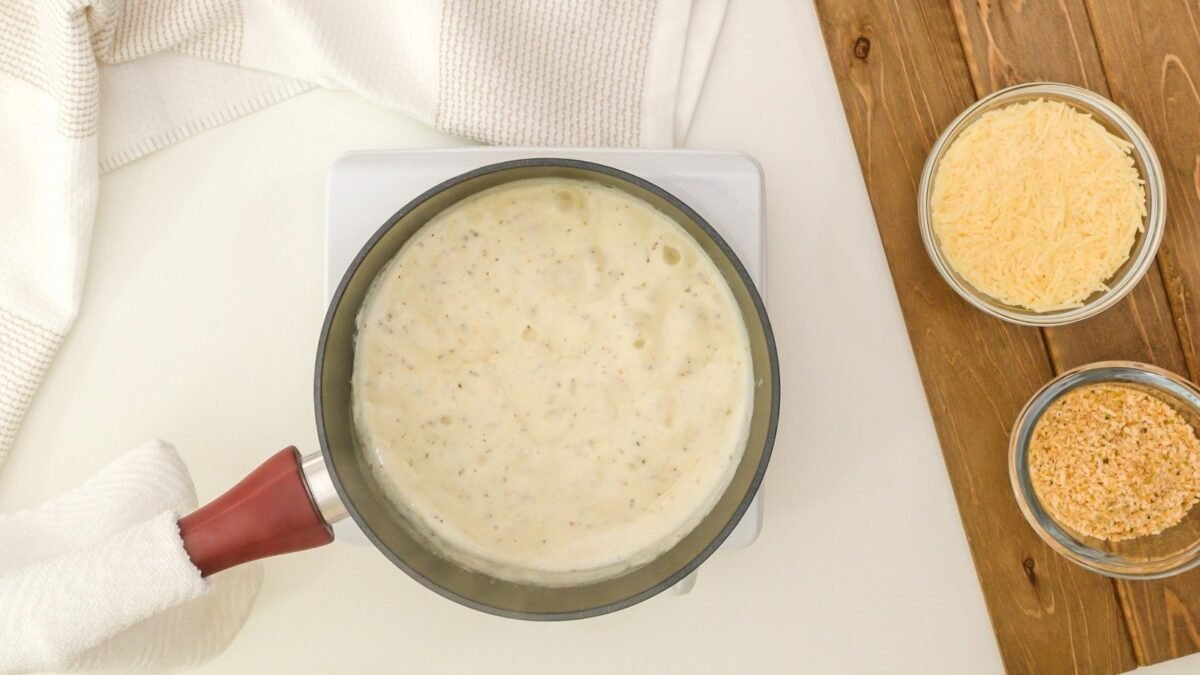
Stand still for a moment before you reach for anything. Stir the sauce, lift the spoon, and watch how it falls. Does it sheet off in a thin stream and pool at once, or does it drop in slow ribbons and hold a shape for a second? Draw a finger across the back of the coated spoon. A line that holds its edges means the sauce already coats; a line that floods shut at once means it is still loose. That quick reading tells you whether the sauce needs real thickening, a brief simmer, or nothing more than a minute off the heat, since every sauce tightens a little as it cools.
Judge the flavour at the same time, because thickness and flavour are linked. A thin sauce that tastes concentrated may only need reduction held back and a gentle thickener, while a thin sauce that tastes watery is asking for simmering first. A thick sauce that tastes dull may be over thickened rather than under seasoned. Changing texture without tasting invites the classic error of fixing the spoon test and spoiling the plate. Also decide what the sauce must do at the table: cling to pasta, nap a piece of meat lightly, pool around vegetables, or stand up on mashed potato. Each job wants a different body, and a sauce that is wrong for one job may already be right for another.
Consistency, in the end, is a promise the cook keeps from pan to plate. A sauce earns trust by coming out at the same thickness every single time, and that same discipline decides whether a small venture survives, as the piece on starting a subscription box business from a small idea shows when every monthly box is held to the standard subscribers expect. The parallel is plain rather than decorative: in both cases the work is judged by whether the result matches the promised standard on every repetition, not by whether it worked once. At the stove that means measuring your fix, watching the spoon the same way each time, and noting what you did, so the next pan is a repetition rather than a fresh gamble.
Thickening Choices and What Each One Costs
The classic starting point is the roux. The roux entry in Wikipedia defines it as a mixture of flour and fat cooked together and used to thicken sauces and soups, and that plain definition hides its main virtues. A roux brings stability, a gentle richness, and a sauce that reheats calmly without turning gluey or splitting. Its costs are time and attention. The flour must cook long enough to lose its raw taste, the liquid must be added with steady whisking, and the sauce needs a short simmer after thickening before it shows its true body. A pale roux thickens strongly and tastes mild, while a darker roux trades thickening power for deeper flavour, so the longer you cook it for colour, the less body each spoonful gives you.
Corn starch sits at the opposite end of the temperament scale. Corn starch, as the reference entry on corn starch notes, is a starch powder that thickens liquids when it is mixed with water and heated, and in practice it is the fastest fix a home cook owns. Mix it with cold water until smooth, drizzle the slurry into a simmering sauce while whisking, and the sauce turns glossy within moments. The advantages are speed, a clean shine and almost no added flavour. The drawbacks are equally clear. Hard boiling for more than a short time breaks its set and the sauce thins again, long cooking in an acidic sauce weakens it, overuse turns the texture slightly gummy, and leftovers can gel in the cold and need gentle reheating to loosen.
Reduction is the thickener that adds nothing at all. Simmering a sauce uncovered drives off water, so the body thickens while the flavour deepens. For a sauce that is only slightly thin and tastes a little dilute, nothing beats it. The costs are time, lost volume and concentrated salt, and it fails completely when the sauce is already strongly flavoured or when hungry people cannot wait. Pureeing a portion of the cooked vegetables, beans or potato from the sauce itself back into it thickens invisibly and keeps the flavour true, though it clouds a sauce that was meant to shine. Cream and grated cheese thicken while enriching, which suits some dishes beautifully and overwhelms delicate ones. Egg yolk stirred in off the boil gives silk and body to certain pan sauces, but it curdles if the sauce boils afterward, so it is a finishing move for confident hands and gentle heat only.
Laid side by side, the pattern is simple. Choose a roux when the sauce will simmer, wait or reheat. Choose corn starch when the sauce needs help now and will be served soon. Choose reduction when flavour needs deepening as much as texture does. Choose puree when the thickener should disappear into the dish. Every one of them fails somewhere, and knowing the failure in advance is what separates a fix from a second problem.
Thinning Without Washing Away Flavour
Thinning looks easier than thickening and quietly ruins more sauces, because every splash of liquid that loosens the texture also dilutes the seasoning. The defence is to thin only with a liquid that already belongs in the dish. Stock suits savoury sauces, the starchy water from pasta suits tomato and cheese sauces and helps them cling, milk or cream suits white sauces, and wine suits pan sauces where its sharpness is welcome. Plain water is the last resort, acceptable in small amounts, but it is the thinnest flavour you can add.
Warm the liquid before it goes in. Cold liquid can shock a butter based sauce into splitting and always lands unevenly, thickening one part of the pan while another stays heavy. Add it gradually over a gentle heat, whisking steadily, and stop to test the spoon after each addition. Sauces loosen faster than they thicken, and the gap between perfect and soupy can be a single careless pour. Judge at serving temperature again, not at a boil, and remember that a sauce thinned to perfection in the pan will still tighten slightly on its way to the table.
Then do the step that is most often skipped: taste and re-season. Thinning always needs a seasoning recheck, without exception. The salt that was right for the thick version is now spread through more liquid, and acid and herbs have faded by the same measure. Add salt in small pinches, restore a squeeze of lemon or a drop of vinegar where the dish wants brightness, and taste the sauce with the food it will cover if you can, since plain pasta or plain meat will take some of the seasoning load themselves.
Trouble With Lumps Broken Emulsions and Over Reduction
Lumps are born in one reliable way: dry powder meeting hot liquid. Flour or corn starch tipped straight into a simmering sauce hydrates on the outside of each clump and seals the dry centre in, and whisking only moves the lumps around. Prevention is the slurry, the paste or the roux, always mixed smooth before it touches the pan. For a sauce already lumpy, push it through a fine sieve or give it a brief blend until smooth, then return it to gentle heat. Straining is slower and loses a little sauce; blending is fast but can lighten a sauce’s colour and should be brief.
A broken emulsion shows itself as grease pooling on a sauce that should look unified. Emulsion sauces built on butter or cheese split when they overheat, when cold liquid shocks them, or when they are held too long at a fierce temperature. Move the pan away from the heat and whisk in a small spoonful of cold water or cream; many splits pull back together within moments. A sauce that refuses can often be rebuilt by whisking a little of it into a fresh yolk or a fresh spoonful of cream in a clean bowl, then gradually whisking the rest in. Heat caused the break, so more heat is never the cure.
Over reduction is the third common trouble, and it arrives disguised as success. The sauce has body, the flavour is deep, and then the first bite is fiercely salty and the pan holds half the sauce you expected. Restore volume with water or unsalted stock, then rebuild the finish using butter, a touch of acid and aromatics instead of salt. Serve the rescued sauce a little more sparingly if it still tastes intense, and let the food beneath carry more of the plate.
Verdict Matching the Fix to the Sauce
For gravies, béchamel and any sauce built to simmer or reheat, the verdict is the roux, with beurre manié kept in hand as the late correction. The flavour is right, the body is stable, and leftovers behave. For a quick stir fry sauce, a glossy pan sauce or a fruit sauce that must stay bright, the verdict is a corn starch slurry added at the end and served without long boiling. For a thin but promising tomato sauce or stock based sauce with time in hand, the verdict is reduction, finished only after the flavour has deepened, with seasoning left until last because the salt will concentrate as the water leaves.
For a soup or stew that should stay recognisably itself, the verdict is puree: blend a ladle of its own solids back in and the body rises while nothing foreign enters the pot. For a sauce that is too thick, the verdict is always the same regardless of type: warm matched liquid added gradually, then a full seasoning recheck before serving. No thickener suits every sauce, and no thinner is free of cost. A cook who matches the fix to the sauce in front of them, and who states plainly where the chosen tool is weak, will rescue nearly every pan. A cook who reaches for one powder for every problem will keep meeting the same three failures: lumps, a broken set, or a sauce that tastes thinner than it looks.