Eggs leave the shell soft and fluid, yet a brief spell over fierce heat can turn them firm, squeaky and wet all at once. That odd pairing has a simple cause. As egg proteins warm they link together and hold water, but push them further and the network tightens, squeezing liquid out and leaving the curds tough. Once that squeeze has happened it cannot be reversed, which is why timing matters more than any special ingredient. The phases below follow an egg from cold pan to plate, showing where tenderness is won, where it is lost, and how gentle heat keeps it safe.
Phase One Cold Eggs and a Warming Pan
The work starts before any heat is involved. Crack the eggs into a bowl and beat them until the yolks and whites are fully blended, with no streaks of white left floating in the mixture. A uniform mixture cooks at a uniform pace. A streaky one sets in patches, so part of the pan is firm while another part is still liquid, and fixing the liquid part overcooks the firm part. Add a small pinch of salt at this stage if you like, or at the end if you prefer. When salt goes in is mostly a matter of taste and habit, with only a small effect on texture either way, and it should never be treated as the decision that saves or ruins the pan.
Choose a pan that spreads heat evenly and a coating the eggs will release from easily, and set it over the lowest heat you would normally use for cooking rather than warming. Add a knob of butter and let it melt slowly. Butter is a useful gauge at this stage, since it foams gently as the water in it heats, and that soft foaming tells you the pan is warm and ready without any need for guesswork. If the butter browns quickly or sizzles hard the moment it lands, the pan is already too hot, and the kindest move is to take it off the heat and let it settle before the eggs go anywhere near it.
There is a comforting fact about this phase. Tender eggs need no costly extras, no special cream and no rare equipment, as the cost of cooking perfect scrambled eggs at home shows when the ingredients and pan costs are broken down plainly. Anyone fixing rubbery eggs is cooking the same breakfast staple, and the fix from here on is heat control and attention, both of which are free.
Have the plate ready before the eggs go in, warmed if you can manage it. The final phase moves fast, and a cook hunting for a plate while finished eggs sit in a hot pan loses exactly the tenderness the whole method was built to protect.
Phase Two Curds Forming Under Gentle Heat
Pour the eggs into the warm pan and wait a few seconds for the first thin layer to turn opaque at the edges. Then stir slowly and continuously, pushing a flexible spatula across the base of the pan in long sweeps, folding the setting layer into the liquid above it. The movement should be calm. Fast, frantic stirring breaks the curds into tiny grains, while slow folding lets them form in soft, large folds that hold their moisture.
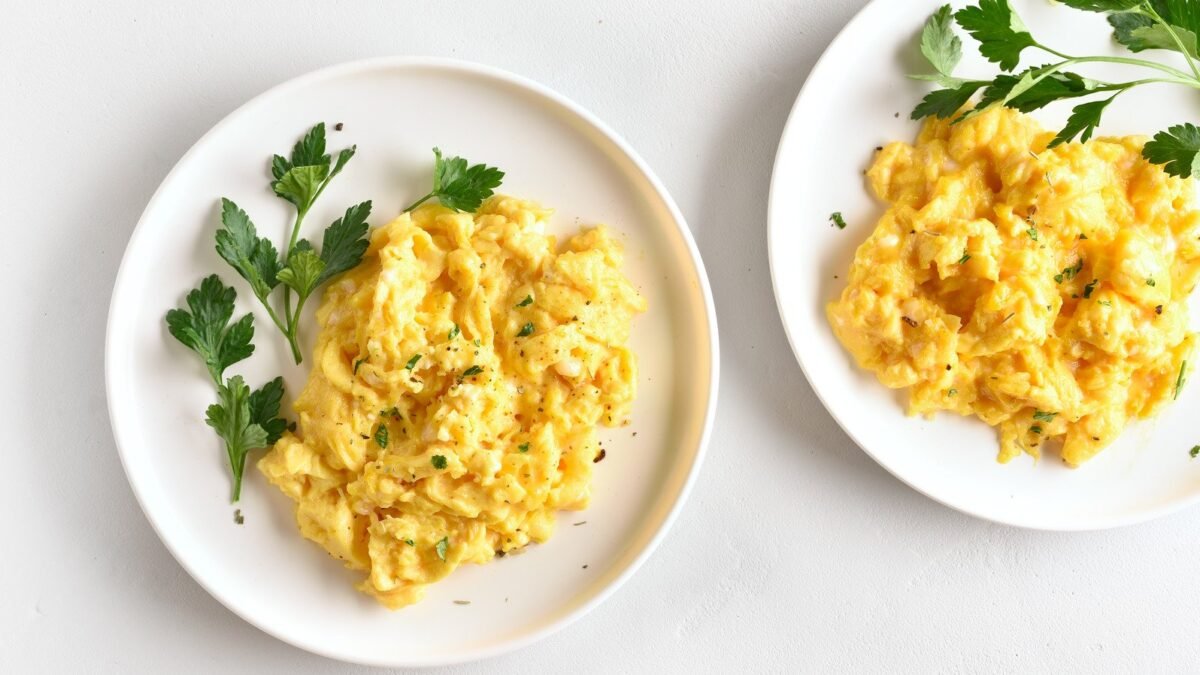
What is forming under the spatula has a simple shape. Heat is setting the beaten egg into soft curds, exactly as scrambled eggs are summed up in the entry on scrambled eggs, as eggs beaten and cooked while stirring so that they form those curds. The protein in both white and yolk is what sets as it warms, linking into a loose net that traps water and melted butter inside it. At this gentle stage the net is delicate and generous, and the curds should look soft, glossy and only just holding together.
Keep the heat low throughout, even when the pan seems to be doing nothing. Eggs cook slowly at first and then suddenly quickly, and the quiet early minutes are when the cook is most tempted to turn the burner up. Resist it. If the curds are setting faster than you can fold them calmly, slide the pan off the heat for a few seconds and keep stirring. The pan itself holds enough heat to keep the eggs moving, and that lift-and-return habit is the most useful skill in the whole process.
Judge progress by look rather than by the clock. The mixture should move like a slow, thick sauce with soft folds rising through it, never like separate dry pieces. Steam should rise gently. Loud sizzling at this stage is a warning, not a sign of success.
Phase Three The Tightening Point Where Texture Turns
Every pan of eggs reaches a turning point, usually sooner than a new cook expects. The loose net of protein that held water so kindly begins to tighten as the temperature climbs. The folds that looked soft start to look firm. The surface loses its sheen. This is the moment the dish is decided, because the tightening does not stop politely when you notice it.
The change underneath has a name in science. Heat unfolds protein molecules and alters their structure, and that unfolding and re-linking is laid out in the entry on denaturation in biochemistry, which explains how heat changes protein structure and why a firmly overcooked egg turns tough and lets go of liquid it once held. Pushed gently, the unfolded proteins link loosely and the egg stays tender. Pushed hard, they bond tightly, contract, and physically wring the water out of the curds. The puddle that appears on the plate under rubbery eggs is that wrung-out water, and the squeak against the teeth is the tightened net itself.
Learn the signs that the point is near. The curds hold a fold instead of flowing back level. The spatula leaves a clear trail across the base of the pan that fills in slowly rather than at once. The gloss turns from wet shine to a softer glow. Any one of these means the eggs are nearly done, whether or not they look done by the standards of a firmer style. A cook who waits for the eggs to look completely finished in the pan has already passed the point, because the pan keeps cooking them after the heat is off.
Say plainly what this means for rescue. Once the proteins have tightened and squeezed, the rubberiness cannot be undone. No sauce, rest or gentle reheat reopens that net. Prevention at this phase is the only true fix, and everything in the next phase is about stopping in time.
Phase Four Off the Heat While Still Glossy
Set the pan down away from the burner while the eggs still look slightly too soft, glossy and loose in the folds, a touch wetter than you would want them on the plate. Give them a final few folds with the spatula. The heat stored in the pan and in the eggs themselves finishes the setting during those last seconds and during the short trip to the table, a gentle carryover that firms the curds without tightening them into rubber.
Move the eggs out of the pan at once. Leaving finished eggs sitting in hot metal is a quiet way to lose them, since the pan keeps working on them long after the burner is off. Serve them on the warm plate you prepared earlier, which keeps them pleasant without cooking them further, and season at the table if the salt was held back. A little butter folded through once the pan has left the burner adds richness, with no risk of that heat turning it into further cooking fat.
Texture at the table should be soft folds that hold together on the fork, moist without weeping, and tender all the way through. If liquid pools under the eggs within a minute or two of serving, the pan ran hot at some point, most often in the third phase. Note where it happened rather than blaming the eggs, the pan or the butter. The same cook with the same equipment and a slightly earlier stop will land the dish next time, because the whole method rests on that one judgement.
Eat scrambled eggs promptly. They are at their best within minutes, and no holding method, warm oven included, keeps them tender for long. For a group, cook in smaller batches back to back rather than holding one large batch, and serve each batch as it finishes.
Using Up a Batch That Went Too Far
Some mornings the phone rings, the toast needs saving, and the eggs go too far anyway. Those eggs are not curable, and it is better to be straight about that. The tightened protein will not soften again. What follows is disguise, not cure, ways to put firm, dry curds in settings where their texture stops being the point of the dish.
Chop the overcooked eggs and fold them through fried rice, where small firm pieces belong among the grains and a sauce coats every bite. Tuck them into a warm wrap or a filled roll with cheese, tomatoes and something creamy, so the other fillings supply the moisture the eggs lost. Stir them through a hot noodle broth at the last moment, where the surrounding liquid hides the dryness. Mash them with a fork and mix them with a spoonful of plain yoghurt or a soft spread, salt and pepper, and pile the mixture on toast, where the crumb and the spread carry the texture.
Small additions help the disguise. A knob of butter melted over chopped firm eggs just before serving coats them and softens the first impression. Warm sauce spooned over them does similar work. Cold firm eggs, by contrast, only taste firmer and drier, so any batch being reused is better warmed gently and eaten soon after.
Then take the honest lesson from the batch. Rubbery eggs teach the timing better than any description can, because the cook now knows exactly how the pan looked in the minute before it turned. Next time, keep the heat lower, fold more slowly, and lift the pan off the burner while the curds still shine. That single earlier stop is the whole difference between the squeaky pan and the soft one, and once it becomes habit, tender eggs stop being a matter of luck.