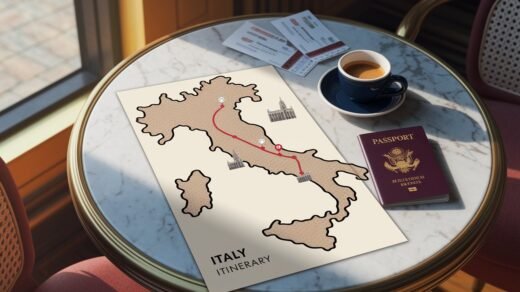
Folk wisdom about airfares loves a tidy rule, yet prices refuse to sit still for any single day or hour. Modern fares move with demand, remaining seats and rival airlines, sometimes shifting several times within a day. Patterns still exist for travellers willing to think in windows rather than magic moments. Flexibility about which days to fly usually beats cleverness about when to click. A patient watcher with alerts set will outperform a hopeful gambler almost every season.
Seductive Rules That Rarely Survive Real Prices
Every traveller has heard a confident claim about buying on one magic weekday, at one magic hour, or exactly so many days before departure. Such rules feel satisfying because they promise control over a system that feels random, yet they belong to an older era when fares were loaded in batches by hand. Pricing now runs continuously and automatically, reacting to bookings as they happen, so a rule pinned to a weekday of purchase describes a world that no longer exists. A fare can move several times between breakfast and dinner without any human deciding anything at all.
Other tidy beliefs fail for similar reasons. Clearing stored browser data or searching in a private window does not unlock a hidden lower price, because fares respond to seats and demand on the route rather than to how often one person has looked. A single exact day count collapses too, since a quiet route in a slack month behaves nothing like a packed route during a school break. Treating any of these as law leads travellers to watch the calendar of purchase while ignoring the forces that actually shape the number on screen.
The habits underneath the myths are not worthless, only misplaced. The traveller who hunts for a cheaper week to fly usually guards the budget at the destination too, and learning to enjoy weekends without spending money is the habit that keeps a trip affordable long after the fare is paid. Money saved by rigid myth-following is fragile; money saved by flexible thinking repeats itself on every trip. The reliable patterns sit elsewhere: in how close departure has come, in which days the journey itself falls on, and in how full the aircraft is getting.
Leaving Purchase Until the Final Days Costs Dear
The costliest habit is waiting for a last minute collapse in price that almost never arrives. Airlines know that people booking close to departure tend to need the journey: work has called them, family events have fixed the date, or an emergency has removed the option of staying home. Buyers with no choice accept higher fares, and pricing systems are built to charge accordingly. As departure nears and seats thin out, the cheaper categories vanish first, leaving only the flexible, expensive ones on sale.
Fares for a given route tend to climb as departure approaches and the remaining buyers become less price sensitive, a pattern rooted in how airlines manage each cabin as a shrinking stock of seats. Every booking removes one more seat from the pool, and the system answers scarcity by raising the price of what remains. Waiting in hope therefore runs against the machinery itself. The empty seat beside you on a half full flight was rarely sold cheaply at the end; more often the airline accepted flying it empty rather than training travellers to wait.
There are narrow exceptions that keep the myth alive, such as a genuinely flexible traveller with points to spend or a route where a new service has just added capacity, yet building a plan around exceptions is a gamble with poor odds. For a fixed date that matters, a wedding, a sailing, a conference or a family gathering, delay carries a double risk: the price rises and the convenient departure times sell out first, leaving the dawn departure and the late arrival as the expensive remains. Buying inside a sensible window removes both risks at once.
Group travel sharpens the late booking penalty further. A single traveller can sometimes squeeze into the one remaining seat in a cheaper category, but a family or a group of friends needs several seats together at the same level, and those shared levels empty earliest of all. The later the purchase, the more likely the party faces a choice between paying the higher category for everyone or splitting across different flights and times. Booking while the cheaper categories still hold enough seats for the whole party is one more reason the window closes well before departure day arrives.
Buying Far Too Early Can Also Waste Money
Impatience at the other extreme wastes money more quietly. When a trip first appears on sale, many months before departure, airlines have little reason to discount, because the travellers booking that early are often the most committed ones, people who will pay to secure the date. Discounting tends to begin once the airline can judge how a flight is filling, and that judgement needs bookings to arrive first. A fare bought at the very start can therefore sit above the level the same seat reaches later in the selling season.
Early buying also freezes plans before they have settled. Dates shift, companions drop out, events move, and a ticket bought in a burst of enthusiasm months ahead can carry change costs or end up abandoned entirely. There is a difference between watching early and buying early. Setting alerts when the trip is first imagined costs nothing and teaches you what a normal fare on that route looks like, so that when prices soften into their usual range, the drop is recognisable instead of guessed at.
Peak periods break this patience rule and deserve earlier commitment. Demand peaks around holidays, school breaks and major events, so seats for those dates sell earlier and discount less readily, because the airline expects the aircraft to fill without help. For an ordinary week in a quiet season, restraint pays; for the busiest weeks of the year, the window slides forward and waiting for a late softening is the expensive choice. Knowing which sort of trip you hold is most of the skill.
Travel Days Matter More Than Purchase Days
Shift attention from the day of buying to the days of flying and the savings become sturdier. Demand follows the working week and the leisure week: aircraft fill with business travellers at the edges of the week and with holidaymakers across weekends, while the middle of the week runs quieter on many routes. The Wikipedia overview of yield management explains how airfares respond to demand and remaining seats, and that machinery means a traveller willing to depart or return on quieter days is fishing in a cheaper pool before any question of purchase timing even arises.
Flexibility of a single day can matter more than weeks of watching prices on a fixed date. Test the combinations rather than assuming the first dates chosen are sacred: leave a day earlier, return a day later, swap which leg takes the weekend. Nearby airports deserve the same open mind where a region offers more than one, since a route with several rival airlines usually prices keener than a monopoly route between the same cities. None of this needs luck. It needs the willingness to treat the exact shape of the trip as negotiable while the destination stays fixed.
Season shapes the same calculation at a larger scale. A city hosting a major festival, a sporting final or a graduation weekend prices its incoming flights like a seller with a queue, because that is what it has. Moving a flexible trip by a single week, away from the event, can change the fare more than any purchase trick. Where dates cannot move, accept the peak honestly and buy earlier rather than hoping the event crowd will fail to materialise.
Fare labels deserve the same clear eyed reading as dates. The lowest headline price on a route sometimes strips away seat choice, changes and baggage allowances that the traveller will quietly buy back later at a worse rate. Comparing the fare you would actually live with, bags and flexibility included, against the fuller fare beside it prevents a false saving that evaporates at the payment screen or the airport desk. A slightly higher fare that includes what the trip genuinely needs often works out as the cheaper purchase once every addition is honestly counted.
Alerts and a Sensible Window Form the Reliable Method
The dependable method is plain enough to write on a card: watch early, buy inside a broad window, and let alerts do the staring. Begin tracking a route as soon as the trip is real, set a fare alert, and learn the ordinary level before spending anything. For most ordinary trips the sensible window opens some weeks before departure and closes before the final fortnight, sliding earlier for international journeys and for any date the calendar marks as busy. Within that window, a fare near the level your alerts taught you to expect is a fare worth taking, and taking it ends the auction with your own time, which has value too.
A safety net makes buying inside the window calmer. The Wikipedia overview of airline tickets sets out the full day cancellation protection on qualifying bookings, under which United States rules require airlines to hold a reservation without payment or allow cancellation without penalty for at least a full day when the booking happens a week or more before departure. That protection turns purchase into a reversible step: book when the fare looks right, keep watching for the remainder of the protected period, and reverse the decision if the price falls or the plan changes. Read the conditions that apply to the booking channel, since the protection attaches to how and when the reservation was made.
After buying, a small amount of continued watching is reasonable inside the protected window, and rather less after it closes. Endless rechecking of a settled fare buys nothing except irritation, because the patterns that move prices have already done their work on your ticket. The traveller who consistently lands fair prices is rarely the one with a secret rule. It is the one who watches early, stays flexible about travel days, buys inside a sensible window, and uses the cancellation protection as a cushion rather than a crutch. Patience, applied early and released at the right moment, does the work that superstition only promises.