Fifty glowing rectangles, a wall of model codes and a salesperson steering toward the priciest box — yet the set that suits a first-time buyer is decided by five traits, not by the sticker. The wall is designed to overwhelm, and it works: brightness cranked to showroom levels, every screen shouting, and the dearest models placed exactly at eye level. Step back from the noise and the choice narrows fast. Resolution, panel family, brightness format, refresh speed and the smart system decide nearly everything, and the rest is decoration. Readers weighing screen families in detail should also compare the difference between OLED and QLED TVs for movies, because that comparison shows how two premium approaches handle film differently, and the same way of thinking applies at budget prices. This piece sets each pair of options side by side and hands over a rule for choosing between them, so the wall stops looking like a gamble.
What the ultra-high-definition label changes on the couch
Ultra-high-definition means three thousand eight hundred forty by two thousand one hundred sixty pixels, four times the pixel count of older high-definition, and the gain is plain to see from a normal couch. On a fifty-five-inch screen viewed from eight to ten feet, text looks sharper, nature documentaries show finer detail, and sports motion looks cleaner. A clear account of four thousand resolution and what the pixel count means in practice explains the arithmetic, but the lived effect is simpler: the picture stops looking like a picture and starts looking like a window. Almost every streaming platform now carries ultra-high-definition content, so the extra pixels get used every evening rather than sitting idle.
The rival option is an older high-definition set sold cheap, and the rule for choosing is blunt. Skip the older standard except for a small bedroom screen under thirty-two inches, where the screen is too small for the difference to matter. At living-room sizes the sharper standard is the starting point, not the luxury, and the price gap between the two has shrunk to almost nothing. Budget sets inherit a decade of panel-making refinement, which is why a modest set today outperforms a flagship from years ago. Buying the older standard to save a small sum means living with softer text for years to save what a takeaway meal costs.
Panel families and the seating that picks between them
Two panel families dominate budget sets, and seating layout should pick between them. VA panels deliver richer blacks, which flatter film nights in a dim room, because dark scenes hold their depth instead of glowing grey. IPS panels offer broader sightlines, which flatter large family rooms, because the picture holds its colour when viewed from the side. Neither is better in the abstract. The right question is where people sit.
A household that watches films straight on, two viewers on one couch, should lean toward the VA side for its deeper blacks. A household with armchairs spread wide, children on the floor and guests perched at angles, should lean toward IPS, because a VA picture washes out fast from the side. Test this in the shop by walking to the side and watching a dark scene, rather than trusting the specification sheet. Inflated contrast ratios in the millions are measured inconsistently and tell you nothing, and motion rates printed beside sixty-cycle panels are marketing arithmetic rather than real speed. The seating test is honest in a way the numbers never are. A plain account of OLED technology and how its glowing panels differ from backlit sets is worth a look for anyone curious about the premium end of the market.
Brightness, colour range and the formats that enrich the picture
Brightness formats matter more than added pixels for picture richness, which surprises first-time buyers who assume resolution is everything. HDR ten is the standard format that counts, and any budget set worth buying supports it. It widens the range between the brightest highlights and the deepest shadows, so sunlit windows glow and night scenes keep their detail. Dolby Vision is a welcome bonus where included, adding scene-by-scene refinement, but its absence should not kill an otherwise strong set.
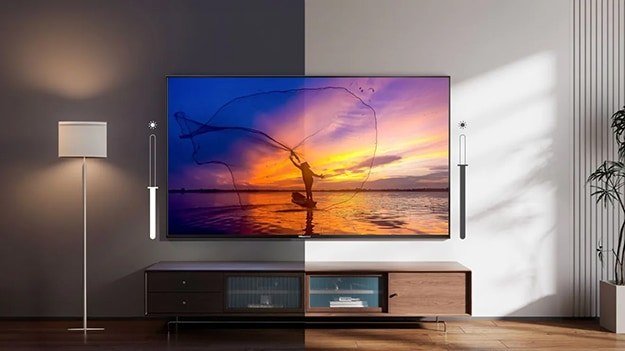
The comparison that helps here is HDR ten against the ultra-high resolution label that some budget makers push instead. A set with more pixels but no brightness format looks flat beside a set with fewer pixels and proper brightness handling. Shoppers should therefore read the brightness line before the resolution line, and treat an eight-thousand-pixel label at budget prices as a joke: no content exists for it, and the benefit at normal viewing distances is invisible. Colour range follows the same logic. A wide colour range makes grass, skin and sunsets look natural, while a narrow one makes everything look slightly painted. Judge both by eye in film mode, never in the torch-bright showroom mode the shop prefers.
Refresh speed and the ports gamers should insist on
A true sixty-cycle panel suits films and casual viewing, because films and most shows were never made to move faster than that. The picture stays smooth, the price stays low, and nothing about the evening suffers. Serious gaming with a modern console is the case that changes the answer: a one-hundred-twenty-cycle panel makes fast motion visibly smoother, and the premium it commands is money well spent for a player who games most evenings.
The connector question follows the same fork. The newest connector standard matters for owners of a current game console, because it carries the fast signals those machines produce. The previous generation is fine for everyone else, including households whose console is older or who never game at all. Paying for the newest ports without a console to feed them is paying for a road nobody drives on. The same discipline applies to the smart system. Roku, Google and Fire systems are all good, so choose the system that fits the handset and apps the household already uses, rather than the one the salesperson prefers. A sluggish menu annoys daily, so test the remote and the interface speed before committing, and confirm the return terms in writing.
Smart systems matched to the phone already in your pocket
Smart systems look interchangeable on a specification sheet, and in daily use the differences are about habit rather than horsepower. A household living on Android phones and Google services will feel at home with the Google system, where voice search, casting and shared accounts all line up. A household living on Apple phones may prefer a system that talks easily to their devices, while a household that simply wants the largest app shelf and the plainest menus often settles happily on Roku.
The rule is to match the system to the pocket, not to the poster. Ask which apps the household actually opens: the catch-up services, the sports app, the music service, the children’s programmes. If one system lacks a single app the family uses weekly, that absence will sting far more than any difference in processor speed. Also ask who will use the set most. Older viewers and children benefit from the plainest menus, while a keen tinkerer may enjoy the deeper settings of a more flexible system. A smart system cannot be swapped later without buying a separate streaming stick, so this choice deserves ten minutes of thought at the counter.
Price bands by size and the calendar windows that cut them
Sensible price ranges for trusted makers such as TCL, Hisense, and entry Samsung and LG models run near two hundred twenty to three hundred for forty-three inches, near three hundred thirty to four hundred fifty for fifty-five inches, and near four hundred fifty to six hundred fifty for sixty-five inches. The fifty-five-inch size is the favourite size for most living rooms, where rivalry is fiercest and the deepest discounts appear. A fifty-inch set sits between the two smaller bands, offering a middle step for rooms that cannot quite hold the larger size.
Prices fall deepest in three windows: the late January sale week around the championship game, the summer sale day, and the late November sale weekend through the following Monday. Previous-year models commonly drop by a quarter to two fifths during those windows, and buying one is the single smartest saving in this market, since television technology moves slowly from one year to the next. A set that was the talk of the shop last spring becomes a bargain this winter with almost no real-world downside. The buyer who can wait for a window, and who is willing to take last year’s model, often saves enough to cover a soundbar as well.
The upsells, the tape measure and the in-store trial
Store warranties priced at roughly a sixth to a quarter of the purchase rarely pay off, since most failures arrive in the first weeks under maker cover or after many years, long past the warranty end. The dear cable is the second trap: a certified cable costing about ten performs identically to one costing about sixty, because a digital signal either arrives intact or it does not. Paid calibration, often priced around two hundred, is the third trap, since a free twenty-minute adjustment in film mode reaches the same result. Each upsell is pure profit dressed as care, and declining all three leaves the budget for things that genuinely improve evenings.
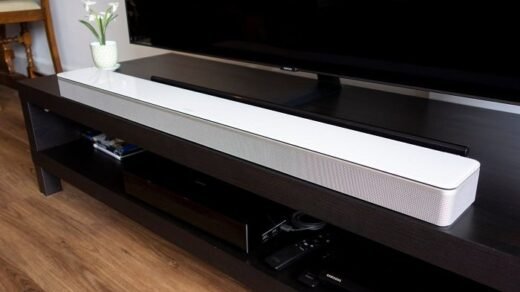
Measure before buying, because beginners consistently buy too small. A rough size rule divides viewing distance in inches by one point six, so ten feet suggests a seventy-five-inch set, though most households settle happily at fifty-five to sixty-five inches. Measure the stand or wall space too, check how wide the set stands with its feet attached, since the feet spread beyond the screen, and confirm the stand can carry the weight. Built-in speakers are widely mediocre, so plan a basic soundbar near one hundred to one hundred fifty as a later upgrade if film dialogue matters. Then trial the set properly: change the picture setting away from the torch-bright showroom mode to film or cinema mode, play dark scenes to judge shadow detail, walk to the side to test angles, and test the remote. A set that survives that trial, bought in a sale window at the right size, will serve the household for years without a single regret.