
Water draining slower each week is quietly asking for hands and simple tools, not a harsh bottle tipped hopefully into darkness. Grease softens with heat, hair surrenders to a hooked strip, and deeper blockages yield when an auger actually reaches them. Each method suits a different kind of obstruction, which is why order matters more than force. Begin gently, observe what changes, and escalate only when the evidence in front of you demands it.
Heat Soap and Soda Options for Grease and Soap Film Blockages
Kitchen sinks usually slow down for an unglamorous reason: cooking grease and soap film coat the inside of the pipe a little more each week, narrowing the passage until water lingers. That kind of buildup responds to patience and heat far better than to violence. Boil a kettle, let it settle briefly so it is hot rather than furious, and pour slowly so the warmth works along the greasy stretch instead of flashing past it. Repeat once, wait, and watch whether the drain clears with a new willingness.
Washing up liquid adds real value here, because soap that cuts grease on a plate performs the same service inside a pipe. A generous squeeze into the drain, followed by hot water in stages, helps loosen softened fat so the flow can carry it away. Household soda used with hot water belongs in the same gentle family of attempts: mild, cheap in effort, and suitable for film and early buildup. These approaches suit maintenance and mild slowdowns, and knowing how to unclog a drain without chemicals shapes every method compared here, from the very first kettle onward.
Restraint matters because the alternative carries genuine risks. Reference summaries of chemical drain cleaners and the substances in them describe products that may contain strong alkalis or acids, noting that such substances can injure skin and eyes and can harm some pipe materials. That warning frames the whole comparison: a gentle method that fails costs you time, while a harsh method that fails can cost you safety and leave a more dangerous problem sitting in the trap for whoever tries next.
Never escalate carelessly after chemicals have entered the drain. If any chemical cleaner has already been used and the water still stands, do not plunge, open the trap, or push tools into that water as if it were ordinary dirty water, because splashes and pressure can throw harmful liquid back at you. Let time pass, ventilate the room, read the product guidance, and call a professional if there is any doubt at all. That plain warning outranks every technique described anywhere, and no blocked sink is worth an injured eye.
Judge the gentle methods by evidence. If hot water and soap restore a brisk swirl, the blockage was grease or film and you are done, with a new habit to adopt later. If the water barely improves, the obstruction is probably solid, fibrous, or further away, and repeating kettles all afternoon will not change its nature. Move on calmly to tools designed for physical blockages, carrying one useful piece of knowledge with you: the problem is material, not coating, and it needs reaching rather than softening.
Hair Tools and Hand Augers for Solid Bathroom Blockages
Bathroom drains fail differently. Hair works its way past the plug hole strand by strand, binds with soap residue, and builds a dense mat exactly where fingers cannot reach. A simple hooked plastic strip, pushed gently down and drawn slowly back, often emerges carrying the whole sorry construction with it. Work patiently, rotate slightly, and rinse the strip between passes rather than forcing it deeper. The amount recovered frequently explains weeks of slow drainage in a single glance.
Shower and bath drains reward the same approach, with one extra habit: remove and clean whatever guard or cover sits over the opening before reaching deeper. Hair mats often form right beneath that cover, close enough to lift away by hand once the cover is off. Wear gloves, keep a bag beside you for the debris, and spare yourself a full retelling of what you find. If the flow returns fully after such modest work, stop there with satisfaction and fit the guard again.
When the blockage sits beyond strip range, a hand auger earns its place. This simple coiled tool feeds into the drain as you turn the handle, travelling around bends until its end meets and works through the obstruction. Feed slowly, keep gentle pressure, and withdraw to clear whatever the coil has caught rather than ramming the whole length onward. Hair and cooking grease rank among the most frequent causes of household drain blockages, and the auger exists precisely because so many of those blockages are solid lumps waiting at a bend.
Know the limits of your tools. An auger handles blockages near the drain, not deep inside walls or floors. If several drains slow together, or water rises in one fixture while another empties, the problem sits in shared pipework. Stop there and let a professional take over.
Plungers and Trap Removal When Lighter Methods Stall
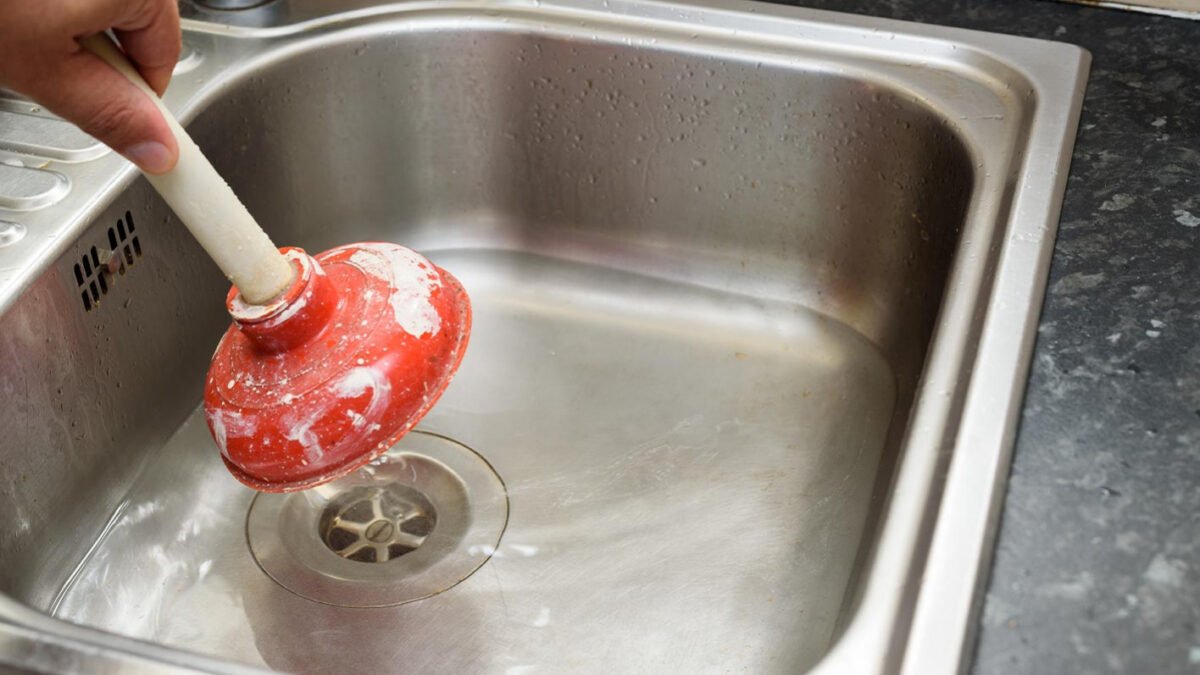
The plunger remains the honest middleweight of drain work: no chemicals, no dismantling, only pressure and suction applied with rhythm. Explanations of how a plunger uses suction and pressure describe how suction and pressure from a rubber cup can loosen obstructions near a drain opening, and that nearness is the point. Seal the cup fully over the opening, block any overflow outlet with a damp cloth, pour in water until the cup sits fully submerged, and work in steady thrusts rather than frantic ones. Release, watch, and repeat a few honest times before judging it.
Technique decides whether plunging works. A poor seal wastes every stroke, while a good seal moves the water column itself, and that moving water is what worries a blockage loose. Keep the cup wet, keep your strokes vertical, and pause between rounds to let dislodged material settle or drain. Success often arrives as a sudden give followed by a healthy gurgle. Failure after proper attempts is also information: the obstruction sits too far away, too solid, or beyond a vent arrangement that bleeding pressure defeats.
Trap removal is the next honest step for sink drains, and it frightens people more than it should. A trap beneath a sink holds water that blocks sewer gases from entering the room, and its curved section can be removed for cleaning on many household sinks. Place a bucket beneath, loosen the fittings by hand where possible, and lower the curved section carefully, because it will be full of the very water and debris you have been chasing. Clear it, rinse it, check the washers, and refit it snugly without overtightening.
Working on the trap teaches you the true state of the pipe. Grease lining the walls points back to kitchen habits, hair packed at the inlet points to guards and grooming, and grit or fragments may hint at problems worth mentioning to a plumber. Photograph anything unusual before cleaning it away if you rent, since evidence helps landlords act. Once refitted, run water generously and watch every joint with dry fingers and a torch, because a slow drip discovered now is a cupboard floor saved later.
Habits That Stop Grease Hair and Wipes Blocking Pipes Again
Prevention reads as dull advice until you have spent one Saturday with a bucket under a sink. Keep grease out of the kitchen drain at the source: let cooking fat cool and set, scrape it into the bin, and wipe pans with paper before washing. Fat that enters as a warm liquid becomes a cold lining exactly where you cannot see it, and every kettle treatment described earlier is simply the cure for a habit that prevention makes unnecessary.
Guards earn their tiny keep in every bathroom. A simple cover over the plug hole catches hair while it is still easy to lift away, turning a monthly blockage into a weekly second of housekeeping. Clear the guard as part of ordinary cleaning rather than waiting for water to announce neglect. Brush hair away from basins before rinsing, and give the shower drain a brief hot flush after heavy use. Small rituals, repeated without thought, are what separate houses that call plumbers from houses that merely own a plunger.
Wipes deserve a blunt sentence of their own: keep them out of the toilet and out of every drain, whatever the packaging claims about flushing. Along with grease and hair, they belong to the small cast of materials that household pipes simply cannot process, gathering at bends and snagging everything that follows. The bin is always the right destination, and a household that agrees this rule once, clearly, avoids the most miserable category of blockage entirely. Guests benefit from a small bin placed obviously, which removes the temptation born of embarrassment.
Recommendation: Work From Gentlest Method Toward Physical Removal
Weighed against each other, the methods form a ladder rather than a contest. Heat, soap, and soda answer grease and film with almost no risk and should always come first in a kitchen. Hooked strips and hand augers answer hair and solid lumps in bathrooms, where softening agents were never the right tool. The plunger bridges both worlds for obstructions near the opening, and trap removal gives direct access when a sink allows it. Each rung exists because the rung below it sometimes fails, and skipping rungs trades patience for risk without buying speed.
The recommendation, held plainly, is to work from the gentlest method toward physical removal, escalating only on evidence. Diagnose before acting: grease behaves differently from hair, a single slow drain differs from a whole house slowing, and standing water changes what is safe to attempt. Observe after every step, because the result of each attempt is the instruction for the next one. Force has no diagnostic value, while sequence has plenty, and the calm worker who follows the ladder finishes sooner than the frustrated one who starts at the top.
Hold the safety lines without exception. Keep chemical products as a last and separate consideration, never mix approaches after chemicals have been used, and treat any drain containing them with professional caution. Protect eyes and skin around any uncertain water, ventilate small rooms, and stop the moment a problem shows signs of living beyond the fixture in front of you. Several drains misbehaving together, sewage smells, or water appearing where it should never appear are household signals to call for help, not challenges to personal pride.
Finish every successful repair with the habit that prevents its return, chosen to match what you actually found. Grease found means a scraping routine begins in the kitchen that same day. Hair found means guards fitted before the next shower. A trap full of grit means a conversation about what has been rinsed away carelessly. A cleared drain is a diagnosis delivered free of charge, and households that read it carefully tend to meet their plunger less and less often, which is the quiet prize the whole ladder was built to win.


