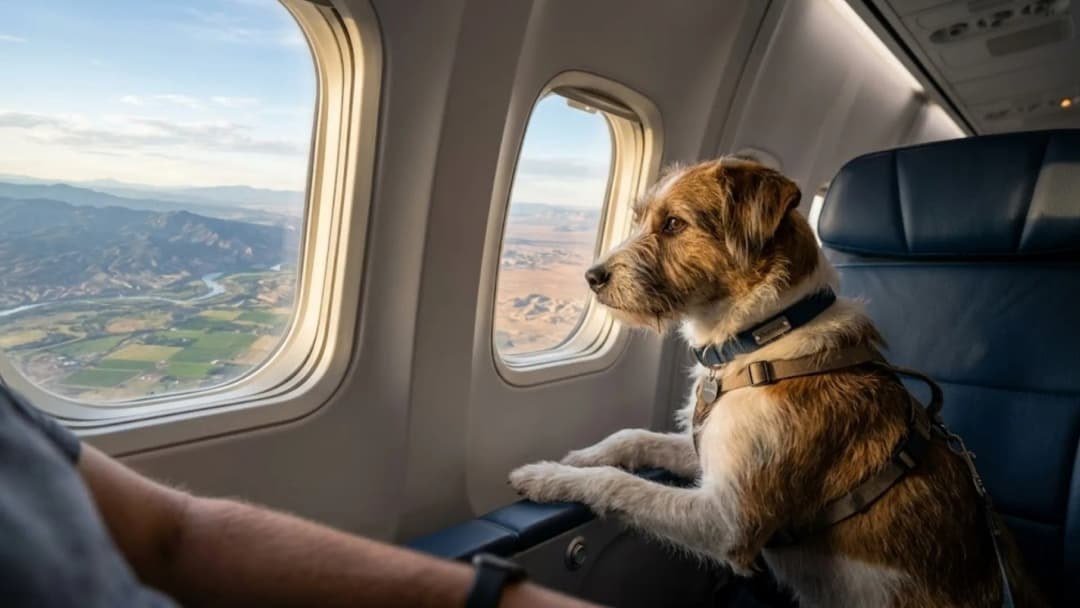
Flying abroad with a dog or cat is possible, yet paperwork decides the outcome long before the aircraft door closes. Microchip records, vaccination timing, health certificates, airline rules, and destination requirements must line up in the correct order, and each country sets its own conditions. Start early, confirm every requirement with official sources and your veterinary practice, choose direct routings where possible, and a beloved companion can travel without last minute panic or heartbreaking refusal. One truth governs everything that follows, and it is worth stating plainly at the outset: rules vary by country and by airline, and no two journeys are governed by exactly the same set of conditions.
The mistakes that ruin pet journeys are rarely dramatic. Nobody forgets the animal. Instead, a vaccination is given in the wrong order, a certificate is issued by the wrong professional, or an owner assumes that an airline seat guarantees entry at the border. Each error is understandable, and each is avoidable once the structure of the process is clear. Two separate authorities stand between your pet and a new home country: the airline, which controls the journey, and the destination, which controls admission. Satisfying one says nothing about the other, and the sections below untangle the habits that confuse the two.
Assuming Airline Permission Alone Lets a Pet Enter Another Country
The most damaging assumption in pet travel is that a confirmed airline booking settles the question. An airline can happily accept your animal for a flight while the destination country remains entirely unpersuaded, because the two decisions belong to different authorities applying different rules. Guidance published by the federal agriculture department’s animal health service makes the division plain, explaining that importing countries set their own requirements for animals entering their territory. Your pet must satisfy the destination’s conditions on arrival, and those conditions exist independently of anything printed on your ticket.
Entry requirements commonly involve identification by microchip, proof of rabies vaccination, and a health certificate issued by an accredited veterinary professional, arranged so each element supports the others in the order the destination expects. Some countries add further conditions of their own, which is exactly why copying a friend’s paperwork from a different route is such a unreliable shortcut. What satisfied one border may leave another completely unmoved. The only safe source for your destination’s list is that country’s official guidance, read directly, alongside advice from the government service in your own country that oversees pet travel.
The same early checking habit extends naturally to the far end of the journey, where your pet will need somewhere legal and welcoming to stay from the very first night. Travellers learning how to find pet friendly hotels for your arrival as part of their preparation avoid the bleak discovery that their chosen accommodation refuses animals, a problem that is trivial to solve during planning and miserable to solve at midnight with a tired animal in a crate. Think of the journey as a chain that runs from your front door to a settled bed in the new country, and check every link while changes are still cheap and easy.
Leaving Microchip Vaccination and Certificate Steps Too Late
Sequencing is where careful owners most often stumble, because the steps depend on one another in a fixed order. Identification normally comes first, since a vaccination recorded against an animal that cannot yet be identified may not count when officials match records to the creature in front of them. Vaccination follows identification, and the health certificate then draws the earlier records together into a single official document. Treating the steps as a pile of tasks to finish in any order, rather than a chain to build in sequence, produces paperwork that looks complete and quietly is not.
Timing presses on the same weak point. A health certificate is generally expected to be issued within a set window before travel, as the plan for your own route will specify through official channels, so arranging veterinary appointments without knowing that window invites wasted visits and duplicated effort at the worst possible moment. Official reading helps here, and the aviation authority advice on travelling with animals is one of several government sources that remind owners how airline acceptance, documentation, and the animal’s readiness interlock. Start by listing every step your destination requires, place each in its proper order, and book veterinary appointments backwards from the departure date so the fragile steps land close to travel and the sturdy ones happen early.
Slowness has a second, quieter cost: options disappear. Airlines limit how many animals travel on any single flight, and pet places on popular routes can be taken long before passenger seats sell out. Veterinary practices with accredited professionals also book up, particularly around holiday seasons when many families move or travel. An owner who begins early can absorb a surprise, such as a vaccination that needs repeating or a document that needs correcting, with nothing worse than an extra appointment. An owner who begins late meets the same surprise with no room left to fix it, which is how avoidable refusals happen.
Cabin Hold and Cargo Options Matched to Size and Breed
Once entry is understood, the manner of flying needs its own honest assessment. Airlines separately decide whether an animal may travel in the cabin or must travel as checked or cargo transport, and that decision rests on the animal’s size, weight with its carrier, species, and sometimes breed. Small dogs and cats may ride beneath the seat in an approved carrier on many routes, staying close to their owners throughout. Larger animals travel in the hold, in a dedicated compartment, inside a sturdy crate that meets the airline’s stated dimensions and construction standards.
Breed enters the conversation because breathing matters at altitude. Airlines commonly apply extra caution, restrictions, or occasional refusals to short nosed breeds whose airways cope less easily with stress and temperature change, and some carriers apply similar care to particular large or powerful breeds. None of this is personal, and none of it can be argued away at a check in desk. The time to learn your airline’s position on your exact animal is during booking, confirmed in writing, so that an alternative routing or carrier can be found if the answer disappoints.
Matching the option to the animal’s temperament matters as much as matching it to the rulebook. A calm, crate trained dog may settle in the hold more peacefully than an anxious small dog endures hours of cabin noise at ankle height among strangers. A confident cat may sleep through either arrangement, while a nervous one benefits from the shortest, simplest journey available. Discuss sedation honestly with your veterinary professional rather than assuming it helps, since many airlines and veterinary bodies discourage sedating animals for flights. The kindest arrangement is the one built around the individual animal, not the one that merely sounds cosiest to people.
Direct Flights Mild Weather and Crate Familiarity for Calmer Pet Travel
With permissions, papers, and placement settled, attention turns to the journey itself, and simplicity is the governing virtue. A direct flight removes connections where crates are unloaded, paperwork is rechecked, and delays can strand an animal in an unfamiliar airport. Where a connection is unavoidable, a longer, calmer gap between flights is kinder than a breathless sprint across a terminal. Background summaries such as encyclopaedia background on pet travel arrangements describe the whole field as travel undertaken alongside a pet, shaped throughout by airline policies and destination rules, and the travellers who fare best are those who keep every stage of that journey as short and predictable as the map allows.
Weather deserves a place in the plan as well. Airlines may restrict animal travel during periods of extreme heat or cold, particularly for animals travelling in the hold, because tarmac conditions during loading are harder to control than cabin conditions. Choosing flights at gentler hours, and milder seasons where your dates allow any flexibility, reduces both official restrictions and genuine discomfort. A journey planned around the animal’s comfort rather than the cheapest departure slot is rarely regretted once the day itself arrives.
Crate familiarity is the preparation most owners can start at home without spending anything at all. An animal that eats, naps, and rests in its travel crate as part of ordinary home life meets the flight inside a familiar den rather than a frightening box encountered for the first time at the airport. Leave the crate open in a favourite corner, feed some meals inside it, and practise closing the door for short, relaxed periods. Line it on the day with familiar smelling bedding, attach water in the manner your airline directs, and label it clearly. These small kindnesses, repeated patiently, convert the crate from a symbol of upheaval into the safest smelling place in a strange and noisy day.
Checking Destination Rules Again Before the Departure Date Arrives
The final safeguard is a deliberate second reading of everything, close enough to departure that changes still leave time to react. Requirements are living documents. Countries revise entry conditions, airlines adjust animal policies, and a detail that was accurate when you first researched may have shifted quietly since. Return to the destination’s official guidance and your airline’s animal pages, and compare them line by line against the paperwork in your folder. Confirm the flight’s pet booking still shows against your reservation, since an animal space is a separate arrangement from a passenger seat and deserves its own confirmation.
Assemble the travel folder as if a stranger might need to follow it: identification records, vaccination proof, the health certificate, airline confirmations, and contact details for your veterinary practice and for a practice near your destination. Carry the papers with you rather than packing them away, and keep copies stored separately in case originals are mislaid in transit. Feed and water the animal on the schedule your veterinary professional advises for travel days, exercise a dog calmly before departure, and arrive with time to spare so that no part of the check in conversation happens in a rush.
Standing back from the detail, successful pet travel rests on a modest set of habits repeated faithfully. Entry belongs to the destination, carriage belongs to the airline, and the two rulebooks must both be satisfied because rules vary by country and by airline at every step. Steps belong in sequence, with identification before vaccination and certification drawing the record together. The route should be as direct, mild, and familiar as you can make it. Owners who absorb those principles early rarely face drama at the airport. They simply board, settle, and arrive in a new country with their companion beside them, which was the entire point from the beginning.