
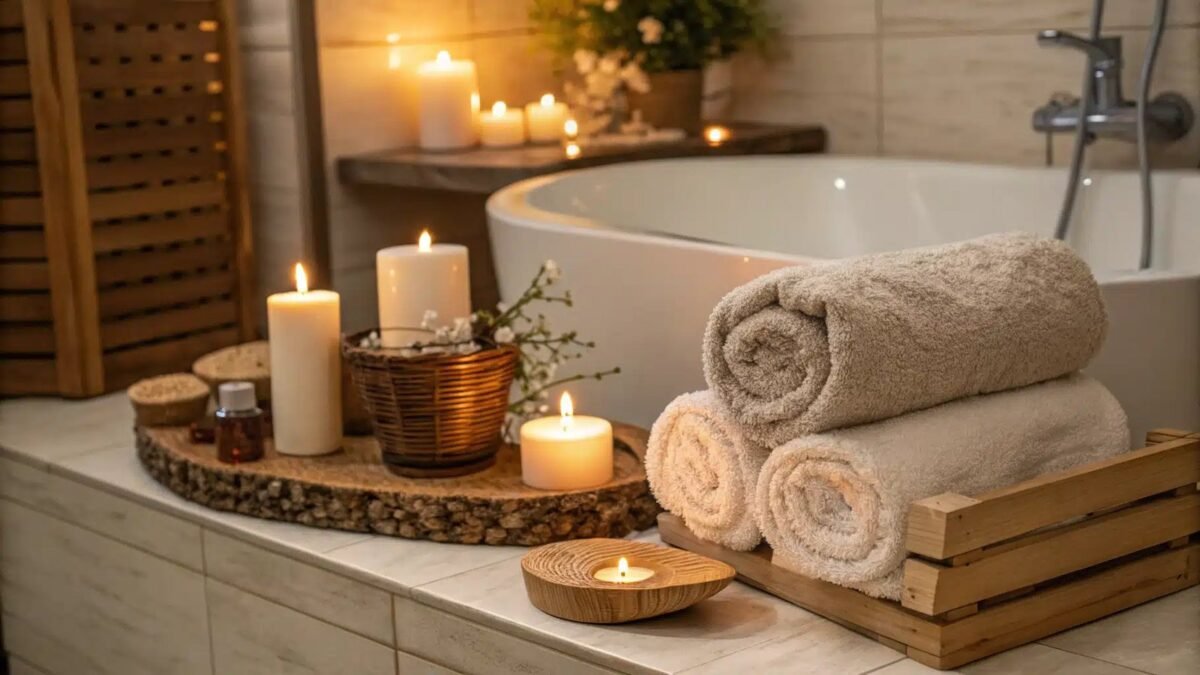
Harsh ceiling light, tangled bottles, and thin towels make an ordinary washroom feel purely functional, however clean it stands. Professional retreats rely on softer tricks: low flickering light, one calm scent carried on steam, plush fabric against skin, and surfaces cleared down to a few beautiful objects. Gather inexpensive versions of those layers first, arrange them patiently, and a daily soak starts feeling indulgent rather than rushed and routine.
The Low Cost Spa Checklist to Assemble First
Start by gathering the pieces below before changing anything in the room itself. Most households already own several of them, and the rest turn up cheaply in ordinary shops, so the whole transformation stays modest in cost while feeling deliberate rather than improvised.
Plain unscented candles, plus a few scented ones, in sturdy holders that catch drips safely.
A bundle of fresh eucalyptus stems, or a small bottle of eucalyptus or lavender oil.
The thickest towels you own, washed without heavy fragrance and folded rather than hung in a heap.
A wooden board, small stool, or tray that can rest across the tub or beside it.
A soft bath mat, a clean robe if you have one, and a hook or rail within easy reach.
Epsom salt or plain bath salt, a gentle soap you enjoy, and a jug for rinsing.
A small plant or a single stem in a jar, something living to soften hard tile lines.
A basket or box that will swallow every everyday bottle once the ritual begins.
Notice what the list leaves out. No renovation, no new fittings, no matching designer sets. The effect professional spaces create comes from layering simple sensory changes, not from expensive hardware. A calm room is mostly an edited room: fewer objects on show, softer light on skin, one scent instead of five competing ones, and fabric that feels generous. Work through the list over a week if money is tight. Candles and cleared surfaces alone already shift the mood noticeably, and the remaining layers can arrive gradually as you find them.
Before the first soak, give the room one honest clean. Lime marks on glass, dust on the window ledge, and a gritty tub floor all fight against the feeling you are building. Scrub, rinse, and dry the surfaces, then remove everything that does not belong to the ritual itself. Cleaning products, spare razors, half empty bottles, and laundry waiting for a wash all move elsewhere for the evening. What remains should be only the items on the checklist, arranged where your hands will naturally look for them.
Soft Candlelight Replacing Harsh Overhead Glare
Overhead bathroom lighting is designed for shaving and cleaning, not for unwinding. It flattens faces, sharpens every shadow, and keeps the brain in task mode. Switching it off is the single fastest transformation available, and it costs nothing beyond the candles already gathered. Place them where their light bounces gently: one near the mirror, one at the far end of the tub, perhaps one on the window ledge. Reflected candlelight warms tile and skin alike, and the small moving flames give tired eyes something soft to rest on.
Safety deserves plain words here. Keep flames away from towels, curtains, and aerosol cans, and set every candle in a holder that stands steady on a flat surface. Never leave a burning candle alone in the room, and extinguish each one before sleep rather than after. Battery powered candles with a warm flicker make a sensible substitute in homes with small children, curious pets, or anyone who tends to drift off in the tub. The goal is lower, warmer, softer light, and that goal survives the swap intact.
Height matters more than quantity. A few candles placed low, near the water and along the floor line, create the sheltered feeling associated with retreat spaces, whereas a bright cluster at eye level can still feel busy. If the room has a dimmer or a small lamp with a warm bulb, that works too, shaded and turned toward a wall rather than aimed at the bather. Test the lighting once before the first real soak, adjusting positions while the room is dry and you are fully awake, not mid ritual with wet hands.
Sound, often forgotten, completes the lighting change. A tiled bathroom amplifies every drip and echo, which keeps the space feeling hard even when the light has softened. A small speaker placed safely away from water, playing quiet instrumental music or recorded rainfall at low volume, rounds off those echoes surprisingly well. Keep the volume below conversation level. The room should feel hushed, not entertained, and you should still hear the water moving. Silence itself is also a legitimate choice, especially after a day full of voices and notifications competing for attention.
Steam Friendly Scents From Leaves and Oils
Scent is the layer people remember most, and steam is its best delivery system. Hot water releases fragrance into the air continuously, wrapping the whole room rather than perfuming one corner. The classic method hangs a small bundle of eucalyptus stems from the showerhead or a nearby hook, clear of the direct water stream. Warm vapour passes through the leaves and carries their sharp, clean aroma outward. Bundles stay fresh for a week or two in the damp air, and crushing one leaf gently between your fingers revives the scent before a soak.
The same thinking extends past the bathroom door. A home scented gently with natural ingredients feels coherent, so the calm of the bathing room connects with the rest of the evening instead of ending at the threshold. Simmering citrus peel and herbs on the stove, opening windows after cooking, and keeping fabrics fresh all help make your home smell amazing naturally without heavy synthetic sprays. Choose one direction for the whole home on a given evening, herbal, citrus, or warm and woody, and let the bathroom scent belong to that same family.
It helps to understand what these spaces were originally about. A spa, as reference sources recount, began as a place where mineral rich spring water was used for medicinal bathing, and the word has widened to cover many settings devoted to overall wellbeing. Water itself was the treatment. That history is reassuring for a home project: the soak matters more than the accessories. Oils added to bathwater should be diluted first in a spoon of plain carrier oil or mixed into salts, since undiluted oils can irritate skin and make the tub dangerously slippery. A few drops are plenty; scent should greet you, not follow you for hours afterwards.
Plush Textiles and Cleared Uncluttered Surfaces
Fabric touches skin more than any other material in the room, so textiles carry the feeling of luxury more honestly than decoration does. Thick towels, dried fully and folded with care, signal that the soak is an occasion. Warm them on a radiator or in a brief tumble while the tub fills, and the step out of the water stops being a shock. A robe waiting on a hook extends the warmth for the unhurried minutes afterwards, when lotion, tea, and slow dressing turn a bath into an evening rather than an errand.
Clutter is the opposing force. Every extra bottle on the rim asks the eye to read a label, and reading is work. Move daily products into the basket from the checklist and store it in a cupboard or just outside the door during the ritual. Leave out only what the soak itself needs: soap, salt, perhaps a scrub. Clear surfaces also wipe down faster, which protects the whole project, because a room that stays easy to clean stays inviting. Visual quiet is not emptiness; the plant, the candles, and the folded towels remain, chosen rather than accumulated.
Touch the remaining details with the same editor’s eye. A mat that slides is a small hazard and a small irritation, so choose one with a grippy backing or place a dry towel beneath it. Rolled hand towels in a basket look generous and keep essentials reachable. If towels have gone thin and scratchy over the years, replacing just two large ones transforms the experience more than any ornament would. Buy the best cotton you can reasonably afford, wash new towels without fabric softener so they stay absorbent, and retire the worst old ones to cleaning duty.
Shared bathrooms need a little diplomacy for the system to survive. Tell the household when the room will be occupied, keep the ritual within a fair span of time, and leave the space cleaner than you found it. A small sign on the door feels playful rather than strict in some homes. When others feel respected rather than displaced, they protect the ritual instead of teasing it, and some may ask for a turn with the candles and the good towels themselves.
A Slow Soaking Ritual Worth Repeating Weekly
With the room prepared, the ritual itself can stay beautifully simple. Run the water warm rather than scalding, add salts as the tub fills so they dissolve fully, light the candles, and give the steam a few minutes to gather scent before you step in. Bring drinking water, since warm baths are quietly dehydrating, and leave the phone in another room. The absence of a screen is not a punishment; it is the condition that lets the mind slow down to the pace the body has already adopted.
Traditions around scented bathing run deep. Aromatherapy, in the reference sense, involves plant derived aromatic materials, including essential oils, used to support physical and psychological comfort. Treat that as gentle support rather than medicine. Choose scents by honest preference: lavender in the evening, eucalyptus when your head feels heavy, citrus when the soak happens earlier in the day. Keep the water time moderate, around twenty to thirty minutes for most people, and rise slowly afterwards, since warm water relaxes blood vessels and a sudden stand can bring light headedness.
Warm bathing before bed carries one more quiet benefit. Body temperature rises in the water and falls afterwards, and that fall is associated with easier sleep, which is why an evening soak often pairs with a heavy, contented tiredness. End the ritual as deliberately as it began: candles out, towels hung to dry properly, the basket returned, surfaces wiped while they are still warm and easy. Repeating the same closing steps each week turns upkeep into habit. Protect one regular slot, a Sunday evening or a midweek pause, and let the room you assembled keep its promise all year.


