
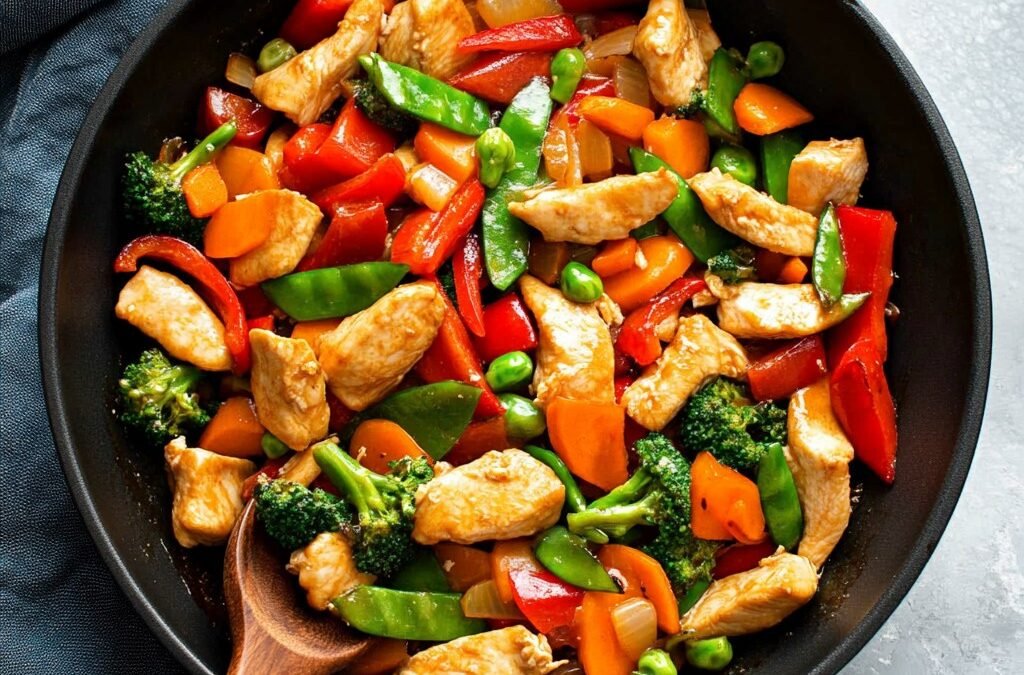
Home stir fry often disappoints for fixable reasons: meat sliced thick, a pan that never quite gets hot, and sauce tipped in so early it boils instead of clinging. Correct those three habits and a modest pile of vegetables and sliced chicken starts tasting remarkably close to a favourite takeaway order. The whole supper still lands on the table fast, built from store cupboard bottles and whatever produce needs using. What it calls for is respect for sequence: prepare everything first, heat the pan properly, and let the sauce arrive only when there is something hot and seared for it to coat.
Stir Fry Habits That Steal the Takeout Taste
Start with the slicing. Thick chunks of chicken or beef cannot cook through in the short burst of heat a stir fry allows, so their outsides toughen while their centres lag behind, and the cook, worried about rawness, leaves them in the pan far too long. Thin slices solve the whole problem at once. They cook in moments, they brown across a wide surface, and they stay tender because they spend so little time over the heat. Cut against the direction of the fibres you can see running through the meat, since shortening those fibres is what makes each bite feel soft rather than chewy. A quick freezer chill firms flesh up enough that a sharp knife glides instead of tearing, and even slices become much easier to manage.
A second habit is impatience with the pan. Food added to a merely warm skillet releases its juices into a puddle, and from that moment on it stews instead of frying. The surface never browns, the edges never crisp, and the flavour stays flat no matter how good the sauce is. Wait until the pan is properly hot and a faint shimmer moves across the oil. Add the food, spread it out, and then leave it alone long enough for a crust to form before you start pushing it around. Constant stirring is another quiet thief. Every turn exposes a cool side and drops the temperature a little, so stir in short bursts and let the heat do its work in between.
Sauce timing is the third habit, and it ruins more attempts than the other two together. Poured in at the beginning, sauce behaves like a simmering liquid: it softens crisp edges, it dilutes as vegetables release water, and its sugars can scorch during a long cook. Held back until the final minute, the same mixture meets hot food, thickens almost at once, and clings in a shiny layer. Timing lessons like these travel well between dishes, and anyone who has studied restaurant style pasta at home will recognise the same principle, since noodles and sauce there also meet late and briefly. For the broader background, the Wikipedia overview of stir frying history and technique explains how the method grew around intense heat and constant readiness. Fix slicing, heat and sauce timing, and the dish changes character completely.
A Heavy Skillet and High Heat Oil for Stir Fry Work
A wok is welcome but not required. A broad, heavy skillet made of cast iron or thick stainless steel holds heat when cold ingredients land in it, and that stored heat is what keeps the sizzle aggressive instead of feeble. Thin, light pans swing wildly in temperature, cooling the instant food arrives and then overshooting once the food is removed. Weight is the quiet advantage. The pan should also be wide enough that pieces sit in a single layer with small gaps between them, because those gaps are where steam escapes. If the layer doubles up, steam gets trapped, surfaces turn grey, and browning never starts.
Oil choice matters for a plain reason: the pan gets hotter than most cooking ever demands. Avocado oil, peanut oil and refined coconut oil all tolerate that punishment without smoking heavily or turning bitter. Delicate oils belong elsewhere, in dressings and finishing drizzles, where their flavour survives. Use enough oil to gloss the base of the pan, no more. A flooded pan fries unevenly and leaves the finished dish greasy, while a dry pan grabs at the food and tears the crust you worked to build.
Everything else is simple support. Have a bowl ready for the cooked protein, a small jug holding the mixed sauce, tongs for turning, and the vegetables already cut and grouped by how long they need. Stir fry moves too fast for mid-cook chopping. Once the first slice of meat hits the oil, there is no spare minute to hunt for the garlic. Lay everything out in the order it will be used and the cooking feels calm despite the fierce heat.
Coating Sliced Meat for a Silky Stir Fry Finish
The tender, smooth texture people associate with a good takeaway comes largely from a light coating applied before cooking. Stir the sliced meat with cornstarch, a spoonful of soy sauce and a small amount of oil until every piece looks evenly dusted and slightly glossy, then leave the bowl alone for somewhere between fifteen and thirty minutes. During that rest the starch settles onto the surface, the seasoning soaks in a little, and the oil helps the pieces separate in the pan instead of clumping into one solid mass.
When the coated meat meets serious heat, the starch layer sets into a delicate shell. That shell shields the flesh from the harshest of the temperature, holds moisture inside, and gives the sauce something to grip later on. The result is the silky finish the technique is named for, and the Wikipedia entry describing the velveting technique sets out how cooks developed the approach for exactly this effect. The coating works across chicken, beef, pork and firm seafood, so one habit serves almost any protein a household keeps.
Two details decide whether the coating succeeds. First, the slices need to be genuinely thin and roughly equal, or the shell sets on some pieces while others are still raw in the middle. Second, the pieces must land in a single hot layer. Shake off loose dry starch as you add them, cook in two rounds if the batch is large, and resist moving the meat for the first stretch so the coating can set and later turn cleanly instead of sticking.
Stir Fry Cooking Order From Protein to Aromatics
With preparation finished, the cooking itself is brief, roughly six to eight minutes from first sizzle to serving. Begin with the protein. Sear it in that single uncrowded layer until it colours well and is just cooked, then lift it out onto a clean plate along with any juices. Leaving it in while the vegetables cook would overcook it and flood the pan, so the pause matters. The resting meat also finishes gently in its own warmth while the rest of the work happens.
Vegetables go in by density. Firm pieces such as carrot batons, broccoli florets and thick onion wedges need the longest contact with the heat, so they enter first and get a head start. Quicker items follow once the firm ones have softened at the edges: pepper strips, snap peas, mushrooms, cabbage shreds and bean sprouts cook in a fraction of the time and turn limp or watery if they wait too long. Judge by bite rather than by clock. A vegetable that still crunches pleasantly when it leaves the pan will soften a touch more in the sauce and on the plate.
Aromatics come last among the raw ingredients. Garlic and ginger burn quickly at stir fry temperatures, and burnt garlic turns bitter enough to shadow the whole dish, so give them only the final half minute or so, stirring until their smell rises sharply. Then the protein returns with its resting juices, everything is tossed together once, and the pan is ready for sauce. That order, protein out, firm vegetables, quick vegetables, aromatics, reunion, is the whole choreography. Learn it once and it applies to almost any combination a fridge can offer.
A Balanced Stir Fry Sauce Mixed Before Cooking Starts
Mix the sauce before the burner is lit, because there will be no pause to assemble it later. A reliable balance starts with about three tablespoons of soy sauce for salt and depth, a tablespoon of oyster sauce for savoury sweetness, and a teaspoon each of sesame oil, sugar and cornstarch, loosened with a splash of water or light stock. Whisk until the starch disappears completely, since dry lumps will not dissolve properly once the sauce hits the pan.
Each part earns its place. Soy sauce seasons and colours. Oyster sauce adds body and a rounded, cooked flavour that soy alone cannot give. Sesame oil is a perfume rather than a cooking fat, so a small amount is plenty and more turns heavy. Sugar does not make the dish sweet; it rounds the salt and helps the coating shine. Cornstarch is the thickener, and it works only when the sauce heats through, turning from thin and cloudy to glossy and clinging within about a minute of tossing.
Adjust within that frame rather than abandoning it. Dried chillies bring heat, and a dash of rice vinegar sharpens a sauce that tastes flat. Taste the raw mixture with a fingertip and correct it calmly at the counter, not over a smoking pan. Then pour it around the inside wall of the pan rather than straight onto the food; the hot metal warms it on the way down and it thickens evenly as you toss.
Serving Stir Fry Over Rice or Noodles
Serve at once. Stir fry waits for nobody, because the vegetables keep softening in the residual heat and the glossy coating dulls as it sits. Spoon everything over plain steamed rice when you want the sauce to be the star, letting the grains soak up what runs off the vegetables and meat. Rice also stretches a modest amount of protein across more plates without anyone feeling short changed, and its plainness resets the palate between bites of a richly seasoned sauce.
Noodles make a different kind of meal from the same pan. Cook wheat noodles until just shy of done, drain them well, and toss them through with the sauce so they finish by absorbing it. Rice noodles need only soaking until pliable before they join the pan, and they are delicate, so fold them gently. Either way, the noodles should arrive coated and shining, never swimming.
Finishing touches take seconds. Scatter sliced spring onions over the top for freshness, shake on a few sesame seeds if they are handy, and put extra chilli on the table for whoever wants it. Serve in warm bowls so the food stays hot to the last mouthful, and eat it while the contrast is alive: crisp vegetables, tender coated meat, sauce still glossy. Cooked this way, with the habits corrected and the order respected, a home stir fry stops apologising for itself and simply tastes like supper done properly.
2 comments