
Steakhouse flavour is mostly heat control, dry surfaces, and patience after cooking, none of which require professional training or restaurant equipment at home. Weighing a gentle oven first method against faster pan only routes helps a beginner choose with confidence. Restaurants enjoy advantages of blazing grills and rested, well marbled beef, yet the gap between their plates and a careful home attempt is narrower than reputation suggests. The honest argument centres on one technique, reverse searing, which suits some steaks beautifully and others barely at all, so the case for it and the case against it both deserve a hearing before any verdict is offered.
The Case For Reverse Searing Thick Steaks in a Home Oven
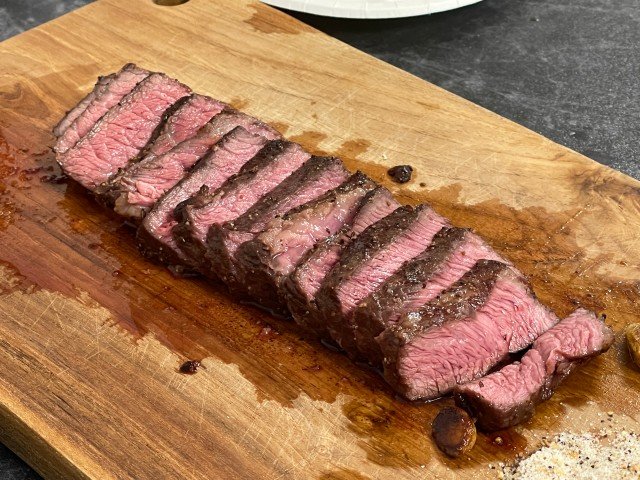
Reverse searing cooks a thick steak gently in a low oven until it nears its target temperature, then finishes it briefly in a very hot pan. The strongest argument is evenness. Because the oven heat surrounds the meat slowly and uniformly, the interior rises as one consistent colour from edge to edge, leaving only a thin overcooked band beneath the crust instead of the thick grey ring that fast, fierce cooking often produces. A steak sliced open after reverse searing shows the blush its cook intended across nearly the whole cross section, which is exactly the presentation that makes steakhouse plates look luxurious.
Forgiveness follows evenness as the second great virtue. A thick steak in a gentle oven changes temperature slowly, giving the cook a wide window of several minutes in which the meat sits near its target rather than racing past it. Beginners gain time to prepare the pan, melt butter, and breathe, instead of hovering anxiously over sizzling meat whose interior climbs by the second. The method also dries the surface as a side effect, since warm oven air steadily evaporates moisture from the exterior during the slow stage. That dry surface then sears almost instantly in the hot pan, building a deep crust in a short burst of contact while the interior, already warm, barely cooks further. Reliability completes the case: the same thickness, oven setting, and target temperature reproduce the same result week after week, turning steak night from a gamble into a routine.
Presentation benefits deserve mention as well, because the gentle stage levels the playing field between the centre cut and the ends of a long steak. Pan only cooking tends to leave the thinner tail of an uneven cut more done than its thick heart, whereas slow oven warming brings the whole piece along together, so every slice served looks and eats consistently. For anyone cooking for guests whose preferences lean rosy, that uniformity across the platter removes the quiet disappointment of one diner receiving a grey portion while another enjoys a blushing one.
The Case Against Reverse Searing Thin Steaks and Hurried Dinners
The disadvantages begin with time. The slow oven stage stretches the total cooking well beyond a pan only steak, and a household sitting down to a hurried weeknight dinner may reasonably judge the improvement in evenness not worth the wait. Oven use itself adds friction in hot weather, warming the kitchen for the sake of two portions of beef, and the method demands a rack and tray arrangement that produces one more set of washing up than a single pan supper requires.
Thin steaks expose the deeper flaw. A cut with little thickness reaches serving temperature so quickly that the gentle stage offers almost no window at all; by the time the exterior has dried, the interior may already stand near its target, leaving the final sear nowhere to go without overshooting. For such cuts the whole premise collapses, and a screaming hot pan used briefly on each side produces a better plate with less ceremony. Grill cooking makes a similar honest claim for many households, delivering smoky flavour no oven can imitate, and pan only cooking keeps the butter, garlic, and herbs bathing the meat for the entire process rather than only at the finish. Reverse searing therefore presents itself as a specialist tool for thick cuts, not a universal law of steak, and beginners serve themselves best by understanding its boundaries as clearly as its strengths.
Choice Ribeye, Chuck Eye, Flat Iron, and Sirloin as Beginner Cuts
Cut selection shapes success as strongly as method does. Ribeye stands as the classic beginner recommendation because its generous marbling, the fine fat flecked through the muscle, melts during cooking and adds moisture and flavour, which makes the cut tolerant of a minute too long in the pan where a leaner steak would dry out. A ribeye slightly overshot still eats tender and rich, which builds confidence early. Chuck eye, cut from near the ribeye end of the chuck, offers much of that same marbling character at a friendlier price, though individual muscles within the cut vary, so thickness can wander and cooking may run unevenly across the piece.
Flat iron brings tenderness out of proportion to its modest reputation, with fine marbling and a uniform thickness that suits even cooking, provided the cook respects that it toughens if pushed far beyond a rosy interior. Sirloin occupies the leaner, beefier corner of the beginner shelf: affordable, widely available, full of honest flavour, yet less forgiving, since its lower fat content dries quickly when overcooked and rewards careful temperature attention. Thickness matters across all four cuts; a steak thick enough to fill a palm gives any method room to work, while thin versions of even the finest cut surrender their interior before a crust can form. Buy thickness first, marbling second, and prestige last, and the cooking that follows becomes markedly easier.
Dry Surfaces, Smoking Cast Iron, and Butter Basting for Crust
Crust separates a memorable steak from a merely cooked one, and crust begins hours of thinking before the pan. Browning develops largely through the reaction between proteins and sugars at high surface temperatures, and that reaction only proceeds well on a dry surface, since surface water must boil away before temperatures can climb toward browning territory. Salting in good time and resting the steak uncovered in the refrigerator dries the exterior noticeably, while a final pat with paper towels just before cooking removes whatever moisture remains. A wet steak steams in its own juices, emerging grey and tired, however impressive the pan beneath it.
Cast iron earns its place through mass and heat retention: a heavy pan, heated until its oil only just begins to smoke, delivers the fierce, steady contact a crust requires without cooling dramatically when cold meat lands in it. Lower the steak into the pan moving away from your body, so splashes land away from your hand, leave it undisturbed while the first side browns, and resist pressing or shuffling it, since contact builds crust and movement interrupts it. Butter basting belongs to the final moments, when butter foams in the tilted pan with crushed garlic or hardy herbs and gets spooned repeatedly over the meat, enriching flavour and helping the surface finish evenly. Butter added too early burns before the crust forms, so its entrance should feel like a finishing touch rather than a cooking medium, with the pan heat eased slightly as basting begins.
Seasoning choices sit alongside the heat decisions without complicating them. Coarse salt and cracked pepper applied generously suit nearly every beginner cut, since thick steaks can carry assertive seasoning across their large surfaces. Sugar bearing rubs brown quickly and can scorch during a hard sear, so sweeter blends belong on gentler routes or should be added with restraint. Slicing the finished steak on a board with a groove catches the resting juices, which then belong spooned back over the meat or folded into a simple pan sauce rather than wiped away as waste.
Doneness Temperatures, Carryover Heat, and Resting Steak Before Slicing
Doneness is judged by internal temperature rather than by cooking time, because thickness, starting temperature, and the heat of a particular oven or pan all change how fast a steak cooks, making minutes an unreliable witness. Every beginner should know the official benchmark plainly: guidance for fresh beef steaks puts the safe standard at one hundred and forty five degrees Fahrenheit, followed by a short rest. Many steak lovers prefer a warm red centre, which sits below that figure; serving steak at that lower level is a knowing personal choice made by the eater, and it should never be presented as the safe standard itself. A simple probe thermometer removes guesswork entirely, and readers who dislike relying on gadgets alone can learn about telling when steak is done through touch and timing cues that support, rather than replace, temperature awareness.
Carryover heat continues the cooking after the steak leaves the pan, as residual energy migrates inward and the centre climbs a little further during the rest. Wise cooks therefore pull a steak slightly before its target, trusting the rest to carry it the final distance, while a steak pulled exactly at target often arrives at the table one shade more done than intended. Resting itself is not idle waiting: during a rest, the meat relaxes and its juices settle back through the interior instead of flooding the board at slicing, so a rested steak keeps its moisture on the plate where it belongs. Tent the meat loosely, give it roughly half its cooking time, then slice against the grain so each bite shortens the muscle fibres and eats tender.
Verdict: The Beginner Method Worth Learning First at Home
The verdict favours reverse searing, with its boundaries respected. A beginner who buys a thick, well marbled steak, dries its surface properly, warms it gently in a low oven, sears it hard in cast iron, bastes with butter at the finish, and rests it before slicing will produce a plate that stands comparison with restaurant efforts, and will do so repeatedly rather than by luck. The method teaches the transferable lessons of steak cooking, temperature over time, dryness before searing, carryover during resting, more clearly than any faster route, because its slow pace lets a learner observe each stage instead of surviving it. Background on steak cuts and grading helps shoppers read labels and understand why marbling grades differ, while the science behind the crust rests on the Maillard reaction and browned crust flavour, the chemistry that rewards a dry surface and a properly hot pan. Keep pan only cooking for thin steaks and rushed evenings, keep the grill for smoky summer nights, and let reverse searing be the first method mastered, because confidence built on one reliable ritual spreads to every other cut and technique a home cook attempts afterwards.
One comment