Thirty three an hour works out to sixty eight thousand six hundred and forty a year before tax, comfortably professional on paper. Whether it feels that way in practice depends on pay cycles, unpaid weeks and the benefits wrapped around it.
The Full Time Baseline Behind Every Comparison
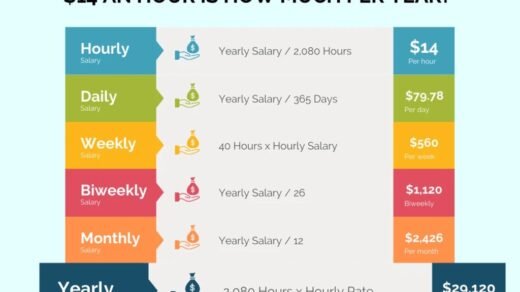
Every comparison in this piece leans on one fixed reference point, so that reference deserves a clear statement before any weighing begins. Full time work at this rate, stretched across the standard year, produces sixty eight thousand six hundred and forty before tax. Beneath that headline, the calendar average sits at five thousand seven hundred and twenty a month, a single packet covering a fortnight brings two thousand six hundred and forty, and one standard week accounts for one thousand three hundred and twenty. Those four numbers form the baseline; everything compared later is measured against them rather than against a feeling.
Paperwork habits and payment routines shape how an income feels between paydays just as surely as the rate itself, and anyone whose work involves billing clients directly will recognise the value of writing a professional invoice that gets paid faster when cash flow timing matters. Employees meet a softer echo of that same truth: a predictable cycle steadies a household, while an erratic one makes even a strong wage feel unreliable.
Payment agreed for a defined stretch of work is the foundation beneath the baseline, a point the Wikipedia article on salary makes when describing salary as compensation settled for a period rather than by the task. With that foundation stated and the baseline fixed, the comparisons can begin, starting with the calendar itself, which quietly rearranges this income depending on how an employer chooses to slice the year.
Pay Every Two Weeks Compared With Twice Monthly Pay
Two pay cycles dominate working life, and they deliver identical yearly totals through noticeably different monthly experiences. Under the fortnightly pattern, pay arrives in packets of two thousand six hundred and forty, with most months holding two packets and a couple of months each year holding three. Under the twice monthly pattern, pay lands on set dates in smaller, perfectly even instalments, and every month looks identical on paper, which some households find restful and others find oddly rigid.
Weighed head to head, the fortnightly cycle wins on one clear point: its occasional extra packet arrives as a lump large enough to matter, ready to be directed at debt, savings or a yearly bill in a single move. The twice monthly cycle wins on smoothness, since budgeting requires no adjustment between ordinary months and generous ones. Neither cycle pays a unit more across the year, so the honest verdict is that preference, not arithmetic, should decide which a worker hopes for when both are genuinely on offer.
The trap shared by both cycles is planning around the flattering average. Five thousand seven hundred and twenty describes no actual month under fortnightly pay, and households that spend as though it does meet a recurring shortfall that feels mysterious until the calendar is examined. Regular commitments belong inside the ordinary month whichever cycle applies, leaving any surplus packet as planned ammunition rather than accidental rescue money.
One further angle separates these cycles in practice, and it concerns how each handles the irregular costs that refuse to arrive monthly. School expenses, vehicle repairs, annual subscriptions and festive spending all land unevenly across a year. Fortnightly households often discover that the occasional additional packet, precisely because it does not fit the monthly pattern, becomes a natural home for exactly those uneven costs. Twice monthly households, receiving no such irregular lump, usually need a deliberate monthly transfer into a separate pot to achieve the same result. Both routes work; they simply place the discipline in different locations, one inside the calendar and the other inside a standing instruction the household sets for itself.
Shorter Schedules Weighed Against the Full Week
The second comparison sets reduced schedules against the full week, and here the trade is genuinely two sided. Stepping down to half time halves the headline with mathematical neatness, bringing the year to thirty four thousand three hundred and twenty before tax. The weekly arrival shrinks in the same proportion, yet the cost of simply existing barely moves, which means the household gives up half its income while keeping nearly all of its outgoings.
Against that stark arithmetic stand things no conversion table can price: time for children or parents, room to study, space to recover health, or capacity to build something alongside employment. A reduced schedule chosen deliberately, with its lower total named in advance and the budget rebuilt around it, can serve a household well. A reduced schedule drifted into, while spending still assumes the full week, produces the slow leak that people misdiagnose as a cost of living problem.
Unpaid weeks sharpen the same comparison from the other direction. Each week away without pay subtracts a full weekly slice from the year, so a role offering generous unpaid leave is quietly a lower paying role than its rate suggests. When two offers carry the same hourly figure, the one protecting paid time away usually deserves the stronger mark in this particular contest.
Hourly Pay Compared With a Salaried Package
The third comparison is the one most likely to decide a real job choice: an hourly post at this rate set against a salaried post wearing a similar yearly costume. The hourly version pays strictly for time worked, so holidays, closures and sick days may arrive unpaid unless the contract says otherwise. The salaried version smooths those gaps away, paying through leave and quiet periods alike, and that smoothness has genuine cash value across a year even though it never appears as a separate line anywhere.
Value also hides in what surrounds the pay rather than inside it. As the Wikipedia article on employee benefits explains, benefits count toward overall compensation on top of direct wages, covering things like insurance cover and provision for retirement. An employer funding health cover, matching retirement contributions or providing insured protection is adding real worth that a bare hourly comparison completely misses, and a modest salary with a rich package can quietly overtake a flashier rate standing alone.
Premium pay belongs in this comparison too, handled with suspicion. Extra hours sometimes attract enhanced rates in hourly roles, while many salaried posts at this level are classed as exempt and attract nothing extra at all. Because eligibility varies so sharply, confirm it in writing before letting any premium assumption tilt the balance between two offers.
Deductions, Benefits and the Gap Before Spending
Between the gross baseline and anything spendable lies a gap assembled from several distinct pieces, and honesty requires naming them without pretending they add up to the same total for everyone. Amounts are held back from wages toward tax obligations, payroll taxes take their share from pay, and the position a person files under changes how much holding back is appropriate. On top of those sit voluntary subtractions with value of their own: payments into a workplace retirement plan and contributions for benefit cover both shrink the arriving packet while building protection or future income in exchange.
Where a reader lives and how their household is arranged decide the final shape of that gap, so any article promising one universal spendable figure for this wage is selling false precision. Two colleagues on identical rates can take home noticeably different packets for entirely legitimate reasons, and neither packet reveals an error. The practical move is to build the household budget from an actual payslip once one exists, and from a cautious estimate until then.
Benefits deserve a second mention inside this gap, because they blur it in a helpful direction. Cover funded by an employer reduces what a household must buy for itself, so a slightly smaller packet accompanied by strong benefits may leave a family better protected than a larger packet carrying no such support. Judging the gap on cash alone understates the package, just as judging the offer on its headline alone overstates it.
There is also a quieter test worth applying before any recommendation is reached, and it involves watching how an offer behaves under mild misfortune. Imagine a month containing a vehicle repair, a week of reduced hours and a yearly bill arriving together, because real calendars produce such clusters without asking permission. A package with paid leave, funded cover and a packet that survives its deductions will absorb that cluster with grumbling rather than borrowing. A package depending on unpaid time being painless, or on premium hours always materialising, may wobble badly under the same ordinary pressure. Offers rarely advertise how they perform in a bad month, yet that performance often matters more than how either looks in a perfect one.
Recommendation for Judging an Offer at This Level
The comparisons now earn their conclusion. Judge any offer at this level first by its ordinary month, the one built from two standard packets, and refuse to let the flattering yearly average negotiate on the offer’s behalf. An offer that comfortably houses, feeds and protects a household inside that ordinary month is a sound offer; one that only works when extra packets, premiums or optimistic hours are included is a fragile one wearing professional clothing.
Second, price the whole package rather than the rate in isolation. Add the worth of paid leave, funded cover and retirement support to the salaried side, check whether premium eligibility is real or merely rumoured, and confirm how many weeks in the year will actually be paid. Offers that look identical at the headline routinely separate by a wide margin once those quieter elements are given their proper weight.
Finally, remember what the baseline promised at the outset. Sixty eight thousand six hundred and forty before tax is a genuinely professional yearly figure, fully capable of supporting a settled life in many places when its calendar quirks are respected. Treat the headline as the start of the enquiry rather than its answer, weigh cycles, schedules and packages as this piece has weighed them, and the decision that follows will rest on evidence instead of on the seductive neatness of a single hourly number.