Routers often land wherever the installer found a spare socket, then households blame the internet for years of patchy rooms. Moving that one box can transform coverage more than pricey replacements, because radio waves obey simple rules about height, distance and obstacles. A shelf near the middle of the home, out in open air, gives every room a fairer share. Ten thoughtful minutes spent thinking like a tape measure beats months of grumbling.
Placement is the cheapest upgrade in home networking because it asks for no new equipment at all, only a fresh look at where the signal begins its journey. Every room in the house receives whatever is left after the signal has crossed the distance and the obstacles between it and the router. Start the journey in a kind corner and the far rooms inherit plenty; start it behind a sofa in the far basement and even the next room begins at a disadvantage it may never recover from.
The fair way to judge any spot is to weigh what it gives against what it takes away. A good position gives distance fairly, height generously, and a clear path in most directions. A poor one takes those things silently, and the household pays the difference in stalled calls, buffering evenings, and rooms where messages simply wait. The sections that follow set the gains and the losses side by side, so the final verdict rests on evidence from your own rooms rather than on habit.
What a Central High Shelf Gives You
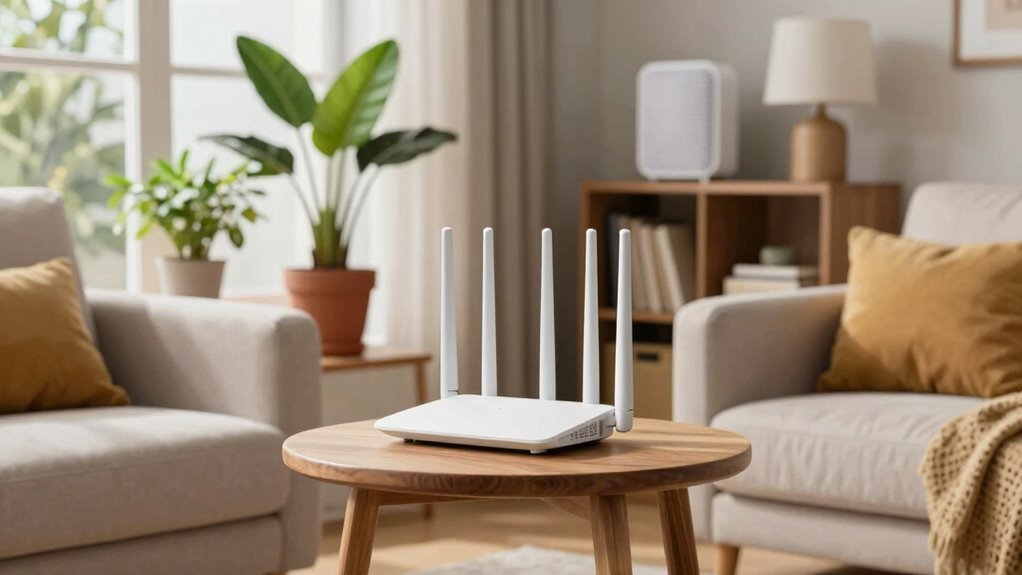
The centre of the home is where fairness begins. A router placed near the middle radiates its coverage evenly toward every corner at once, so no room sits at the extreme edge of the pattern while another bathes in strength it does not need. The far bedroom and the kitchen receive comparable treatment, and the whole household shares the connection the way the connection was meant to be shared. Consumer guidance from the Federal Communications Commission echoes the advice makers give: a central, elevated, unobstructed position gives the fairest spread of signal through a home.
Height adds its own quiet advantage. Up on a shelf, the signal travels over much of the furniture that would otherwise stand in its way, crossing rooms above sofas, tables, and bookcases rather than through them. Floors and low clutter stop mattering so much, and rooms on the same level receive a cleaner path. The router also breathes better in open air than it does wedged behind a television or buried in a tangle of other warm electronics competing for the same cramped corner.
Once a strong central position settles the indoor rooms, many households start eyeing the garden for summer evenings, and extending wi-fi into the backyard becomes the natural next step to weigh. That question deserves its own honest weighing of gains and losses, because outdoor coverage asks the signal to cross an outside wall as well as open air. The point here is simply that the indoor decision comes first: a well placed router gives any later extension a far stronger starting point.
What Corners, Cabinets and Basements Take Away
Distance is the first thief. The Wikipedia entry on radio propagation explains how radio signals weaken steadily as they travel and how they bend around, reflect from, or soak into the obstacles standing between a transmitter and a listener. A router pushed into one corner of the home therefore starts every journey to the far rooms from the worst possible place, spending much of its strength crossing the near rooms twice over in spirit before it ever reaches the people waiting at the other end.
Cabinets and enclosed furniture take a second toll. A closed cupboard door, a media unit with a back panel, a stack of other devices piled around the box: each one stands in the signal’s path at the very moment it sets out, weakening it for every room at once. Owners often hide the router precisely because its lights annoy them, then wonder why coverage feels thin everywhere. The hiding place feels tidy, yet the whole household pays for that tidiness every evening.
Basements combine both thefts with a third. The signal must climb through the floor structure of the house, which is among the densest material it will ever meet, and it begins that climb from one end of the building rather than the middle. Rooms two floors up receive what survives the journey, which is rarely much. A basement router can serve a basement workshop honestly, but as the main source for a whole home it begins every single connection with a handicap.
Materials and Appliances That Swallow Signal
Walls are not all equal, and treating them as equal is where many placement plans go wrong. Plain plasterboard passes signal easily, which is why stud walls inside a home rarely cause much trouble. Brick and concrete are far less forgiving, drinking in the signal as it crosses, and metal blocks or reflects it outright. Large mirrors, with their metallic backing, can bounce a signal away from the room it was meant for, leaving a strange dead patch where the reflection geometry works against you.
The two bands a home router uses behave differently through all of this. The Wi-Fi material collected on Wikipedia describes how the higher frequency band weakens faster through walls and obstacles, while the lower frequency band penetrates them more readily but carries less capacity. That difference explains a familiar mystery: a far bedroom may hold a workable connection on the lower band while the faster band has faded to nothing, even though both leave the same box at the same moment.
Appliances compete for the same airspace as well. Microwaves, baby monitors, and neighbouring networks all crowd into the shared air, especially in apartments and dense streets where dozens of households broadcast within earshot of one another. A router placed beside the kitchen’s busiest appliances inherits their interference as a permanent neighbour. None of this can be removed entirely, but a central shelf away from the worst offenders gives the signal a cleaner room to work in, and cleaner air often matters as much as raw strength.
Balancing Looks Against Coverage in Real Rooms
Few households will accept a router enthroned in the middle of the living room ceiling, and honesty requires admitting that looks count. The weighing, though, is rarely as stark as people fear. A shelf on a hallway wall, the top of a bookcase in the room nearest the centre, a landing cupboard with the door left open: each of these keeps the box reasonably discreet while preserving most of what centrality and height provide. The losses from a slightly imperfect central spot are small; the losses from a hidden corner are not.
What deserves real resistance is the placement driven purely by where a socket or a cable point happens to sit. Sockets were installed for the convenience of builders, not for radio waves. A longer cable run to a better shelf costs little effort compared with years of patchy rooms, and it is a one time journey rather than a daily tax. When a household weighs an ugly but central shelf against a hidden but hopeless corner, the evenings spent streaming, calling, and working should outvote the afternoon spent glancing at a small box.
Testing settles arguments that opinions cannot. Before committing, rest the router in a candidate spot for a day and walk the home with a phone, noting where calls hold and where they crumble, particularly in the rooms that have historically complained. Then try the rival spot and walk again. Two short walks give a household its own evidence, matched to its own walls and furniture, which no general advice can fully predict. Layout decides the answer in each home, and the walk reveals the layout’s opinion.
Small homes and flats call for separate treatment, because centrality works differently where rooms are few. In a compact flat the distances are short, so the battle is rarely about reach; it is about the one thick wall, the metal clad bathroom, or the network next door shouting from the other side of the partition. A high shelf near the middle still wins, but the walking test matters even more, because moving the router a single room can carry it past the one obstacle that was quietly ruining the bedroom. In larger homes the same test sometimes delivers a humbler verdict: one router, however well placed, may serve the middle honestly while the farthest rooms still plead for help, and accepting that limit is better than blaming placement for a problem of sheer distance.
The Verdict on the Single Best Spot
Weighed together, the evidence points the same way from every direction. The gains of a central, high, open position are large and they are free: fairer distance for every room, fewer obstacles at the start of each journey, cleaner air away from interfering appliances, and a stronger base for anything the household adds later. The losses are modest and mostly cosmetic, a visible box and perhaps a longer cable. Set against the losses of corners, cabinets, and basements, which tax every device in every room every day, the exchange is not close.
So the single best spot, for the great majority of homes, is a shelf or surface near the middle of the main living floor, raised up, out in the open air, away from thick masonry, metal, and the busiest appliances, with the router’s own position chosen after a short walking test rather than by the accident of a socket. No universal room can be named, because floor plans differ, but the principles travel: centre, height, openness, and distance from the materials that swallow signal.
Households that make this one move often find that the equipment they were about to replace was never the problem. The connection they already paid for simply needed a fairer place to stand. Ten thoughtful minutes with a tape measure’s mindset, one shelf, and one honest walk around the rooms will do more for most homes than any box with a bigger promise printed on it.