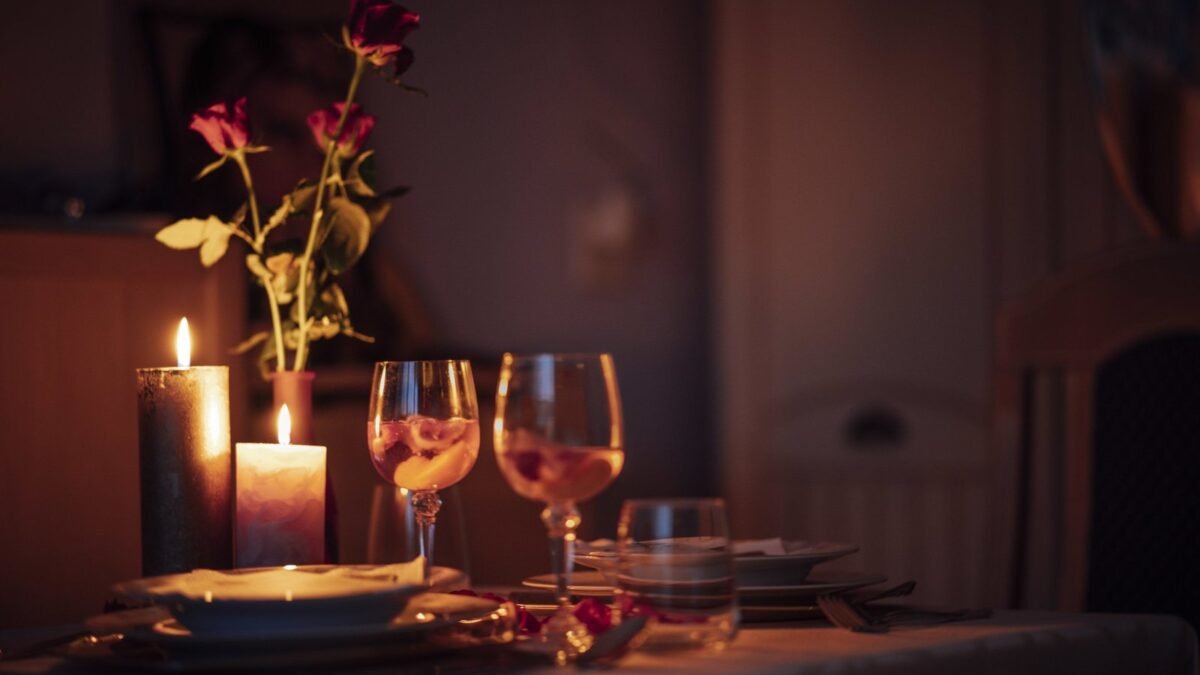
Romance at home rarely fails through lack of feeling. It fails through sameness: same sofa, same takeaway containers, same glowing phones resting between two tired people. Deliberate preparation breaks that pattern without restaurant prices or travel. A cleared room, food cooked or plated with ceremony, low lamplight, chosen music, and an activity held in reserve turn an ordinary evening into an occasion both partners remember and request again soon.
Treat the evening as something you are making together rather than something you hope will happen. Agree the night in advance, protect it from visitors and errands, and let anticipation build during the day through small messages and quiet planning. Secrecy about every detail is unnecessary; shared expectation is itself part of the pleasure. What matters is that both of you arrive knowing the hours ahead were chosen, not merely left over.
Materials to Gather: Candles Music Ingredients and Linens
Gather everything before the evening begins so nobody spends it hunting through cupboards. You need candles or tealights with safe holders, matches kept nearby, clean linens for the table and perhaps fresh bedding, ingredients for the meal and drinks, a speaker or other way to play music, and glasses and plates you enjoy using. None of it needs to be new. Familiar objects, cleaned and arranged with care, feel more personal than purchases made in a rush.
Choose food you can handle calmly. Ingredients for a dish you have cooked before, good bread, cheese, fruit, chocolate, or components for a shared dessert all work well. Buy or prepare anything fragile a day early, chill drinks in good time, and keep a simple backup in case a sauce splits or something burns. A relaxed cook is worth more than an ambitious menu eaten by two people who spent the evening stressed and apologising.
Prepare the sensory materials with the same attention. Pick music in advance: something warm and low for cooking, something slower for eating, and perhaps favourite songs from earlier in your relationship for later. Select candles with a gentle scent or none at all if fragrance competes with food. Lay out soft throws, cushions, and clean towels. Small comforts gathered early free the evening from interruptions once it has properly begun.
Decide on the reserve activity before you need it. Dancing in the living room, a deck of cards, questions that invite real conversation, a telescope or blanket for the garden, or a film you have both wanted to see can fill the later hours naturally. Keep the materials for it within reach but out of sight. An evening with a gentle next step never collapses into the usual slump in front of a screen neither of you chose.
Step One: Clear the Space and Silence Every Phone
Begin by resetting the room. Clear surfaces of paperwork, laundry, and the debris of ordinary days, wipe the table, take out rubbish, and move everyday clutter behind a closed door. You are not performing perfection for a visitor; you are removing visual reminders of chores and obligations. A cleared room changes posture and breathing. It tells both of you that tonight this familiar space holds something different from routine.
Silence every phone properly. Put them on silent, face down, and ideally in another room with a shared understanding about genuine emergencies. Agree that work messages, feeds, and news can wait until morning. The first minutes may feel oddly empty, and that emptiness is valuable. Without glowing interruptions, conversation slows down, eye contact returns, and small remarks that usually get swallowed by notifications find room to become real exchanges.
Change your clothes, even though you are staying home. Wash away the day, dress in something clean that feels good against the skin, and add one deliberate touch, a favourite shirt, a soft dress, a scent you both like. Dressing marks the threshold between household mode and occasion mode. It also shows effort, and visible effort is itself romantic, because it says the other person was worth preparing for.
Close the remaining doors on the day. Feed pets early, finish urgent messages before the agreed hour, lock up as you normally would, and lower lights in rooms you will not use. If children are in the home, settle them first with their own pleasant routine and clear expectations. The fewer loose ends wandering through the evening, the easier it becomes to give each other undivided attention without listening for the next demand.
Step Two: Cook Side by Side or Stage a Surprise
Cooking together turns preparation into part of the date rather than a delay before it. Divide tasks by preference: one person chops while the other stirs, one seasons while the other lays the table. Taste as you go, share the spoon, and keep the pace easy. Conversation flows naturally when hands are busy and nobody has to perform across a table yet. A simple dish made together often creates more warmth than a complicated plate produced by one exhausted host.
A surprise works beautifully when it spares rather than startles. If one partner cooks alone, let the other arrive to a finished scene: table set, music playing, a drink poured, and the cook free to sit down within minutes. Avoid surprises that create work, embarrassment, or pressure. The point is to make the other person feel considered, from the choice of dish down to remembering how they take a drink or which dessert they always choose first.
These same shared decisions scale far beyond one evening. Anyone learning how to plan a honeymoon budget without losing the romance faces identical questions about food, timing, treats, and where careful spending actually shows. Practising at home teaches you both what matters: rarely the grandest option, usually the thoughtful one chosen together. A home date, done well, becomes rehearsal for every larger celebration you plan side by side.
Plate the food with a little ceremony. Warm the plates if the dish suits it, wipe the rims, add a garnish of herbs or a twist of peel, and carry the food to the table rather than eating from pans. Pour drinks after you sit. Eat the first course slowly, without commentary about chores or schedules. Ceremony is not stiffness; it is attention made visible, and attention is the ingredient your ordinary evenings have been missing.
Step Three: Set Lighting Sound and Scent Together
Lighting does more for mood than any decoration. Switch off harsh overhead lights and build softer layers instead: candles on the table, a low lamp in a corner, perhaps a string of small lights where they belong. Candlelight has been tied to intimate and ceremonial settings for centuries because a soft flame flatters faces, softens a room, and slows people down. Keep flames away from curtains, sleeves, and paper, and never leave them burning unattended.
Adjust sound as deliberately as light. Music should sit beneath conversation, not compete with it, and the volume deserves checking from where you actually sit. Choose songs with shared history sparingly; one familiar melody can unlock a story, while a whole evening of nostalgia can trap you in the past. Silence has a place too. Between courses or after eating, a few quiet minutes together can feel closer than any playlist, provided the silence is comfortable rather than strained.
Scent needs restraint. A lightly scented candle, herbs from the cooking, fresh flowers, or clean linen each contribute without overwhelming the meal. Avoid stacking several strong fragrances at once, and open a window briefly if the room grows heavy. Partners differ in sensitivity, and headaches kill romance faster than plain air. Ask, notice, and adjust. That small attentiveness, repeated across lighting, sound, and scent, is what transforms decoration into care.
Temperature and seating finish the scene. Warm the room enough that nobody sits hunched in a coat, arrange chairs so you face each other or sit close at an angle, and put cushions where backs will thank you later. If the evening moves to the sofa, refresh it first: folded throw, plumped cushions, drinks within reach, candles carried safely across. Comfort that has been thought about in advance lets attention stay on each other instead of on small physical irritations.
Step Four: End Slowly With Dancing Stories or Stargazing
Resist the reflex to clear everything the moment eating ends. Leave the table for a while and let the evening change gear gently. Move to softer seats, refresh drinks, lower the music further, and choose the reserve activity while the mood is still warm. An ending given its own time tells both partners the night was never just about food. It was about lingering, and lingering is where home dates most often beat restaurants with closing times.
There is a plain idea underneath all this staging. Romance, at its heart, names a strong emotional attraction toward another person, expressed through courtship behaviour. The staging serves that feeling; it never replaces it. Dancing slowly in a cleared space, holding each other through one song, needs no skill and no audience. Awkward laughter is welcome. Closeness that includes humour lasts longer than a performance of sophistication neither of you actually enjoys.
Stories carry the closeness further. Trade memories you rarely revisit: first impressions, early disasters that became funny, moments when the other person surprised you. Reference writing on dating as a social activity frames such evenings as ways couples assess and deepen intimacy, and that deepening continues long after the early stage. Ask questions whose answers you do not already know. Long familiarity can hide unexplored territory, and curiosity is one of the most flattering gifts a partner can offer.
If the sky is clear, end outside. Wrap up warmly, take drinks or a blanket into the garden, onto a balcony, or to a quiet spot nearby, and look up together without rushing to identify anything. Shared novel activities, rather than repeated routines, are the ones relationship writing links with renewed excitement, and even this small change of scene qualifies. Walk back in slowly, blow out the candles together, and let the evening close as deliberately as it opened.