
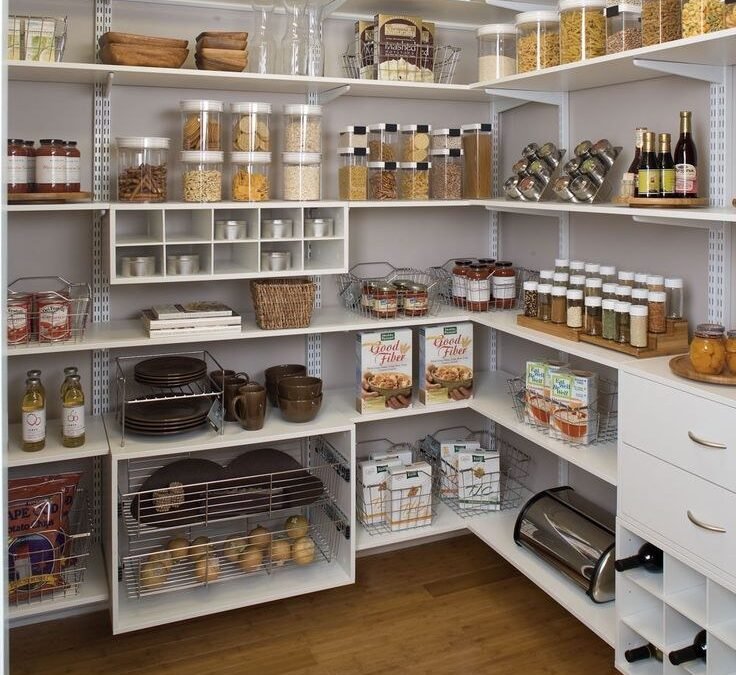
Kitchens rarely lack belongings; they lack reachable places for them, so pans hide pans and spice jars vanish behind cereal boxes. Reclaiming the dead zones inside doors, above sinks, and at cabinet backs can change daily cooking more than a costly refit. Most kitchens already contain far more storage volume than their owners ever use. It hides at the backs of deep cupboards, in the tall empty air above a single layer of tins, on the flat inner face of doors, and in narrow gaps beside appliances that fit nothing standard. The work, then, is not buying more furniture. It is matching each awkward space with a fitting that makes its contents visible and reachable, and grouping everything by the task it serves. A cook who can see every spice, lift any pan without unloading three others, and clear the counter in one sweep at the end of the day owns a kitchen that feels twice its size, even though not a single cabinet has changed.
Fifteen Kitchen Storage Ideas Listed Before Anything Is Bought
Here are fifteen ideas, counted plainly so nothing creeps in later wearing a different name. One, fit a slim rack on the inside of a cabinet door for wraps, foil, and lids. Two, hang hooks beneath wall cabinets for mugs and measuring tools. Three, add shelf risers that create a second tier inside tall cupboards. Four, install pull out frames that bring the back of a deep base cabinet forward. Five, place a lazy Susan turntable in the corner cabinet so jars rotate into view. Six, stand trays, boards, and baking sheets upright in vertical dividers. Seven, mount a magnetic strip on a wall or cabinet side for steel knives. Eight, use clear stacking boxes in the pantry so contents stay visible. Nine, fit adjustable drawer inserts that give utensils fixed compartments. Ten, lay a tiered insert in a shallow drawer for spice jars near the hob. Eleven, bridge the space above the sink with a rack for washing up items. Twelve, add hooks or a slim rail on the outer side of an end cabinet. Thirteen, use the plinth space beneath base cabinets as a shallow toe kick drawer. Fourteen, slide a narrow rolling trolley into the gap beside the refrigerator. Fifteen, keep cleaning supplies in an under sink caddy shaped around the plumbing. Every section that follows expands these same fifteen ideas by zone, in the order a real kitchen clear out would tackle them, starting with the surfaces everyone forgets.
Door Backs, Cabinet Sides, and Other Forgotten Kitchen Surfaces
Doors are the most ignored storage surface in the room. The inside face of a cabinet door is flat, clean, close to the work area, and usually completely bare. A slim rack there, the first idea on the list, holds cling film, foil, baking paper, and stray lids exactly where hands reach for them, provided the rack is shallow enough that its contents clear the shelves when the door closes. Measure that clearance before buying anything, and test with the tallest roll in the collection. The twelfth idea extends the same thinking outward. The outer side of an end cabinet, the panel that faces the room and does nothing, accepts hooks or a slim rail for aprons, oven gloves, or a frequently used ladle, turning a blank panel into a working surface. Underneath wall cabinets is another forgotten plane. Hooks there, the second idea, suspend mugs and measuring tools in air that was previously wasted, and they free an entire drawer in the process. Keep those hooks away from direct hob heat and steam, and choose fixings rated for the weight of the heaviest mug, because a hook that fails drops crockery onto whatever waits below.
Making Deep Base Cabinets Reachable With Sliding Interiors
Deep base cabinets swallow more good equipment than any other part of the kitchen. Pots nest inside pots, the roasting tin migrates to the far rear corner, and retrieving anything becomes a kneeling excavation. The fourth idea, pull out frames, changes the geometry entirely. A frame on smooth runners converts that dark rear half into a shelf that travels to the cook, so the heaviest pan sits visible and liftable rather than buried. Anyone planning a wider reshuffle of cupboard interiors will find sound principles in organising kitchen cabinets effectively before spending anything on fittings. It helps to understand what is being fitted into, and an account of kitchen cabinet construction and standard sizes explains why base units, wall units, and their interiors follow the dimensions they do. The corner cabinet deserves its own mention, because its awkward wedge defeats most shelving. The fifth idea, the turntable, answers it elegantly, and the history and use of the lazy Susan turntable shows how long this simple rotating answer has served kitchens and tables. A spin brings the rear jars to the front without reaching, tipping, or unloading. Load turntables with items of similar height, keep the tallest bottles toward the centre, and leave a small gap at the edge so nothing topples into the mechanism during a turn.
Two habits keep these sliding interiors working for years. Load the heaviest pans on the lowest frame and spread weight evenly across the runners rather than piling everything at the front, because a frame that travels level glides smoothly while a nose heavy frame strains its fixings. Wipe the runners during ordinary cleaning, since grit and spilled flour collect there quietly and turn a smooth glide into a scrape. On the turntable, group sauces and jars by the meal they serve, breakfast spreads together and cooking sauces together, so a single spin during a busy evening lands a hand on the right bottle without a second search through the whole corner.
Vertical Dividers for Trays, Boards, and Baking Sheets
Flat items stored flat create a familiar misery. The baking sheet needed tonight sits at the bottom of a heavy stack, and lifting the stack with one hand while sliding the sheet free with the other is a small daily wrestling match. The sixth idea ends it by storing those pieces upright, the way books sit on a shelf. Vertical dividers, whether a slotted rack bought for the purpose or simple partitions fitted inside a tall cupboard near the oven, let each tray, board, and sheet slide out individually. Place this storage beside the oven and preparation area, since zoning by task is what makes the system feel effortless later. Boards used for raw meat should stand where they can be reached and washed without crossing the room, and dividers should be spaced so swollen wooden boards in humid weather do not jam. Upright storage also protects edges and non stick surfaces from the grinding damage that stacked piles inflict. While arranging dividers, resist filling every slot. A divider system crammed to capacity recreates the original problem in a new shape, and leaving one slot empty gives awkward seasonal pieces, such as a large roasting board, somewhere honest to live.
Counter Clearing Moves That Return Daily Preparation Space
Counters shrink because homeless items settle on them permanently. The knife block, the mug tree, the washing up bottles, and the trolley of odds and ends each claim a patch, until the actual preparation area is a narrow strip in front of the hob. Several of the fifteen ideas exist purely to reverse that creep. The seventh idea, the magnetic strip, lifts steel knives off the counter and onto a wall or cabinet side, where blades sit visible, dry, and out of drawers. Mount it where children cannot reach, and slide knives onto it gently rather than snapping them against the magnet, which chips edges over time. The eleventh idea reclaims the air above the sink, where a rack bridging the basin holds washing up liquid, brushes, and a draining board for glasses, clearing both window sill and surrounding counter. Check that the rack clears the tap swing before ordering. The fourteenth idea, the narrow rolling trolley, attacks the odd gap beside the refrigerator that fits no cabinet. A trolley there swallows bottles, oils, or cleaning sprays and rolls forward when needed, then vanishes. Together these moves obey one rule worth stating plainly. The counter is a work surface first and a shelf last, and every object that earns a permanent place elsewhere returns chopping and rolling room that no extension could match for the price.
Placement decides whether these counter clearing moves survive real family life. Knives on the strip should sit within one step of the main chopping area yet clear of the sink splash zone, and mugs on their hooks belong near the kettle and the tea and coffee supplies, not above the hob where steam dulls and greases them. The trolley gap deserves measuring at floor level as well as at counter height, because skirting boards and uneven tiles narrow many gaps at the base, and a trolley that fits at the top and jams at the bottom helps nobody. Roll it out fully before loading it, confirm the wheels run true, and only then give it its permanent cargo of bottles.
Pantry and Drawer Systems for Small Items That Wander
Small items cause disproportionate chaos because they migrate. Spice jars drift between cupboards, batteries and tape appear in the cutlery drawer, and the tin opener is never where memory insists it was left. Drawers answer well when they are given internal order. The ninth idea, adjustable drawer inserts, assigns utensils fixed compartments that can shift as the collection changes, ending the single tangled drawer that must be raked through at every meal. The tenth idea gives spices a dedicated home, a tiered insert lying in a shallow drawer near the hob, so labels face upward and every jar can be read at a glance instead of spun one by one on a shelf. Keep that drawer away from direct oven heat, which dulls flavour over time. In the pantry, the eighth idea, clear stacking boxes, keeps packets, grains, and baking supplies visible and contained, so an opened bag never slumps behind tins again. Square boxes use shelf corners better than round ones, and a consistent size stacks without leaning. The fifteenth idea finishes under the sink, where a caddy shaped around pipes and traps gathers cleaning supplies into one liftable unit, replacing the usual sprawl of bottles wedged around plumbing. The thirteenth idea, the toe kick drawer in the plinth beneath base cabinets, suits flat and rarely used pieces such as spare trays, and it closes the list where the whole project began: space that was always there, finally asked to work. The third idea, shelf risers, deserves its closing word too, since a second tier inside a tall cupboard is often the cheapest change in the entire fifteen and the one most kitchens feel on the very first day.


One comment