Gary Barlow Net Worth, Age, Family, Career and Biography
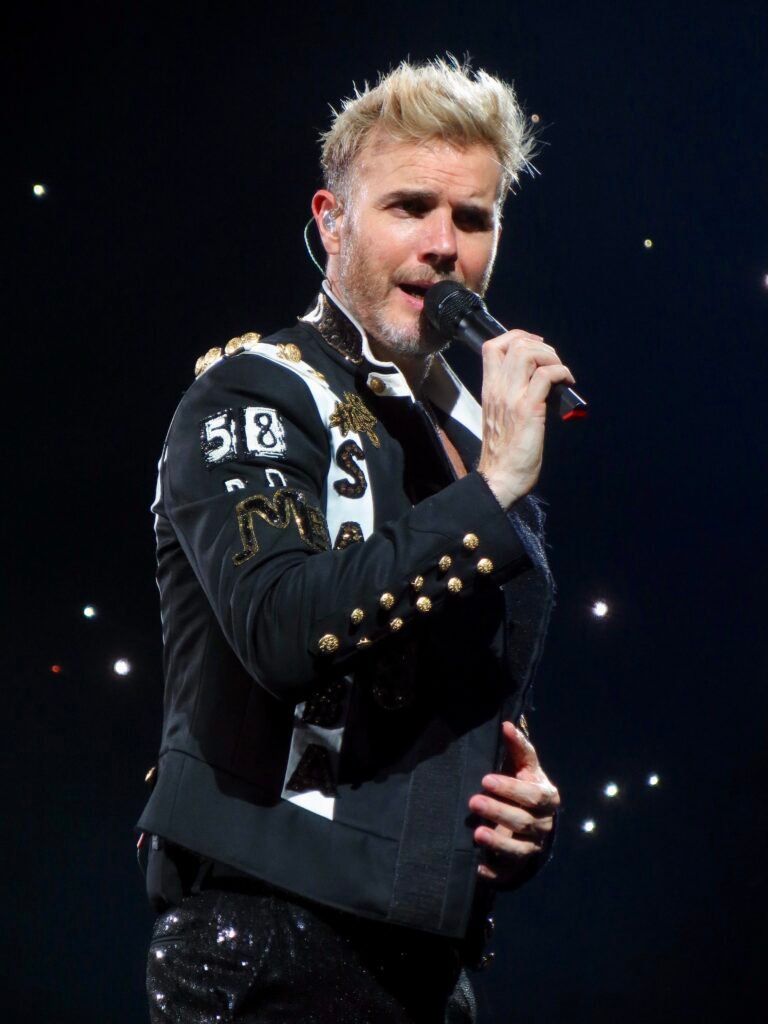
Gary Barlow has a net worth estimated at $125 million by Celebrity Net Worth. The singer, songwriter and pianist, who turned 55 in January 2026, built that fortune as the lead vocalist and principal songwriter of Take That, through a solo recording run of his own, and through writing and production work for other artists over more than three decades.
This biography covers the full record: his birthday and early life in Frodsham, Cheshire, his parents Colin and Marjorie Barlow, his wife Dawn Andrews and their children, his best-known songs, his solo albums and his work with Take That, and his Instagram account.
Early life
Gary Barlow was born on January 20, 1971, in Frodsham, Cheshire, England. He is 55 years old. His parents were Colin Barlow and Marjorie Barlow, nee Cowan. His father Colin died on October 15, 2009, a loss Barlow has spoken about in interviews and in his writing, and his mother Marjorie remained a close presence in the family’s life in Cheshire.
Music arrived early and it arrived seriously. Barlow taught himself piano as a child and was writing songs while he was still young, drawn to the piano-led pop of the era and determined to make songwriting itself the job. By his mid-teens he was performing live, singing and playing keyboards in working men’s clubs and venues around the North West, and building the practical craft — reading a room, holding a crowd, finishing a song — that would later separate him from performers who only sang material written for them. In 1989 he recorded a song, “Let’s Pray for Christmas,” after winning a BBC Pebble Mill Christmas song competition, an early sign that his writing could travel beyond the club circuit.
That apprenticeship matters to everything that followed. When Take That were assembled in Manchester in 1990 by manager Nigel Martin-Smith, Barlow was not simply the singer at the front. He was the group’s writer, the member with a catalogue of his own material ready to record, and that position — vocalist, pianist and songwriter in one — shaped both the sound of the group and the way its earnings and credits were divided for the rest of his career.
Career
1990–1996: Take That and the first run of number ones
Take That formed in Manchester in 1990, with Barlow joined by Howard Donald, Jason Orange, Mark Owen and Robbie Williams. The group’s debut album, Take That & Party, was released on August 17, 1992, and reached number two on the UK Albums Chart. The second album, Everything Changes (1993), built largely on Barlow’s own material, went straight to number one and produced four number-one singles. The third album, Nobody Else (1995), also entered at number one and proved to be the group’s last studio album of the decade.
The songs from this period established Barlow’s reputation in full. “Pray,” “Relight My Fire,” “Babe” and “Everything Changes” carried the group through its first chart run, and “Back for Good,” released in 1995, became its defining record — a Barlow composition that reached number one in the United Kingdom and charted internationally, including in the United States. When Williams left the group in 1995 and the remaining four completed their commitments before splitting in 1996, Barlow was widely expected to become the breakout solo star. He had written fifteen number-one singles across his career in total — twelve with Take That, two as a solo artist and one as the writer of a Robbie Williams song — and the first phase of that record was already in place.
1997–2005: Open Road, the solo stall and the writing years
Barlow’s debut solo album, Open Road (1997), reached number one on the UK Albums Chart and sold around two million copies worldwide, powered by the number-one singles “Forever Love” and “Love Won’t Wait.” His second solo album, Twelve Months, Eleven Days (1999), performed far less well, reaching only the lower end of the UK chart, and his solo recording deal ended soon after. The contrast with Williams, whose solo career rose sharply in the same years, defined a difficult public period for Barlow, and he stepped away from performing in his own name.
He did not stop working. Through the early 2000s Barlow wrote and produced for other artists, building a quieter second career behind the desk while his own profile stayed low. Readers who follow how creative earnings are structured over a long career may also value our explainer on what 1000 a week is as a yearly figure, a plain breakdown of how weekly pay adds up across a year — the same arithmetic that sits underneath royalty and fee income at every level of the music business. The writing years kept Barlow’s publishing income moving and, just as importantly, kept his craft current while the public story caught up.
2006–2013: Beautiful World, the reunion and The X Factor
Take That reunited as a four-piece in 2006, without Williams, and the comeback exceeded every expectation set for it. The album Beautiful World, released on November 24, 2006, reached number one and sold more than 2.8 million copies in the United Kingdom alone, carried by the single “Patience,” another Barlow-led composition that returned the group to number one. The Circus (2008) followed at number one, and in 2010 Williams rejoined for the album Progress, which also topped the chart and produced one of the fastest-selling tours in pop history. The group later continued as a trio of Barlow, Donald and Owen after Orange left in 2014.
Barlow’s public standing rose with the reunion. He served as a judge on The X Factor from 2011 to 2013, organised the Diamond Jubilee concert at Buckingham Palace in 2012, and co-wrote “Sing,” the official Diamond Jubilee song, recorded with the Commonwealth Band and the Military Wives. The album Sing (2012), built around that project, gave him another number-one solo album. In 2012 he was appointed an Officer of the Order of the British Empire, an OBE, for services to entertainment and charity. His fourth solo album, Since I Saw You Last (2013), reached number two and restored his solo recording career on the terms the reunion had made possible.
2014–2026: Theatre, further albums and the BMG publishing deal
Barlow widened his work into musical theatre in the following decade. He composed the score for Finding Neverland, which opened on Broadway in 2015, and co-created The Girls, later titled Calendar Girls The Musical, with writer Tim Firth, which opened in the West End in 2017. The Band, a musical built around Take That’s songs, toured from 2017 — a jukebox musical drawn from the group’s catalogue that carried the songs to a new audience. His fifth solo album, Music Played by Humans (2020), reached number one, making him one of the few artists to top the UK album chart in four separate decades across group and solo releases.
Take That released the album This Life in 2023, which debuted at number one, and the group continued to tour through the middle of the decade. In February 2026, Barlow signed an exclusive global publishing agreement with BMG covering his entire songwriting catalogue, including both his existing compositions and his future releases — a deal that placed the writing, the asset he had built since childhood, at the centre of his business affairs once again. Across his career he has had three number-one solo singles, six top-ten solo singles and three number-one solo albums, alongside seventeen top-five hits, twelve number-one singles and nine number-one albums with Take That.
Personal life and family
Barlow married Dawn Andrews on January 12, 2000. Andrews had been a dancer on Take That’s 1995 Nobody Else Tour, where the couple met, and the marriage has now lasted more than twenty-six years. The bank’s wife keyword is answered directly: Dawn Andrews is Gary Barlow’s wife, and the couple remain married.
They have three living children: Daniel, born in 2000; Emily, born in 2002; and Daisy, born in 2009. Their fourth child, a daughter named Poppy, was stillborn in August 2012, days before Barlow performed at the closing ceremony of the London Olympic Games. Barlow has spoken about Poppy in interviews and in his autobiography, and the family has marked her memory publicly with care; she is recorded here as part of the family’s story, exactly as her parents have chosen to tell it. Wikipedia lists Barlow as having four children, counting Poppy, and that is the count used in the table below.
His family background is the Frodsham ground he started from: Colin Barlow, who died in 2009, and Marjorie Barlow, the parents who raised him in Cheshire while he learned the piano and began writing. Barlow has returned to that background repeatedly in his songwriting and memoir work, presenting the club circuit of his teens not as a hardship story but as a training ground. On Instagram, his verified official account is @garybarlow, where he posts about Take That tours, solo releases and studio work. No follower count is stated here, because counts move daily and no count was sourced at the time of writing.
Net worth and assets
Celebrity Net Worth estimates Gary Barlow’s net worth at $125 million. That is the figure used as the headline here, and it is attributed to that source alone: no Forbes net-worth figure for Barlow was published alongside it, and the Sunday Times Rich List does not carry a current separate Barlow entry in the material checked for this article, so no second allowed-source figure exists to print as a disagreement. Where the allowed sources are silent, this article says so rather than filling the gap with tracker numbers from elsewhere.
The shape of the fortune follows the shape of the career. The largest part rests on songwriting: Barlow wrote the core of Take That’s catalogue, and publishing and royalty income from songs such as “Back for Good,” “Pray” and “Patience” has continued across three decades of sales, broadcasts, streaming and live performance. Around that sit his solo recording income, Take That’s touring income from the reunion era onward — among the highest-grossing live runs in pop — his television work, and his theatre compositions. The February 2026 BMG publishing agreement, covering his full catalogue and future writing, underlines where the durable value sits: in the songs themselves. Album sales figures, tour grosses and fee reports are income flows, not net worth, and none is presented as net worth here; the $125 million above is Celebrity Net Worth’s attempt to value the accumulated whole.
On the two physical measurements readers ask about: Barlow’s height is listed at 5 feet 9 inches (1.75 m). For his weight, no reliable published figure exists from a source this article can stand behind — the numbers printed by low-quality biography trackers disagree with each other and trace to no verifiable origin — so no weight figure is printed here rather than an invented one.
Key facts
| Key Facts | Details |
|---|---|
| Born | January 20, 1971, in Frodsham, Cheshire, England |
| Age | 55 years old |
| Height | 5 feet 9 inches (1.75 m) |
| Weight | No reliable published figure exists |
| Wife | Dawn Andrews (married January 12, 2000) |
| Children | Daniel (born 2000), Emily (born 2002), Daisy (born 2009), and Poppy (stillborn 2012) |
| Parents | Colin Barlow (died October 15, 2009) and Marjorie Barlow |
| Net Worth | $125 million, estimated by Celebrity Net Worth |
| @garybarlow |
Gary Barlow’s story, stripped to the verified facts, is a songwriter who learned his trade in North West clubs, wrote the songs that made Take That the biggest pop group of its era, lost his solo footing, rebuilt his standing through a reunion that outran the original run, and placed his catalogue — the asset he created first — at the centre of a $125 million fortune. At 55, with Take That still recording and touring, the writing remains the point.