
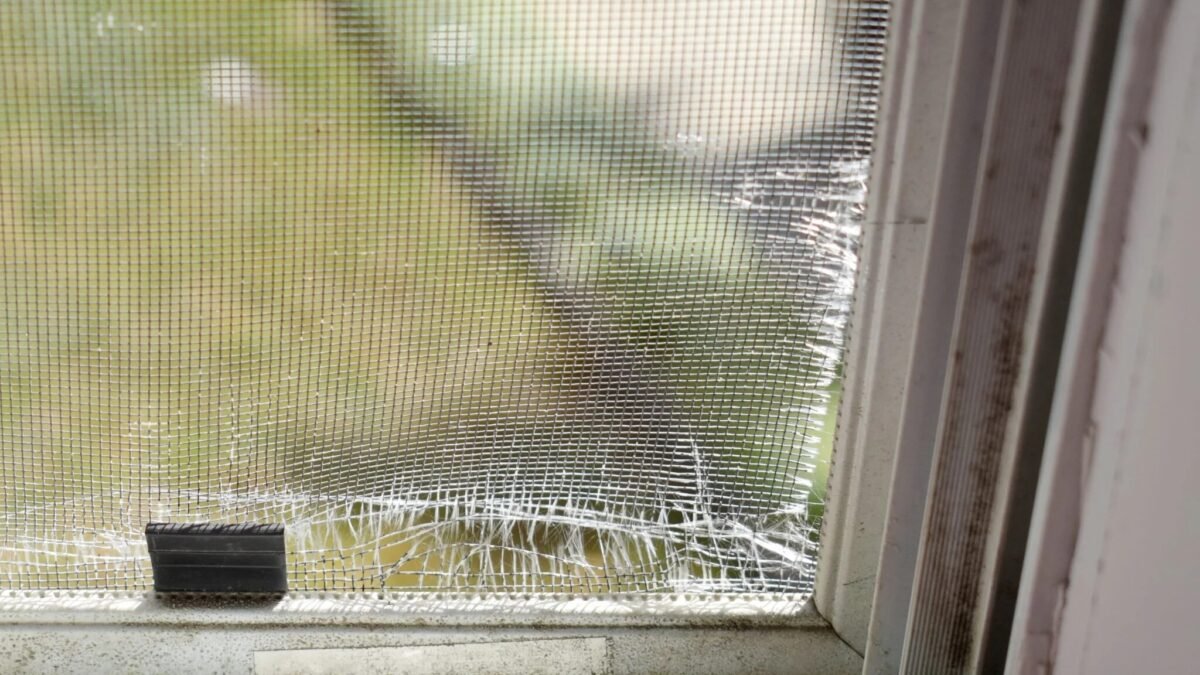
A small rip in a window screen lets insects wander indoors and makes the whole window look neglected, yet the fix rarely needs a professional callout. Choosing well between a quick patch and fresh mesh is where a tidy, lasting result begins. Screens fail quietly: a claw catches, a chair corner presses, sun weakens the weave year after year, and suddenly a neat tear opens along a strand. Three routes present themselves, each honest in the right circumstances, and the sections ahead weigh them against one another using tear size, frame condition, material behaviour, and the time each route stays sound afterwards.
Patch Pieces, Full Mesh Replacement, and Professional Help Compared for Torn Screens
Patching suits a small, isolated wound in otherwise healthy mesh. The simplest version seals the tear edges so strands stop unravelling, while a neater version trims a matching offcut slightly larger than the hole and fixes it over the damage, aligning the weave so the repair reads as a faint shadow rather than a scar. Patching wins on speed and thrift: no frame leaves the window, no cord gets disturbed, and a single damaged pane returns to duty within minutes. Its weakness shows at edges and corners, where patches lift, catch cleaning cloths, and advertise themselves every time light passes through the window.
Full mesh replacement answers damage that patching merely postpones. When tears multiply, when the fabric has turned brittle from seasons of sun, or when the mesh sags in loose waves that no tension will cure, renewing the whole panel restores a flat, even screen that seals against its frame on every side. The work asks more patience than patching, yet it remains well within ordinary household ability, and the result resets the screen clock entirely rather than borrowing a season. Professional help forms the third route, sensible for very large screens, awkward second storey frames, damaged frames needing carpentry, or households where time costs more than the callout. A professional brings spare materials for surprises and finishes several windows in one visit, though the fee for a single simple screen usually dwarfs the price of the mesh itself.
Fiberglass, Aluminium, and Pet Resistant Mesh Weighed for Screen Frames
Fiberglass mesh holds the position of usual household choice for sound reasons. It resists corrosion entirely, springs back after minor knocks from toys, brooms, and elbows, and refuses to keep a permanent crease when folded during handling. Its strands cut cleanly with ordinary scissors, its edges behave during fitting, and its grey or charcoal tones keep the view outward soft and relatively clear. Against those virtues sit modest strength limits: a determined pet claw or a sharp corner can tear it, and prolonged fierce sun eventually leaves it tired, though replacement costs stay low enough that renewal every several seasons remains painless.
Aluminium mesh trades forgiveness for toughness. The metal weave resists casual tearing better and holds tension crisply across wide frames, giving a taut, traditional appearance that suits older houses. Yet aluminium keeps a permanent crease when bent, so a careless fold during fitting marks the finished panel forever, and in salty coastal air the metal can corrode, staining and weakening over time. Handling also demands more care, since cut wire edges scratch hands and frames alike. Pet resistant mesh occupies the heavy end of the scale, woven from vinyl coated polyester strands far thicker than standard fabric. It shrugs off claws and leaning paws that shred ordinary mesh, though the thicker strands darken the view slightly and cost more per roll, making it a targeted purchase for the one or two windows a pet actually attacks rather than a whole house default.
Solar screen variants deserve a mention for rooms that overheat through glass, since their denser weave shades the interior while still blocking insects, at the cost of a noticeably darker outlook and reduced breeze. Tinted bronze and bright aluminium finishes also exist for houses where the screen tone forms part of the exterior appearance. None of these specialties changes the underlying decision, though; they simply refine which mesh goes into a rescreening once replacement has been chosen, and households unsure about shade should test a single window before committing every opening on a sunny elevation to a darker material.
Reading Tear Size, Frame Condition, and Mesh Brittleness Before Choosing
Honest assessment precedes shopping. Measure the tear and count its companions: a lone rip shorter than a finger in sound fabric points toward patching, while several tears, however small each seems, announce that the weave as a whole has aged past rescue. Press the mesh gently away from the tear; healthy material flexes and recovers, whereas brittle mesh crackles faintly, sheds tiny fragments, or splits further under light pressure. Sun facing windows age fastest, so compare a suspect panel against a shaded one on the same house to see how far the decline has travelled.
Frames deserve equal scrutiny, because fresh mesh cannot rescue a failing surround. Sight along each frame rail for bows or twists, test corner joints for looseness, and inspect the narrow channel running around the frame edge where the retaining cord sits. A channel clogged with old cord fragments, paint, or corrosion will fight the new fitting at every inch. Bent frames sometimes straighten with careful pressure, but cracked corners or rails eaten thin by rust push the decision toward professional help or full frame replacement. Choosing after this inspection, rather than before it, prevents the classic disappointment of beautiful new mesh stretched across a frame that never sat square in its opening.
Spline Cord, Roller Tools, and Other Supplies Behind Each Route
Construction explains the shopping list, since a screen is simply mesh locked inside a frame by a flexible cord called a spline, pressed into the channel around the frame edge. Patching needs the least: a mesh offcut, suitable adhesive or fine wire for stitching strands, and scissors. Replacement asks for a roll of mesh cut with margin to spare, fresh spline cord, a small hand roller, a utility knife for trimming, and a flat tool for coaxing old cord out of its channel. That roller carries two different wheel profiles for a reason, one wheel guiding mesh down into the channel and the other pressing the cord fully home afterwards, so a single compact tool handles both stages.
Spline sizing deserves a moment of real attention. Match the replacement cord diameter to the old cord, taking a cut piece along when shopping if doubt exists, because an oversized cord refuses to enter the channel without damaging force, while an undersized one grips too loosely and lets the mesh creep out under tension weeks later. Work on a flat, clean surface with the frame supported along its full length, keep the mesh weave square to the frame rather than drifting diagonally, and roll the cord in steadily without stretching the fabric ahead of the wheel. Trim the surplus mesh only after the cord sits fully home around all four sides, cutting close to the channel with the blade angled away from the new panel.
How Long Patching Versus Rescreening Keeps Insects Out Afterwards
Longevity separates the routes more clearly than effort does. A patch on sound mesh, neatly fixed, can hold for seasons, yet it remains the weakest point on the panel, the spot where cleaning pressure, pet attention, and weather concentrate first. Expect to revisit it, and treat a patch that lifts at one corner as finished rather than pressing it back repeatedly. A full rescreen, fitted with correctly sized cord and even tension, behaves like a new screen because it is one: years of service follow, limited mainly by sun exposure, pet behaviour, and accidental knocks rather than by the repair itself.
Professional work carries similar material longevity, with the addition of a workmanship promise from some firms and the convenience of zero personal time spent. The honest comparison therefore runs patch for a season or two of grace, rescreen for a full renewal at modest material cost, and professional fitting where frames, height, or numbers of windows change the calculation entirely. Whichever route wins, inspect screens each spring before insects return in force, brushing away winter grit, confirming the mesh still sits taut, and catching new nicks while patching remains a genuine option.
Storage habits quietly extend whichever lifespan a route offers. Screens removed for winter should rest flat or hang vertically in a dry place, never leaning under stacked boxes that bow frames and crease mesh beyond recovery. Label each screen with its room and orientation in pencil on the frame edge, since panels that look identical often differ by a small margin and resist swapping come spring. A gentle wash with mild soapy water before storage removes the grit that otherwise grinds into strands under pressure, and storing the roller and spare cord alongside the panels means the next repair starts equipped rather than improvised.
A Clear Recommendation for First Time Screen Repairers at Home
The recommendation, stated plainly, splits by what the inspection found. Patch only when the tear is small and solitary, the surrounding mesh still flexes without crackling, and the frame sits square and sound; that repair is honest, quick, and proportionate. In every other case, rescreen the whole panel, choosing fiberglass for ordinary windows and reserving pet resistant mesh for openings a household animal genuinely attacks. First time repairers succeed with rescreening precisely because the method forgives slowness: cord can be lifted and reseated, tension adjusted side by side, and the finished panel rewards patience with a result indistinguishable from professional work.
While screens are out and windows stand open, wider upkeep of the same opening pays off, because torn mesh often travels with tired seals; learning about weatherstripping drafty windows helps a household seal the gaps around the frame that let in cold air even when the mesh itself is perfect. Anyone curious how mesh, cord, and channel developed into the modern system can read about window screen history and construction, which traces the woven panel from early wire cloth to the removable framed screens fitted today. The material reasoning behind the fiberglass recommendation rests on the material properties of fiberglass, whose corrosion resistance and flexible recovery explain its dominance in household mesh. Start with one window, work slowly, and the remaining screens in the house become an easy afternoon rather than a dreaded list.


