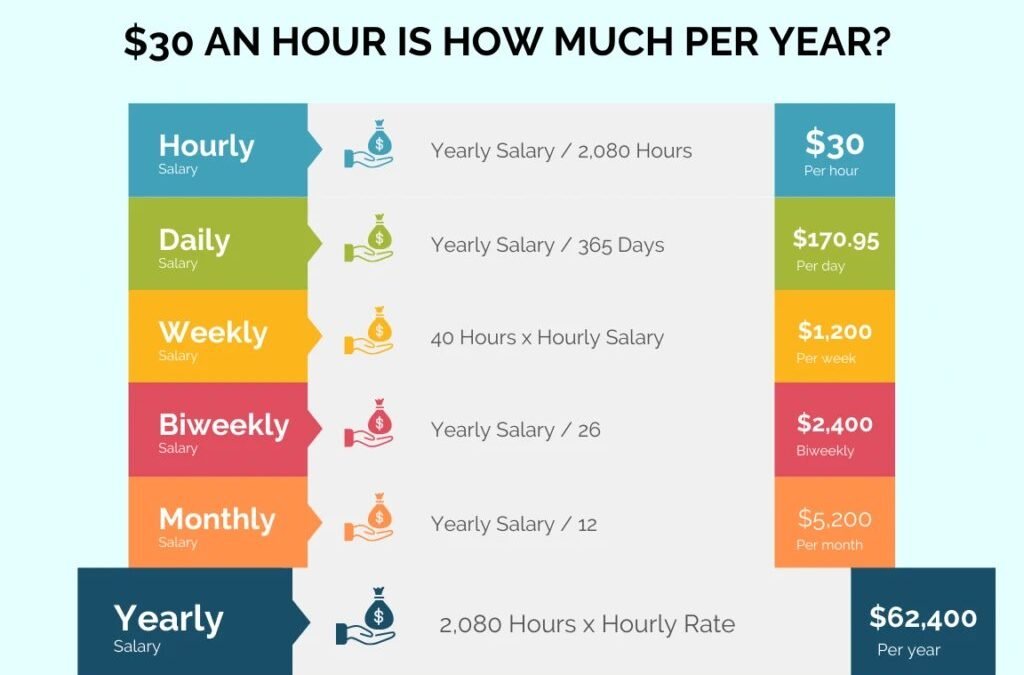
At thirty an hour, a full time year reaches sixty two thousand four hundred before tax, a headline that hides how unevenly the money actually lands. Most budgeting trouble at this level comes from calendar habits rather than from arithmetic itself.
Common Ways the Conversion Goes Wrong
Three habits wreck this conversion more often than any faulty multiplication does, so they deserve naming before any correct figures appear. The first habit shrinks the working year, rounding it down to a tidy guess and quietly deleting a slice of earnings that the real calendar would have paid. A year built from full weeks holds more paid hours than rough mental shorthand usually allows, and every deleted hour understates the offer you are judging. The second habit treats an average month as though it were a typical month, a confusion explored fully in the next section because it causes repeated shortfalls that feel mysterious. The third habit budgets straight from gross pay, spending the headline in your head before withholding and deductions have taken their share, which guarantees disappointment when the smaller real packet arrives. Anchoring helps expose all three errors. Many readers first earned far less than this rate, and looking back at yearly pay at an entry level rate shows how dramatically the annual picture changes across a career, while also revealing how easily old budgeting instincts linger after pay has grown. New rate, old habits is a common pairing. Someone upgrades rent and commitments to match the shiny monthly average, keeps no buffer for lean packets, and then blames the job for pressure that the calendar actually created. Slow down at this stage. A conversion is a planning tool, not a celebration, and its value lies in catching these traps while they are still pencil marks rather than missed payments.
A fourth quieter error deserves a place on the watchlist too, namely trusting the first payslip you receive as though it must be flawless. Payroll departments handle thousands of details and occasionally misread a rota, apply an outdated rate or overlook an agreed enhancement, and a worker who never checks simply absorbs the loss in silence. Compare each arriving packet against the chain you are about to build, line by line and week by week, especially during the opening months of a new role or after any change to your hours. Query a mismatch promptly, politely and with your notes ready, because a discrepancy raised while rotas remain fresh is usually settled in a single conversation. That checking habit also sharpens your feel for the job itself. You begin to notice which weeks genuinely pay, which duties quietly expand your hours, and whether the role described at interview matches the role unfolding on the floor, knowledge that matters long before any annual negotiation begins.
The Monthly Average Trap Explained Plainly
The average month is a statistical creature that never actually visits your bank account. Annual gross divided across twelve gives five thousand two hundred a month, a perfectly correct average and a surprisingly poor guide for setting monthly direct debits. Wages paid every two weeks mostly arrive twice in a month, and twice in a month at this rate falls short of that average, leaving a gap that repeats so regularly it can feel like a leak. Twice a year the rhythm rescues you, because a longer month catches an extra packet and suddenly the account looks healthy again. Households that never spotted the pattern spend those generous months wondering why they feel flush, then spend the ordinary months wondering where the money went, when the answer was sitting in the pay calendar the whole time. The remedy is plain once seen. Fund rent, utilities, food and every other fixed bill from the ordinary two packet month, the level you can rely on in any month of the year. Give the occasional extra packet an assignment before it lands, perhaps topping up savings, clearing a lingering balance, or prepaying an annual cost that otherwise ambushes you. Semi monthly pay behaves differently again, arriving in even slices that match the monthly average more closely, so identify which rhythm your employer uses before applying any of this. Pattern first, budget second, spending third remains a safe order for anyone trying to escape the average trap for good.
The Correct Chain From Hour to Year
With the traps named, the clean chain can finally do its work in a few unhurried moves. Begin with thirty for a single hour, stretch that across a full week to reach one thousand two hundred, then double the weekly result to see two thousand four hundred landing every two weeks under the common pay rhythm. Keep climbing and the weeks assemble into a full time year of two thousand and eighty paid hours, producing sixty two thousand four hundred before tax. Averaged across twelve months that year gives five thousand two hundred a month, a figure you now know to handle as an average rather than a promise about any particular month. Each link in the chain can be checked independently, which is why the method beats quoting a calculator result you cannot interrogate. If a recruiter describes a different annual total for the same rate, walk the chain aloud together and find where your assumptions part company, perhaps over paid leave, scheduled hours or the treatment of holidays. Behind the chain sits a simple idea about what pay represents. As the Wikipedia article on salary outlines, salary is agreed payment covering a stretch of work, and converting an hourly wage simply rebuilds that stretch from its smallest unit upward until the year becomes visible. Write the chain down whenever you compare offers. Paper slows the conversation, exposes hidden assumptions, and stops a confident headline from sweeping awkward questions about hours and leave off the table.
Reduced Hours and Missed Weeks Priced Honestly
Shorter patterns scale this rate down in a straight line, and seeing that line clearly helps you price flexibility without fear or fantasy. Half the standard schedule yields thirty one thousand two hundred annually before tax, half the full time result, and that symmetry makes negotiation easier because both sides can follow the same arithmetic. A modest reduction trims the year modestly, a deep reduction trims it deeply, and no version of the maths softens that relationship just because the reason for reducing hours is a good one. Missed unpaid weeks deserve equal clarity. Each absent week removes a week of pay from the annual total, so a worker planning extended travel, a caring break or time between contracts should subtract those weeks before setting annual goals. Paid leave works the opposite way, preserving the total while you rest, which is why leave terms belong in any serious comparison between an hourly post and a salaried one. Ask whether holiday is paid, whether closures are paid, and whether banked hours or averaged pay schemes exist to smooth gaps. Some employers offer arrangements that steady income across uneven rotas, and those arrangements can be worth real money even when the hourly rate matches a rival offer exactly. Honest pricing also protects your enthusiasm. A reduced schedule chosen with open eyes and a budget rebuilt around the smaller year can be deeply satisfying, whereas the same schedule stumbled into, with spending habits still calibrated to full time pay, breeds resentment toward a job that never misled you.
Take Home Pay and the Forces That Shrink It
What you can actually spend is the gross figure after several forces have each taken a turn, and this section maps those forces without pretending to calculate your personal remainder. Withholding toward income obligations at national level comes first for most workers, with a further layer in many states and none in some, so geography alone can separate two identical offers. A levy on wages then supports collective insurance arrangements, and Wikipedia entry on payroll tax describes such taxes as falling on employers and employees alike while commonly funding social insurance programmes that workers draw on later in life. Household circumstances steer withholding as well, since filing status and the number of people relying on your income influence how much gets held back during the year. Choices you make voluntarily shrink the packet further, though often for sound reasons. Putting money aside through a workplace retirement plan, paying for employer arranged health cover, or electing other benefits all lower the cash arriving each cycle while building protection or savings elsewhere. Occasional items like dues or parking can nibble at the edges too. What remains after all of this will hinge on where you live and on personal circumstances that no general guide can see, so treat any stranger quoting you an exact remainder with healthy scepticism. Study a real payslip when one becomes available, learn what each line means, and anchor your household budget to the arriving cash instead of the headline that opened this article.
Extra Hours and the Value of Premium Time
Working beyond your contracted pattern can raise the year, but premium time deserves the same sceptical treatment as everything else in this piece. Confirm the threshold at which an enhanced rate begins, confirm how much that enhancement is worth in your workplace, and check whether extra hours are guaranteed by a rota or merely likely during busy spells. Likely hours make poor foundations for fixed commitments. Build the core budget so that rent, food, transport and other essentials stand comfortably on ordinary earnings from a normal two packet month, exactly as the earlier trap section advised. Then let premium earnings flow toward purposes chosen in advance, such as building a buffer that protects you during quiet months, retiring a costly balance, or saving toward something with a date attached. Assigning the money early stops it dissolving into general spending, a fate that befalls most unassigned windfalls within weeks. Track what you actually work and what you actually receive, noting dates while memories remain fresh, because queries raised promptly get resolved far more easily than puzzles reconstructed from old rotas. Finally, price premium time in more than money. Late finishes consume sleep, patience and hours with the people you live for, and a year that looks stronger on paper can feel poorer everywhere else if extra shifts become permanent by drift. Review the arrangement every few months, keep the decision conscious, and remember that declining an extra shift occasionally is also a budgeting choice, one that spends money to protect the life the money exists to support.