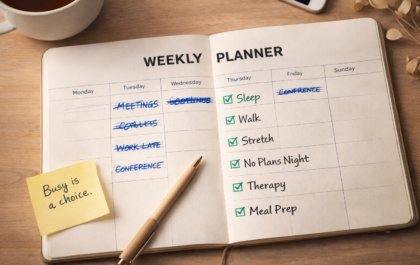
Rest that waits for a spare moment rarely arrives, because errands and obligations expand into every unguarded corner of the week. Putting recovery into the diary before anything else gives energy a protected home instead of leftover scraps.
How Much Rest Does a Week Genuinely Need
Enough rest means waking without dread on most mornings, holding attention through ordinary tasks, and reaching evening with something left for the people around you rather than running on fumes. That test is personal, because a week heavy with physical labour asks something different from a week spent hunched over messages and meetings. Start by noticing where energy leaks away. Tired eyes by mid afternoon, a short temper over tiny delays, or a weekend that vanishes into chores all point to recovery arriving too late. Household jobs deserve honest timing as well, since gutter clearing and similar tasks need a realistic slot of their own instead of swallowing the whole weekend, and checking how long gutter cleaning safely takes helps you fence that chore off properly. Sleep sits underneath everything else here, and the Wikipedia article on sleep describes sleep as a recurring natural state involving altered consciousness and reduced responsiveness, essential to health and restored functioning. That description matters because daytime rest cannot fully replace a shortchanged night. Protect the night first, then add waking recovery around it in smaller pieces through the day and one longer stretch across the week. Quantity alone misleads, though. An afternoon spent half watching a screen while worrying about unfinished work seldom restores anyone. Quality comes from a clear boundary, a chosen activity, and permission to stop monitoring everything else while the block lasts. If you are unsure where you stand, keep a simple note for a week about when tiredness peaks and what helped even slightly. Patterns appear quickly, and they tell you more than any generic target could about the dose your own life requires right now.
What Kind of Tired Are You Actually Carrying
Different depletion needs different repair, and naming the kind you carry saves you from prescribing yourself the wrong remedy. Physical tiredness shows up in heavy limbs, aching shoulders and a body that wants stillness, and it responds to sleep, gentle movement, food eaten slowly and time off your feet. Mental tiredness feels like fog, rereading the same line, forgetting why you opened a drawer, and craving novelty instead of more information. Quiet, a change of scene, or a single absorbing task done slowly often clears it better than another stream of content. Social tiredness arrives after days of being needed, listened to and performed for, even by people you love. Solitude without loneliness, low demand company, or an evening with no conversation owed to anyone can refill that particular tank. Sensory tiredness builds from noise, bright screens, traffic and constant alerts, and it settles when surroundings grow dimmer, softer and less insistent. Creative tiredness is subtler: ideas feel flat, everything sounds like something you have already made, and forcing output only deepens the block. Input without obligation, wandering, looking at beautiful ordinary things and leaving work unfinished for a while tend to loosen it again. The Wikipedia entry on occupational burnout describes prolonged strain without adequate recovery building toward exhaustion and detachment, a reminder that ignoring the signal for months carries a real cost. Treat that as a prompt to act early and kindly, not as a label to diagnose yourself with. Pick the tiredness that feels loudest this week and rest for that one first, because matched rest works faster than generous but mismatched rest.
Where Should Rest Sit Among Fixed Commitments
Rest belongs in the diary alongside appointments that nobody would casually move, not underneath them as decoration. Look at the fixed points first, such as work hours, school runs, caring duties and travel, then place recovery in the gaps that genuinely exist rather than the gaps you wish existed. A short pause after the hardest meeting of the day, a calm hour before the busiest evening, or a slow start on the morning after a late shift all count when they are deliberate. Anchor rest to something that already happens reliably. Tea after lunch, a walk after the evening meal, or lights lowered after children are settled gives the habit a handle to grip. Floating intentions drift, while attached ones survive busy days far more often. Be honest about length as well. A protected twenty minutes that actually happens restores more than a grand afternoon that gets negotiated away every single week. Start with what the current week can hold, prove to yourself that the block stays, and lengthen it later when trust in the routine has grown. Place one longer stretch where the week naturally softens, perhaps after chores finish or before social plans begin, and guard its edges by finishing the previous task properly instead of letting it bleed across the boundary. Recovery placed with this kind of realism stops competing with life and starts supporting everything around it.
How Can a Busy Evening Still Count as Recovery
An evening counts as recovery when it lowers demand instead of merely changing its flavour. Cooking something simple with music playing, stretching while a favourite programme runs, sitting outside as light fades, or reading pages that ask nothing from you can all qualify. The common thread is that nobody needs a performance from you and nothing needs optimising before bedtime. Busy households rarely offer empty evenings, so work with fragments. A bath while someone else handles the kitchen, a short stroll between dinner and washing up, or ten unhurried minutes alone in a parked car before going indoors can reset a frayed mood surprisingly well. Small fragments matter because they interrupt the feeling that the day owns you from waking until sleep. Caregivers and shift workers especially need this micro rest thinking, since long uninterrupted blocks may be unavailable for months at a stretch. A pause between tasks, a drink taken sitting down, a few slow breaths in fresh air at the door, or a message free interval during a break all protect a thread of recovery inside an otherwise relentless schedule. Judge the evening by how you feel when it ends. If you head to bed slightly softer, slower and less crowded in your head than when work finished, the evening did its job, whatever it looked like from outside.
What Protects a Rest Block From Being Traded Away
A rest block survives when other people can see it, when you can defend it briefly, and when losing it triggers a replacement rather than quiet surrender. Put it in a shared calendar with a plain label if that helps at home or at work. Visibility turns a private wish into a recognised commitment that colleagues and family can plan around without guessing. Your defence can stay short and kind. Saying that the time is already committed is a complete explanation, and you are allowed to decline giving detail about what the block contains or why you need it. Privacy is not rudeness. Recovery is a legitimate use of an hour, and over explaining invites negotiation you never asked for. When something urgent genuinely displaces a block, reschedule that lost block within the same week before the week closes. Moving rest keeps faith with the system, while deleting it teaches everyone, including you, that recovery is always the flexible item. Choose the replacement slot immediately, even if it is shorter, and treat the new slot with the same firmness as the original. Protect the edges too. Finish the task before it cleanly, silence alerts during it, and resist filling its final minutes with quick chores that restart your mental engine. A block guarded at both ends feels twice as long as one that leaks, and that felt length is part of what restores you.
How Do You Rest Without Turning It Into Work
Rest turns into work the moment it gains targets, tracking, comparison or an audience. A walk taken to close a ring, a hobby practised mainly to post about, or a relaxing bath scheduled with military precision can quietly become another arena for achievement. Notice when pleasure starts producing performance anxiety, because that tension is the tell that recovery has been colonised. Loosen the rules deliberately. Leave the watch at home sometimes. Read without finishing the chapter. Garden without photographing the result. Sit with a friend without turning the meeting into useful networking. Unmeasured time reminds your mind that not every hour must justify itself, and that reminder is deeply restorative for people whose workdays are scored from start to finish. Choice protects rest as well. An activity selected freely restores in a way that an identical activity imposed by a wellness plan may not, because autonomy itself is part of the relief. Keep a short personal menu of options for different moods, then pick in the moment rather than obeying a rigid rota. Some evenings call for company and laughter, others for a blanket and near silence. Guilt often appears when rest feels unfamiliar, especially for people praised all their lives for being tireless. Treat that guilt as an old habit rather than a verdict on your character. Habits fade with repetition, and each kept block makes the next one feel more ordinary and less like something that needs forgiving.
What Changes After a Month of Planned Recovery
After a month of keeping rest in the diary, the earliest change is usually trust. You stop bracing for total collapse because smaller repairs happen along the way, and ordinary tiredness stops feeling like an emergency. Mornings may still be busy, but they begin from a slightly fuller tank, which changes how setbacks land during the day. Attention tends to steady next. Tasks that once required repeated restarting feel more holdable, conversations get more patience, and the urge to graze on distraction between jobs often softens because your mind is less desperate for escape. None of this arrives as a dramatic transformation, and that modesty is a strength, since quiet improvements are the kind that last. Relationships feel the difference too. A person who has rested is easier to live with, quicker to laugh and slower to snap over spilled drinks or late trains. Family and friends may not name the cause, yet they respond to the steadier presence that planned recovery makes possible week after week. You also learn your own early warnings. A clenched jaw on Tuesday, a craving for noise on Thursday, or a Sunday mood that dips without reason become useful signals rather than mysteries. Meeting those signals with the matched kind of rest, early and without drama, keeps the whole system running. Keep the routine light enough to survive a bad week, review it monthly, and let it evolve with seasons, work and family life rather than freezing it into another rule to obey.