
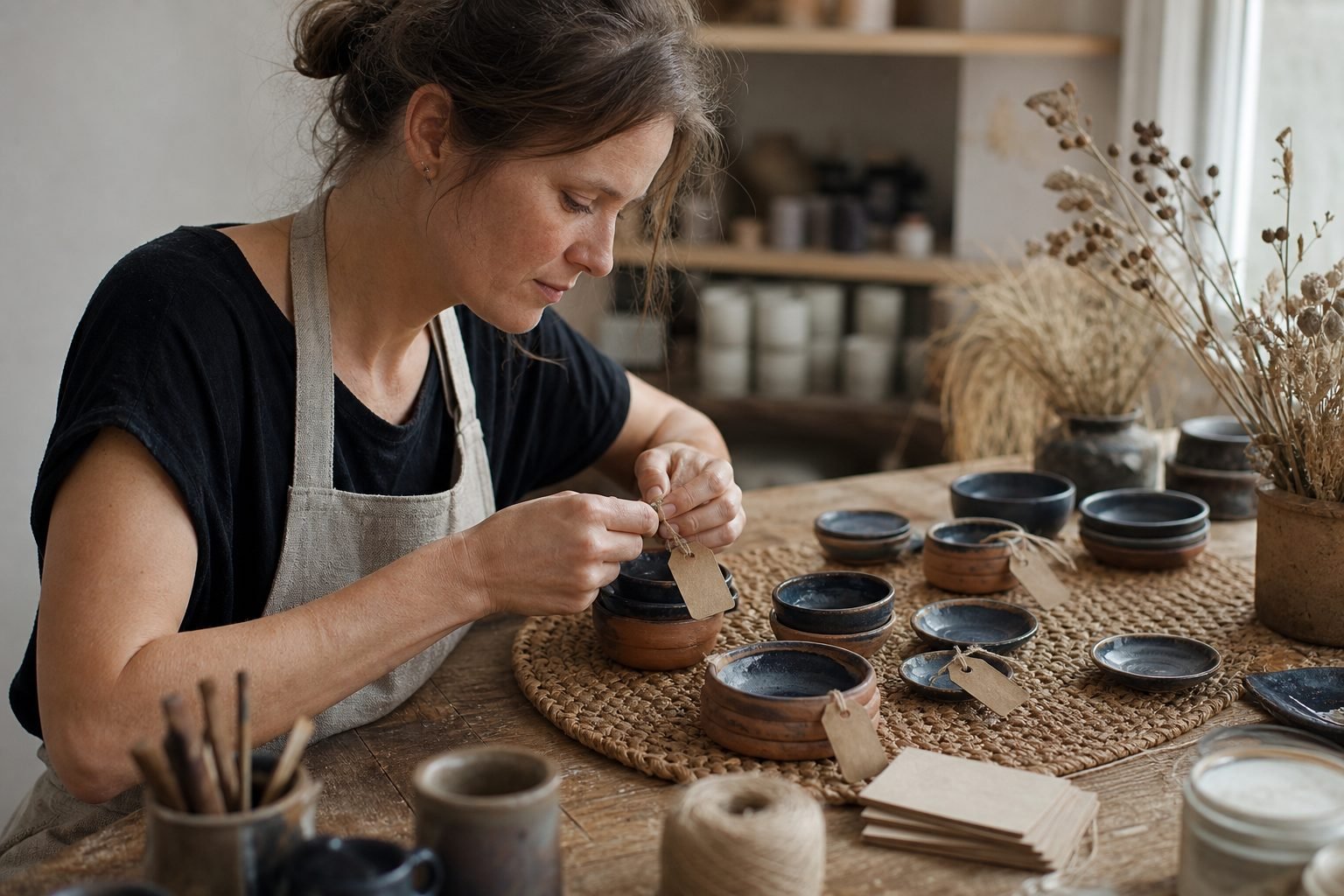
Makers who price by feel usually work for less than their time is worth without ever noticing, and the error hides in the costs they never wrote down. The work feels generous and the sales feel encouraging, yet the bank balance tells a different story at the end of the month, because the price covered the visible materials and a little of the making, while the rest of the business quietly paid for itself out of the maker’s own pocket. Pricing by feel is not a moral failure. It is a natural habit for people who love what they make and who want their work to feel affordable to others. Yet love does not pay for tools, rent, or time, and a business that prices by feel will slowly exhaust the person who runs it, however talented they are. The remedy is not to guess harder, but to write every cost down, time the work honestly, and let a simple formula do the arithmetic that feeling cannot.
Leaving Small Materials Off The List
The first slip happens at the very start, when the maker lists the main materials and forgets the small ones. The headline ingredient or fabric is easy to remember, because it is the largest item and the most obvious, yet a finished product also carries wrapping, labels, tissue, greeting cards, stickers, and posting supplies, each small on its own and substantial together. Beginners forget these small items because they seem too trivial to count, and the small items add up quietly, taking a meaningful share from every sale without ever appearing on a list. A maker who forgets them is not being careless in spirit; they are simply looking at the product rather than at the whole parcel that leaves the house.
True material cost means every component down to the last label, priced at replacement cost rather than at a sale price. A material bought cheaply in a sale still costs its full replacement value when it must be bought again, and pricing from the sale price builds a business that cannot survive its own success, because each reorder costs more than the price allows. Add a small waste allowance for mistakes and offcuts, because no making process is perfect, and the allowance keeps a ruined piece from eating the profit on the good ones. Note the supplier, the item, and the cost of one unit for each part, and keep that list beside the making table where it can be checked, not in memory where it fades.
Counting Only The Fun Part Of The Labour
The second slip is subtler, because it flatters the maker. Labour is counted only for the enjoyable part, the pouring, the stitching, the carving, the moment when the product takes shape, while the work around it is treated as if it cost nothing. Design, preparation, tidying, photography, listing, and packing are all real work, and they take real time, yet they are easy to overlook because they feel like chores rather than craft. A candle that takes a short while to pour but far longer to wrap, picture, and box costs several times the labour a beginner assigns it, and the difference comes straight out of the maker’s day without ever reaching the price.
Labour must be timed honestly across several units and averaged, rather than timed once on a good day and treated as the norm. Time yourself making a few units in a row, include every step from the first preparation to the final packing, and take the average as the true figure. Then multiply that average by a real hourly rate, one that reflects skilled craft labour rather than the low figure a maker tells themselves their time is worth because they enjoy it. Liking the work does not cover materials, tools, or rent, and leaving labour out of the price means the business cannot scale, cannot hire help, and cannot survive a slow month. If the honest arithmetic makes the price feel too high for the market, the product is wrong for that market, not the formula, and the answer is to choose a different product or to lower costs, not to pretend the labour was free.
Forgetting Overhead Rent Tools And Fees
The third slip hides in the background, where overhead lives. Overhead is what running the business costs: a portion of workspace rent, tool wear and replacement, software, booth fees, and insurance, spread across the units made in a month. Most home-based makers land on a small sum per unit, yet that small sum matters, because it is charged on every sale and it pays for the things that keep the business running when no product is being made. A maker who forgets overhead is, in effect, paying rent and replacing tools out of their own pocket, while believing the business is breaking even.
Work out the monthly overhead by adding every regular business cost, then divide by the units realistically produced in a month, and add that share for each unit to the price. Be honest about the unit count, using the number actually made rather than the number hoped for, because an optimistic count shrinks the share and hides the true cost. Platform fees belong inside the price as their own line rather than being swallowed, because fees on handmade marketplaces run to close to a tenth of every sale, and absorbing them quietly means giving away a tenth of every price without noticing. price handmade products for real profit List the fee as a cost, just as materials and labour are listed, and the price will carry it without strain.
Shrinking The Multiplier To Feel Affordable
The working formula doubles the sum of materials, labour, and overhead for wholesale, and doubles it again for retail, which is the standard keystone markup. That doubling is not a trick and it is not greed. The first doubling covers earnings and the discount offered to shops that will be needed if shops ever stock the work, while the second doubling carries the retail price to a level that sustains the business through slow months, fees, and the cost of selling itself. A product whose true cost is modest therefore reaches a retail price that can look startling to a maker who has always priced by feel, and the temptation at that moment is to shrink the multiplier until the price feels comfortable.
Shrinking the multiplier to feel affordable is how makers end up donating labour. The price looks kinder, the product looks more sellable, and the maker feels generous, yet the arithmetic has not changed: the costs are still there, the time is still spent, and the shortfall comes out of the maker’s own day. pricing methods in general A price that feels affordable because the multiplier was cut is not affordable at all; it is a price that asks the maker to work for less than their time is worth, and to do so on every sale. If the full formula gives a price the market will not bear, the honest answers are to reduce costs, to choose a different product, or to find a market that values the work, not to pretend the formula was wrong.
Racing The Cheapest Seller Downward
The fourth slip follows naturally from the third, because a maker who has shrunk the multiplier soon finds themselves comparing prices with the cheapest seller in the market and racing downward to match them. That race has no finish line worth reaching. There is always a rival ready to accept losses for longer than you can, someone selling at a loss to clear stock, someone whose costs are lower because their quality is lower, or someone who has not yet discovered that they are working for nothing. Chasing that seller downward does not win customers; it teaches buyers to expect prices that no honest maker can sustain, and it leaves the maker exhausted, resentful, and no better off than before.
Set your worked-out price beside similar products, not beside the cheapest listing, and check whether it lands in a plausible band for similar quality. If yours sits far above similar work, look for the reason: better materials, customisation, a brand story, or a quality that photographs and reviews can verify may justify it, while a lack of any such difference may mean costs need to fall. Positioning matters, because buyers of handmade work pay extra for story, customisation, and quality they can see and trust, while generic products compete on price alone and lose that competition to mass production every time. cost-plus pricing explained Building a name for your work without spending much directly helps you charge higher prices, because a name gives buyers a reason to choose this maker over a cheaper stranger, and that reason is worth more than any discount.
Waiting Years To Lift Prices
The final slip is the slowest, because it happens over years rather than in a single pricing session. Makers keep prices too low for years through fear, leaving prices untouched while material costs climb, while rent rises, and while their own skill grows. A waitlist that stretches past a fortnight is a clear signal that demand outstrips supply and that the price is too low, while a rise in material costs is a signal that the old price no longer covers the work. At the very least, prices should rise once a year to track rising costs, because standing still while costs climb is the same as cutting the price a little each year without noticing.
Wholesale and craft-show maths complete the picture. A wholesale sheet should price at half the retail figure, with a set minimum for a first order and clear terms for reorders, so shops know exactly what they are buying into. Craft shows need their own arithmetic: add booth fees, travel, and the labour of the event itself to the revenue target for the day, then count back to the number of units that must sell for the day to pay off. Plan inventory months ahead for the busy season, when many sellers make the bulk of their yearly revenue, and labels on the table should display the shop price with confidence, because discounting at the table signals that the prices were inflated. Do the sums once, rely on the formula, look at the market, and lift prices when costs rise. The craft deserves a price that keeps it going, and the maker deserves a business that pays for the whole of the work, not only its pleasant centre.


