
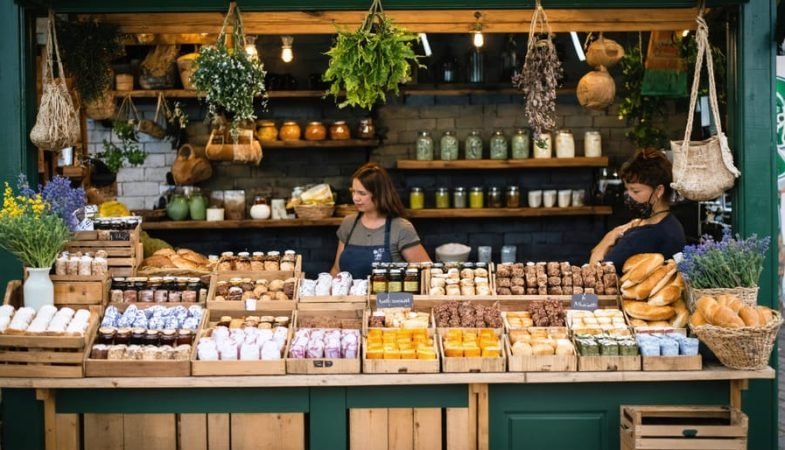
Why do some market stalls draw a steady queue while neighbours selling similar goods spend the morning watching people drift past? Presentation matters, yet paperwork and pricing quietly decide whether a pleasant Saturday hobby becomes a business worth repeating. Every market sets its own stall rules, public authorities may require permission for certain foods, and shoppers judge value within seconds. Sort the approvals early, price with your hidden labour included, and the stall becomes far easier to enjoy.
What Permission You Need Before Your First Market Day
Permission comes in layers, and the layers vary by state and by market. Most vendors need acceptance from the market organiser, a basic business registration where their locality requires one, and, for many foods, some form of public permission connected to how the food is made and handled. Permits and fees vary by state and market, so treat any figure you hear from another vendor in another place as a story about their market, not as a rule for yours.
Whole produce is usually the simplest category. Vegetables, fruit, and flowers you grew yourself often face lighter requirements than foods you prepared. Prepared food changes the picture. Jams, baked goods, eggs, dairy, and meat commonly attract extra rules, and state agriculture and health departments explain those categories in their own guidance. Some states allow certain shelf stable home made foods under cottage food arrangements with conditions attached, while other foods need a licensed kitchen. The category your product falls into decides the path.
Preparation for the first market day also includes knowing your product costs before you ever set a price, because a stall that guesses its costs guesses its survival too. Working through the cost of homemade pie crust in stages, ingredient by ingredient, shows the habit clearly: flour, fat, and filling are only the start, and time, energy, and packaging belong in the reckoning as well. A baker who knows what flaky pie crust costs to make can price a pie with confidence instead of copying a neighbour stall.
Start enquiries early. Market applications, food related permissions, and insurance, where a market asks for it, all take time to arrange, and popular markets fill their pitches well ahead of the season. Keep copies of every approval together, bring them on market day, and expect an organiser or an inspector to ask to see them at some point.
How Markets Choose Vendors and Allocate Pitches
Organisers curate a market the way an editor shapes a page. They want variety, reliability, and stalls that make shoppers stay longer, so applications usually ask what you sell, where it comes from, and how it is made. Markets that pride themselves on local produce may require that goods are grown or made within a certain area, and many give priority to returning vendors in good standing.
Background on the shape of these venues comes from the Wikipedia entry on farmers markets, which describes markets where producers sell directly to shoppers, often outdoors and on set days, with roots in much older market traditions. That direct relationship is what organisers are protecting when they limit duplicate stalls or insist on producer only rules. Shoppers come for food they cannot get in a supermarket aisle, sold by the person who made or grew it.
Pitch allocation follows practical logic. Anchor stalls with strong followings may hold favoured spots, new vendors may start wherever space remains, and organisers balance heavy vehicles, power needs, and queue space across the site. Accept a modest pitch gracefully in your first season. Reliability earns better placement over time far more reliably than complaint does, because organisers remember who arrived on time, set up tidily, and stayed to the end on a wet day when takings were thin.
Expect rules beyond the pitch itself: set up and departure times, vehicle movements, signage limits, and expectations about leaving the site clean. Fees for stalls are set by each market and differ widely, reflecting location, footfall, and what the organiser provides. Read the rule sheet as carefully as the application. Most friction between vendors and organisers comes not from malice but from a rule somebody skimmed in spring and rediscovered, unhappily, in midsummer.
Pricing Goods So Labour and Waste Are Covered
Price from your costs outward, not from your nerves inward. Add up ingredients or materials, packaging, market fees, fuel, and the value of your time in making, travelling, and selling. Then look at what similar goods fetch nearby and judge where your quality and story sit in that range. A price that ignores labour may feel kind to shoppers for one season, right up until the vendor quietly burns out and disappears, which helps nobody who had come to rely on the stall.
Waste is the cost beginners forget. Unsold perishable goods when the market closes are money already spent, so realistic quantities matter as much as price. Keep simple records of what sold, what remained, and what the weather and competing events did to footfall. Within a few markets, patterns emerge that no amount of guessing could have given you, and both your baking or picking quantities and your prices can be tuned against real evidence rather than hope.
Present prices plainly. Clear labels that a shopper can read without asking remove a small but real barrier, because many people will drift on rather than ask and risk feeling trapped into buying. Honest value signals help too: naming the farm, the variety, or the method on a small sign explains a fair price better than any sales talk. Shoppers at these markets are often glad to pay properly for food with a known origin. They mainly dislike feeling unsure what they are paying for.
Review prices as costs move, and move them without drama when they must rise. Regulars respect a small rise explained by a rising ingredient cost far more than a quiet shrinking of the product. Keep some consistency across the season where you can, bundle slow lines with popular ones thoughtfully, and resist copying the cheapest stall in the row.
Arranging a Stall That Invites People to Stop
A stall is read in seconds from several paces away. Shoppers decide from the height of the display, the fullness of the table, and the clarity of the signage whether to slow down. Stack goods with some height, keep the front edge abundant even as stock sells down, and put your name where it can be read from the aisle. A table that looks picked over by mid morning tells a story you did not intend, so restack and tidy as the day goes on.
Finding markets and understanding their character is easier with the national farmers market directory from the agriculture department, which lets shoppers and vendors search for markets by place and shows how numerous and varied these venues are across the country.
Practical comfort matters more than decoration. A canopy that is properly weighted, a table covering that stays put, a float of change, a card reader that works in patchy signal, and bags or boxes ready to hand all remove friction at the moment of sale. Conversation does the rest. People buy from people at these markets, and remembering a regular name is worth more than a loyalty scheme.
Watch the flow around your pitch. Queues should form without blocking the aisle or a neighbour doorway, and your best goods should be visible without a shopper having to commit to entering a cramped space. Stand rather than sit where you can, keep your phone mostly out of sight, and greet people as they slow. None of this is elaborate. It is the accumulated effect of small welcomes, repeated all morning, that turns passing trade into a queue.
Handling Food Safely From Kitchen to Customer
Food safety rests on a few habits carried out without exception. Wash hands properly and often, and keep a simple means of doing so at the stall. Keep chilled food genuinely cold in cool boxes with enough ice or packs for the whole session, keep hot food hot where it is served that way, and use a thermometer rather than guesswork when temperatures matter. Raw and ready to eat foods stay separate, in the kitchen, in transport, and on the table.
Preparation space deserves respect. Work on clean surfaces, with clean utensils, and keep ingredients covered and stored off the floor. Anyone who is unwell should not be preparing or serving food that day, however inconvenient the timing feels. Labels should state ingredients honestly, with allergens made clear, because a shopper with an allergy is relying on your accuracy completely. Where your state or market sets specific labelling rules, follow them exactly rather than treating them as decoration.
Transport is the forgotten middle of the journey. A clean vehicle, food packed securely and kept at the right temperature on the road, and the shortest sensible gap between kitchen and stall all protect the work you did at home. At the stall, keep money handling and food handling as separate as one pair of hands allows, using tongs, gloves where appropriate, and a hand washing pause between tasks.
End the day properly. Note what did not sell and how it was stored or discarded, clean equipment before it is put away, and record anything that went wrong while the memory is fresh. A vendor who treats safety as part of the craft, rather than as an inspection hurdle, builds the kind of trust that brings shoppers back weekly. That trust, once earned across a season, is the real asset a market stall creates, worth more than any single good day of takings.
Do I Need Insurance to Trade at a Market?
Many markets ask vendors for liability insurance, and some require proof before confirming a pitch, while others do not. Ask the organiser directly, check what your existing policies cover, and treat cover as sensible protection in any case, since one accident involving a canopy or a customer can cost far more than a policy.
Can I Sell Food Made in My Home Kitchen?
Sometimes, depending on the food and your state rules. Certain shelf stable goods are allowed under cottage food arrangements in many states, usually with conditions about labelling and where the food may be sold. Other foods need a licensed kitchen. The agriculture or health department in your state decides, so check your exact product before assuming.
How Much Stock Should a New Vendor Bring?
Bring a modest, well presented range rather than everything you can make. Selling out of a popular line teaches you more than carrying unsold stock home, and it leaves shoppers keen to return. Record what went, what remained, and adjust quantities market by market as your evidence grows.


One comment