
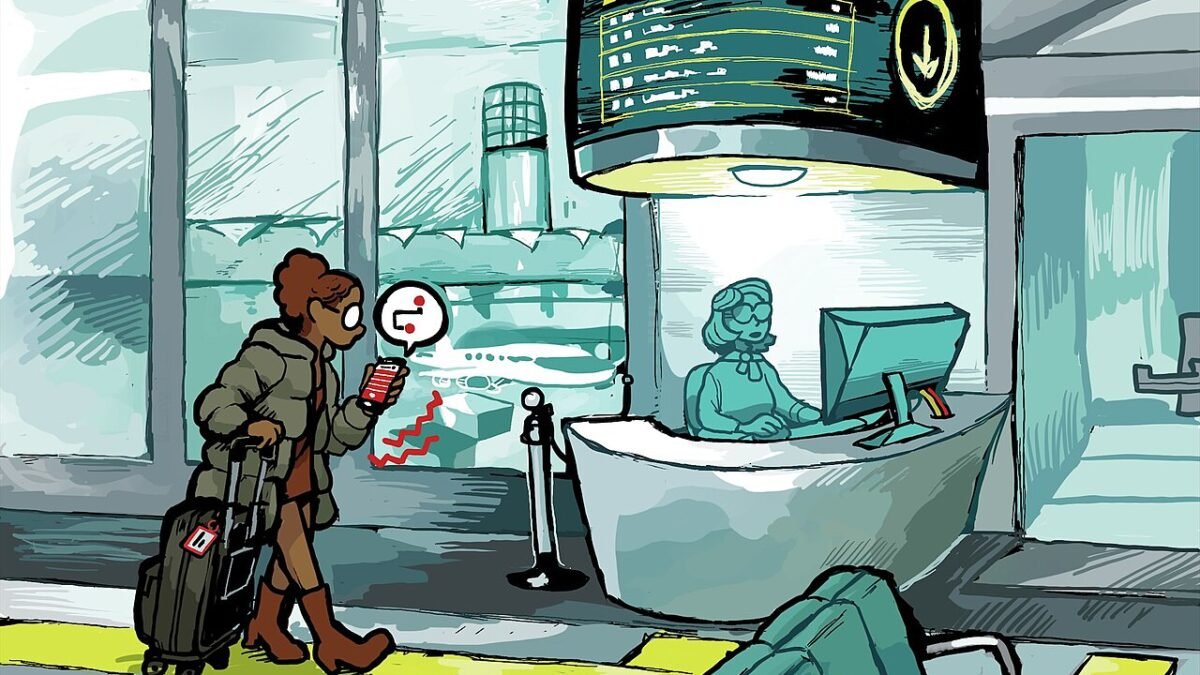
The most expensive data most travellers buy is the data they never meant to use: updates, uploads and background refreshes ticking away in a hotel room. Roaming charges punish inattention far more than honest browsing. Each route abroad, from carrier passes to local cards, trades money against convenience in a different place. Weigh them openly and the trip bill stops being a surprise.
Roaming Passes: the Case For and Against the Easy Option
The case for a carrier roaming pass rests on sheer ease. Nothing needs setting up before departure beyond a few taps in the carrier account, the phone works the moment the plane lands, and your own number keeps receiving calls and texts exactly as it does at home. For a short trip, a tired traveler, or anyone whose bank sends verification messages by text, that continuity has real value. There is no foreign shop to find, no tiny card to swap on a hotel bed, and no new settings menu to learn in a second language at an airport counter late at night.
The case against is equally plain. The Federal Communications Commission warns travelers that roaming charges can build quickly abroad and advises checking carrier terms before departure, and the warning exists because passes reward inattention. Background refreshes, photo uploads and app updates keep consuming data in a hotel room while you sleep, quietly eating the allowance you pictured yourself spending on maps and messages. Terms also vary in ways that catch people out: what counts as a day, which countries are covered, and what happens once the allowance runs dry. A pass bought for convenience can end as the priciest option on the table when the phone stays busy behind your back.
Travel eSIMs: Where They Shine and Where They Stumble
Travel eSIMs shine brightest on preparation. An eSIM is a rewritable chip built into many recent handsets that stores carrier profiles digitally, letting owners add a foreign plan without swapping a physical card. You buy and install the plan at home, land, switch it on, and walk out of the airport already connected, with maps and messages working before the luggage carousel stops. The setup steps reward a calm evening at home rather than a tired scramble abroad, and a careful walkthrough of how to use an eSIM when traveling abroad covers the activation order that catches first timers out. Keeping the home line alive alongside costs nothing extra and preserves the number banks and family already know.
That pairing is the quiet strength of the approach. Travel data plans sold for eSIMs usually provide data only, so calls and texts keep traveling over the home line or through internet applications, and many travelers treat that split as a feature. The home number still receives bank verification messages and calls from school or family, while the foreign plan quietly carries the heavy data. Reading the encyclopedia overview of roaming and how charges arise between networks clarifies why the split saves money: the expensive home network stops carrying bulk data, and only light signalling traffic crosses it. Where eSIMs stumble is compatibility and support, since older handsets lack the chip entirely, some carrier-locked phones refuse foreign profiles, and help, when a plan misbehaves, arrives through an app rather than a shop counter. The reference entry on the eSIM and its digital profile system explains the handset requirements worth checking before any money is spent.
Local SIM Cards: Savings Balanced Against Losing Your Number
The local card remains the ground-level bargain in most destinations. Bought at an airport kiosk, a station shop or a carrier store in town, a domestic prepaid card puts the phone on the same terms as residents, and heavy users who stream, upload photographs and work from trains feel the difference within days. For a long stay, a house sit, or a season of study abroad, that local footing is hard to beat, and coverage in rural areas often follows the domestic networks more faithfully than any travel product layered on top of them. The card itself is cheap plastic; the value sits in the local rates and the generous data bundles aimed at people who live there.
The cost is reachability. Swapping the home card out means your usual number goes silent: bank verification texts land on a card sitting in a drawer or a coat pocket, family callers reach a dead line, and messaging accounts tied to the old number behave oddly until they are re-registered. Carrying a second handset solves the split but adds bulk and one more battery to charge. There are practical frictions too, from hunting a shop after a late arrival to keeping track of a tiny card that must survive the whole trip for the journey home. Travelers who go local and stay happy usually plan the number problem in advance, warning banks and family which number will reach them and which will not.
Offline Habits That Beat Every Price Plan on Offer
The cheapest data abroad is the data never requested, and preparation at home decides how much of the trip can run silent. Maps, translation packs, music and programs can all be downloaded over home wireless networks before departure and used offline later, and the habit takes an evening at most. Save the map of every city on the itinerary, not just the first, and download the neighbourhood around the hotel plus the airport route. Translation packs for the local language, the boarding passes, the hotel confirmations and a photographed copy of key documents all belong on the device before the front door closes. A traveler who lands with the essentials stored can keep the phone in flight mode through the first day and still navigate confidently.
Offline thinking continues during the trip itself. Read the long articles and watch the downloaded programs instead of streaming fresh ones in cafés. Let photographs wait on the device rather than uploading each evening, and review them on the hotel television or a laptop at home. When a connection is needed, use it deliberately: a short session for messages, bookings and a map refresh, then back to quiet. Hotel and café wireless networks handle the heavy lifting for free when patience allows, and batching uploads into those sessions keeps the paid allowance for moments when no network is available and the information genuinely cannot wait. None of this requires a special plan; it requires deciding at home that the phone will mostly carry its entertainment with it.
Background Drains to Silence Before the Flight Leaves
Whatever plan wins, the phone’s background appetite travels with it, so silence the drains at home while the settings are familiar. Phones offer system level data saving modes that restrict background activity, and individual applications add their own download and quality limits, and both layers deserve attention in the same sitting. Turn off automatic app updates over mobile data, pause cloud photograph uploads until a trusted wireless network appears, and stop music and podcast apps from quietly downloading new episodes in the background. Video apps merit their own visit: lower their mobile streaming quality, disable autoplay previews that chew data while you scroll, and clear out any watch list set to download automatically.
Mail, social feeds and news apps refresh on their own schedules unless told otherwise, and a holiday is the right time to stretch those intervals or switch them to manual. Location-hungry services, from weather widgets to ride apps, sip data with every check, so limit them to when the app is actually open. Then run a rehearsal: spend the last day at home with mobile data saving on and roaming habits already in place, and watch which apps complain. Anything that protests at home will protest louder abroad, where each background session carries a foreign price tag in patience if not in money. Fixing the noisy few at the kitchen table is far easier than debugging them from a hotel corridor.
The Verdict: Matching Trip Length to the Cheapest Safe Route
The verdict follows from trip length more than from loyalty to any product. For a short break of a few days, where convenience outweighs thrift and the home number must stay alive, a carrier pass with the background drains silenced is the safest easy route, provided its terms are read before departure rather than after the bill. For a week or two of ordinary holiday travel, the travel eSIM paired with the home line wins on balance: foreign data at local-style behavior, verification texts still arriving, and setup finished at home. For a long stay, relocation or study term, the local card earns its inconvenience, because weeks of heavy use swamp the one-time fuss of shops, swaps and warnings to the bank.
Every route improves under the same discipline: downloads done at home, background appetites trimmed, uploads batched onto free networks, and a data saving mode standing guard over whatever allowance was bought. Choose the route by the calendar, silence the phone before the flight, and the connection abroad becomes a tool picked up when needed instead of a meter running in a pocket. That, more than any single product, is what separates the travelers who come home relaxed about the bill from the ones telling stories about it.
A short departure routine ties the choice together. On the final evening at home, finish the downloads, switch on the data saving mode, silence the background drains, and photograph the carrier terms for whichever route was chosen, so the details sit on the phone rather than in an inbox that needs data to open. At the airport, keep the phone in flight mode until the local arrangement is live, whether that means a pass confirmed, an eSIM switched on or a card bought at arrivals. During the trip, glance at the usage screen every few days; the phone totals data by app, and a surprise name near the top is an early warning that costs little to act on while the trip is young. On the last day, switch the travel arrangement off cleanly and let the home line take over again, so no foreign plan renews itself out of habit after the suitcase is unpacked. None of these steps is clever, and that is rather the point: cheap data abroad is mostly the reward for dull preparation done early.



One comment