Flat pancakes usually trace back to batter that was stirred far too long or leavening that had lost its lift in the cupboard. Gentle mixing, a short rest, and a properly heated griddle change the result completely, giving tall rounds with lacy edges and soft middles. Total time at the stove stays modest, so a slow weekend breakfast need not mean a long morning of work. A relaxed morning also leaves room for a second dish when guests stay over, and learning about making breakfast burritos quickly for busy mornings can round out the table without adding stress. Prepare the ingredients, warm the pan in good time, and resist fussing with the batter once it comes together.
Pancake Batter Errors That Flatten the Whole Stack
The most damaging error happens in the mixing bowl. Flour contains proteins that form gluten when they meet liquid and movement, and gluten is welcome in bread dough but unhelpful here. Stirring and stirring stretches those strands, so the finished rounds turn chewy and lose the delicate crumb that makes them pleasant. A spoon drawn through the batter a handful of times is enough. Streaks of dry flour should be nearly gone, while small lumps remain scattered through the bowl.
Thin batter causes trouble of a different kind. A cook who adds extra milk hoping for a neater pour ends up with rounds that spread wide, brown unevenly, and stack like crepes rather than cushions. Thick batter that barely falls from the spoon holds its shape, keeps its bubbles contained, and rises upward instead of outward. When a batter looks too stiff, add milk one spoonful at a time and judge again, because loosening a thick mixture is far easier than rescuing a thin one.
Batter mixed the night before with all its leavening inside also disappoints. Baking powder starts working the moment liquid touches it, releasing gas that should be trapped during cooking rather than spent in a cold bowl overnight. If mornings feel rushed, measure dry and wet ingredients into separate covered containers in the evening, then combine them after waking. Cold buttermilk and eggs pulled straight from the refrigerator dull the result too, lowering the batter temperature and leaving centres heavy, so let them lose their chill on the counter briefly.
Finally, many cooks crowd the griddle and then poke and press each pancake while it cooks. Pressing with a spatula squeezes out the air pockets that create height, and moving a round before its structure sets tears the delicate base. Give each pancake its own space, keep hands off once the batter lands, and let heat do the quiet work. Pancakes in some form appear on tables worldwide, and readers who enjoy that wider story can turn to the Wikipedia entry on pancakes and their many regional forms for background stretching far beyond a single breakfast.
Fresh Leavening and Buttermilk for Fluffy Pancakes
Baking powder loses strength as months pass, especially in a warm kitchen where the tin sits near the stove. An open tin kept for a year may look and smell fine, yet produce almost no lift. A simple test settles any doubt. Drop a small spoonful into hot water and watch closely. A vigorous fizz means the powder remains active, while a lazy bubble or two means a fresh tin belongs on the shopping list before pancake morning arrives.
For a fuller account of what sits inside that tin and why it reacts as it does, the Wikipedia page covering baking powder and its acid and alkali parts sets out the chemistry in plain terms. Most powder sold today is double acting, meaning some gas forms when liquid arrives and more forms when heat arrives. That second burst in the hot pan rescues a batter that rested a little longer than planned, but even good powder cannot help batter stirred into toughness.
Buttermilk adds a second source of lift. Its gentle acidity meets baking soda and produces gas right away, while softening the crumb and adding a faint tang plain milk cannot match. A reliable batch uses two cups of all purpose flour, two tablespoons of sugar, two teaspoons of baking powder, one half teaspoon of baking soda, and one half teaspoon of fine salt, whisked together in a large bowl. In a second bowl, whisk two cups of buttermilk, two eggs, three tablespoons of melted butter, and one teaspoon of vanilla extract until the mixture looks even.
When buttermilk is missing, soured milk stands in respectably. Stir two tablespoons of lemon juice or plain white vinegar into regular milk, wait a few minutes until it thickens slightly, and use it in the same measure. For a special occasion, whip the separated whites until soft peaks form, then fold them through at the end for extra lift.
Resting Pancake Batter While the Griddle Heats
Once wet and dry ingredients meet, stir only until the flour disappears. Then set the bowl aside for between five and ten minutes. During that pause the flour absorbs liquid fully, which softens the crumb and removes any raw, pasty taste. Starch granules swell, small lumps hydrate and mostly vanish on their own, and the leavening begins forming bubbles throughout the mixture.
Resist the urge to stir again when returning to the bowl. Fresh stirring knocks out bubbles formed during the rest and wakes the gluten a second time, undoing the benefit entirely. If a stray lump troubles you, leave it alone. Small lumps cook through harmlessly and disappear in the eating, while a perfectly smooth batter often signals that tenderness has already been sacrificed.
Use the resting minutes to heat the griddle properly. A heavy griddle or large cast iron pan over medium heat needs time for its surface to even out, because thin pans develop hot spots that scorch one side while leaving the other pale. Aim for roughly three hundred seventy five degrees Fahrenheit where a thermometer is available. Without one, flick a few drops of water onto the surface. Drops that sizzle and dance briefly before vanishing signal a ready pan, while drops that sit and steam slowly mean more patience is needed.
Grease the surface lightly and wipe away most of it, since a thin film gives even browning and lacy edges while pools of fat fry the base unevenly. Portion batter with the same measure each time, one quarter cup per pancake, and leave breathing room between rounds so neighbours do not merge as they spread.
Griddling Pancakes and Knowing the Moment to Flip
Ladle the batter onto the hot surface and then leave it entirely alone. The first side needs about two to three minutes, depending on the heat of the pan and the thickness of the round. Watch the surface rather than the clock. Bubbles will rise, linger, and begin popping near the centre, and the edges will turn from glossy and wet to matte and set. Those two signals together mark the moment to flip, not any single bubble that appears early.
Slide a thin spatula fully under the pancake in one confident movement and turn it over with a quick flick close to the surface. Dropping from a height splashes batter and folds the round onto itself. The second side cooks faster, usually between one and two minutes, and needs only enough time to turn golden underneath and finish the centre. A gentle fingertip press should meet a springy surface that bounces back, rather than a soft dent that stays.
Flip each pancake only once. Repeated turning toughens the crumb, drives out moisture, and leaves the stack dry even when the ingredients were sound. If one round browns too darkly before its centre sets, the pan is running hot, so lower the heat a touch and give the surface a minute to settle. If rounds stay pale and flabby, raise the heat slightly and wait for the griddle to recover between batches.
Blueberries, chocolate chips, or sliced banana can join each round once the batter sits on the griddle rather than in the bowl. Scattering additions over the wet surface before the flip keeps them evenly shared and stops delicate fruit bursting and streaking the whole mixture purple. Finished pancakes should move straight to warm plates or a low oven, ideally on a rack so their undersides keep a crisp edge rather than softening from trapped steam against a plate.
Pancake Timing From Mixing Bowl to Finished Stack
A standard batch fits comfortably inside about twenty five minutes from start to finish when the stages run in a sensible order. Measuring and whisking the dry ingredients takes around three minutes, and whisking the wet ingredients takes another two. Combining the two bowls takes barely one minute of gentle stirring. The rest that follows asks for five to ten minutes, and that pause overlaps neatly with heating the griddle, setting the table, and putting coffee or tea on to brew.
Cooking in batches takes the remaining ten to fifteen minutes, since a home griddle usually holds three or four pancakes at once and a batch of twelve needs three rounds at the pan. Later batches often cook a touch faster as the surface settles into its temperature, so stay nearby rather than wandering off. Keeping finished rounds warm in a low oven during those batches means everything reaches the table hot at the same time, which matters on a morning when eaters arrive at the table in stages.
Doubling the recipe for a crowd does not double the clock, though it demands a wider pan or two pans working together. Batter still rests the same ten minutes, and the leavening holds up well for the first half hour of cooking, after which the lift fades gradually.
Serving Fluffy Pancakes Straight From the Griddle
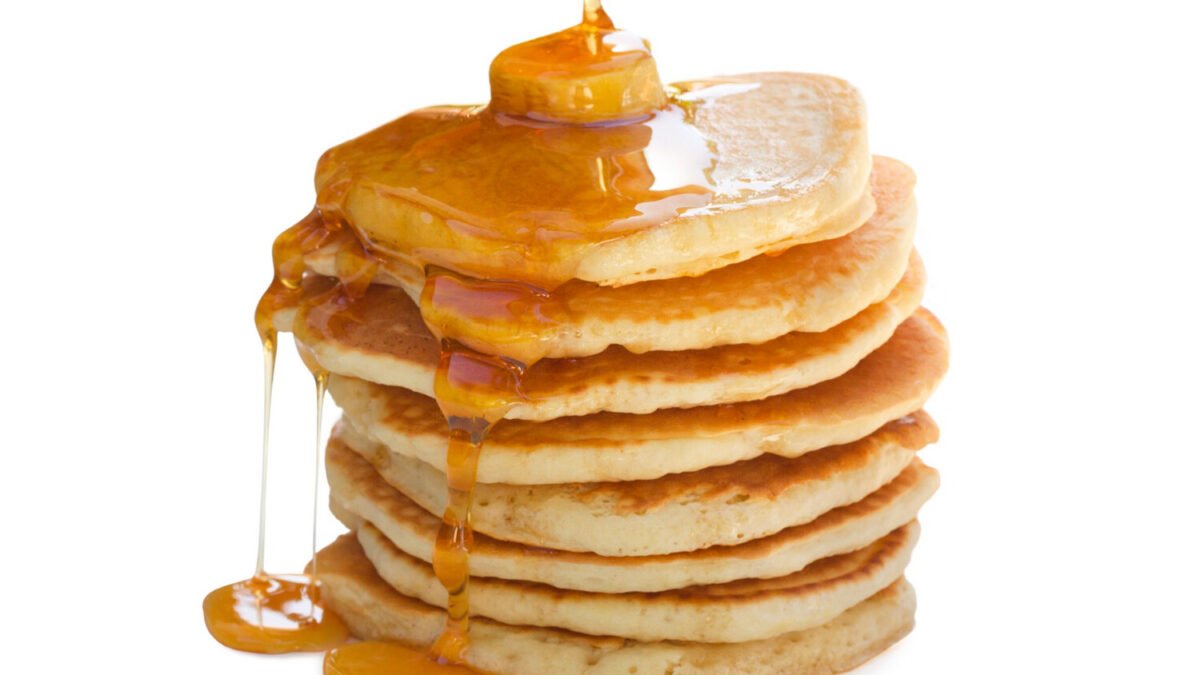
Warm syrup pours better and keeps the stack hot longer. A small jug warmed in hot water does the job without fuss, and soft butter placed on the top pancake melts into the layers as the stack sits for a minute at the table. Cold syrup dragged straight from the refrigerator can drop the temperature of a carefully timed breakfast in seconds, undoing the work of the low oven and the warmed plates.
Fresh berries, sliced peaches, or a spoonful of stewed fruit bring brightness against the rich crumb. A dusting of powdered sugar suits a plain stack, while toasted nuts add crunch for anyone who likes contrast. Whipped cream belongs on the table in a cold bowl, so each person can add as much or as little as they please. None of these additions needs to be elaborate, and the pancakes themselves should stay the centre of attention throughout the meal.
When the meal ends, wash the griddle once it cools and dry it thoroughly before putting it away. A clean, dry surface will be ready for the next batch without carrying flavours from the last one. Remember what actually made the difference this time: fresh powder, lumps left alone, a rested bowl, and a patient single flip. Those four habits, repeated, turn an uneven breakfast into a dependable one.