Weekly cooking only saves money when the shopping, the cooking session, and the storage plan all pull in the same direction from the start. A small set of versatile ingredients, cooked once and seasoned differently across the week, keeps both spending and waste firmly down. Households new to the rhythm can ground themselves in beginner weekly meal prep before refining the system below, because the habits underneath matter more than any single recipe collection. Once the rhythm settles, a week of lunches and dinners stops feeling like a project and becomes a quiet routine that runs almost on rails.
A Repeatable Grain, Protein, Vegetable, and Sauce Formula for Weeks
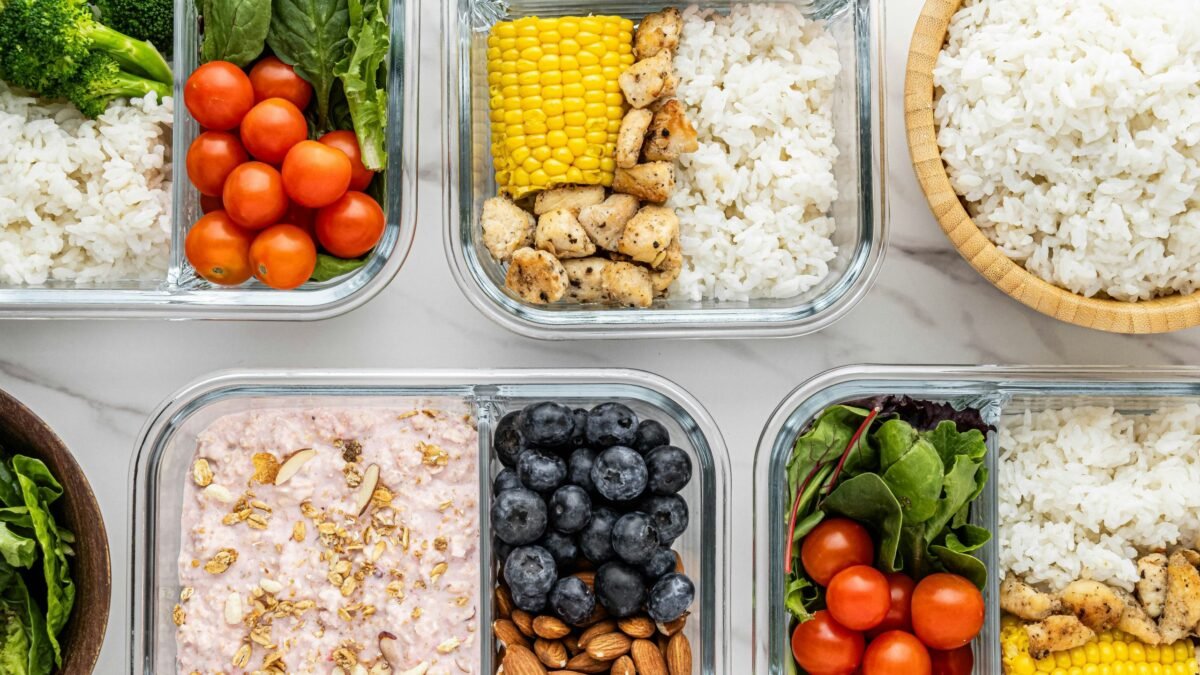
A dependable formula replaces recipe hunting with simple slots that rotate according to appetite, season, and whatever the shops discount that week. One sturdy grain anchors the plates, chosen from rice, barley, couscous, or a similar base that reheats without turning gluey. A pair of proteins covers the week between them, perhaps eggs alongside beans, or chicken thighs alongside lentils, so no single flavour repeats often enough to become tedious. Vegetables divide into a roasting group that tolerates reheating, such as carrots, peppers, and courgettes, and a fresh group added cold at serving for crunch.
Sauces perform the transformation work that keeps repetition invisible. The same grain bowl tastes entirely different under a herbed yoghurt dressing, a peanut style sauce, or a sharp tomato relish, yet the cooking underneath never changed. Keeping sauces in small jars, made in minutes while grains simmer, gives each weekday plate its own character without extra pans. A finishing sprinkle chosen at the table, from toasted seeds to pickled onions kept in the refrigerator door, adds the contrast that reheated food often lacks, and a squeeze of citrus over a warmed portion revives flavours that storage has muted.
Rotation discipline protects the formula from staleness across months. Swapping the grain family every couple of weeks, alternating protein styles between meat, egg, and pulse based weeks, and letting seasonal vegetables dictate the roasting tray keeps the slots constant while the contents evolve. The shopping list practically writes itself once the slots are known, quantities scale by household size, and the cook stops browsing for inspiration and starts executing a familiar pattern with small, enjoyable variations.
Pantry First Lists Built Around Weekly Store Offers and Sales
List building begins at home, in the cupboard and freezer, rather than in the shop aisle. Noting which grains, pulses, tins, and frozen vegetables already sit in stock prevents duplicate purchases and suggests the slots those supplies can fill during the coming week. A running note on the phone or the refrigerator door, updated whenever a staple runs out, turns the weekly list into a short gap filling exercise instead of a reconstruction from memory under fluorescent lights.
Store offers then shape the flexible slots rather than dictating impulse baskets. When peppers or frozen peas sit on promotion, they claim the vegetable slot; when thighs or dried lentils drop in price, they claim the protein slot. Rigid lists built around one fixed menu waste those savings, while slot based lists absorb them naturally. Buying promoted staples with long lives, such as rice, dried beans, tinned tomatoes, and frozen vegetables, during a strong offer builds a small buffer stock that smooths spending across leaner weeks, provided storage space and realistic usage rates keep the buffer honest rather than hoarding.
Container discipline supports the same thrift. Enough reusable boxes to hold the week, plus a few small pots for sauces, covers the storage need without a cupboard of novelty gadgets. Clear sides matter more than matching lids collections, because visible contents get eaten while anonymous boxes drift toward the back and spoil. A roll of masking tape and a marker for dating each container costs very little and removes the guesswork that otherwise sends perfectly good food into the bin out of caution.
Parallel Batch Cooking Across Oven, Hob, and Preparation Counter
A well sequenced session keeps three workstations moving at once so the total time stays compact. The oven takes the longest items first, usually the roasting vegetables and any protein that cooks hands off, while the hob handles the grain and a simmering pulse or sauce beneath occasional stirring. The counter runs in parallel throughout, with washing, chopping, and sauce mixing filling the gaps while heat does its work elsewhere, so the cook rarely stands idle watching a pot.
Sequencing follows cooking duration rather than recipe order. Dense root vegetables enter the oven before quicker peppers, grains start early because they rest happily off the heat, and delicate items such as eggs cook last so their texture survives storage best. Washing up in waves, during natural pauses, prevents a mountain of pans at the end and keeps counters clear for portioning. Laying filled containers out in rows as components finish turns assembly into a short production line, and lids go on only after steam subsides, since trapped condensation rains back onto food and shortens its good days.
Energy thrift hides inside the same sequencing. A full oven roasting several trays at once costs little more than a single tray, and residual heat can warm flatbreads or toast seeds for the finishing jars while the main items rest. Cooking double quantities of a freezer friendly protein during the same session stocks a future week at almost no extra effort, smoothing the calendar when a busy weekend leaves no room for a full preparation session.
Refrigerator Windows, Freezer Portions, and Safe Storage for Cooked Food
Storage discipline decides whether a cooked week gets eaten proudly or discarded nervously. Cooked foods held in a refrigerator generally remain safe to eat for three to four days, which means a Sunday session covers the opening stretch comfortably while later days need support from the freezer. Portioning Thursday and Friday servings into freezer containers on cooking day, then moving each portion into the refrigerator the night before its turn, bridges the gap without quality drama. Freezing pauses the safety clock almost entirely, so surplus batches banked deliberately become next week insurance rather than forgotten frost.
Cooling speed matters as much as the calendar. Perishable cooked food should not sit at room temperature beyond roughly two hours, and sooner in a hot kitchen, so shallow containers that shed heat quickly belong in the refrigerator promptly once steam settles. The science and traditional methods behind keeping food sound are surveyed in food preservation methods and storage science spanning chilling, freezing, and older techniques that still inform modern practice. Practical container choices, materials, and household handling receive similar treatment in food storage containers and safety overview covering how families keep provisions sound between shopping trips.
Labelling closes the system. Each container shows the day it was cooked on a strip of tape across the lid, portions rotate so the earliest dates move to the front, and anything unlabelled gets judged strictly rather than optimistically. Sauces stay separate until serving to preserve texture in grains and greens, salad leaves and cut soft fruit join plates fresh rather than stored dressed, and a quick smell and appearance check before reheating remains a sensible final habit even inside the safe window.
Plain Cooked Proteins Seasoned Differently at Serving Time Each Day
Cooking proteins plain, with salt and gentle aromatics only, preserves their flexibility across the week. A tray of simply roasted chicken thighs can meet a smoked paprika sauce on one evening, a lemon and herb dressing on another, and a curry style yoghurt later still, tasting like three distinct dinners built on one cooking effort. Thigh meat suits this treatment especially well because it stays moister across reheating than lean breast meat, forgiving the second warming that weekday dinners demand.
Plant proteins reward the same restraint. Dried beans and lentils provide protein at a fraction of the cost of most meats, cook in large forgiving batches, and absorb whatever sauce or spice blend meets them at the plate. A pot of plain lentils can become a herbed salad base when served warm with fresh vegetables, a spiced stew when simmered briefly with tomatoes, or a filling for wraps alongside roasted peppers. Eggs bridge gaps gracefully, whether sliced cold over grain bowls or folded warm through reheated rice at the last moment, adding richness without another cooking session.
Seasoning at serving also protects texture. Spice blends applied before storage can dull or turn bitter across days, while sauces added fresh keep their brightness and let each eater adjust heat and acidity personally. Keeping two or three sauces and one dry sprinkle mixture ready covers most plates, and rotating those accents weekly delivers variety more cheaply than rotating the underlying ingredients ever could.
Scaling a Single Person Plan Up for Family Sized Appetites
The formula scales by multiplication rather than redesign, which keeps family preparation from becoming a separate discipline. Grain quantities rise, protein trays multiply, and the oven simply fills more completely, while the sequence and storage rules remain identical. Larger households benefit from assigning the sauce and finishing jars generously, because differing tastes around a family table resolve themselves when each person can dress a plain base personally rather than negotiating one flavoured batch for everyone.
Appetite variation finds a natural outlet in modular assembly. Growing teenagers can take a double portion of grains and protein while a lighter eater adds more fresh vegetables, all from the same containers, and lunchboxes draw from the same stock with sauces packed in leak proof mini pots. Planning one deliberately larger batch of a freezer friendly item each week builds a reserve that absorbs unexpected guests, missed shopping trips, or an evening when nobody can face cooking, without disturbing the standing rotation.
Cost control survives scaling because the principles travel unchanged: pantry first listing, offers shaping flexible slots, frozen vegetables whose nutritional value rivals fresh produce that has travelled and stored for days, and pulses stretching meat across more plates. Families who review the week briefly together, noting which containers emptied first and which lingered, tune quantities faster than any calculator, and the lingering items shrink or vanish from the following list. Over a month, that feedback loop trims waste steadily while the table still feels generous, which is the entire point of the system working as one connected whole.