
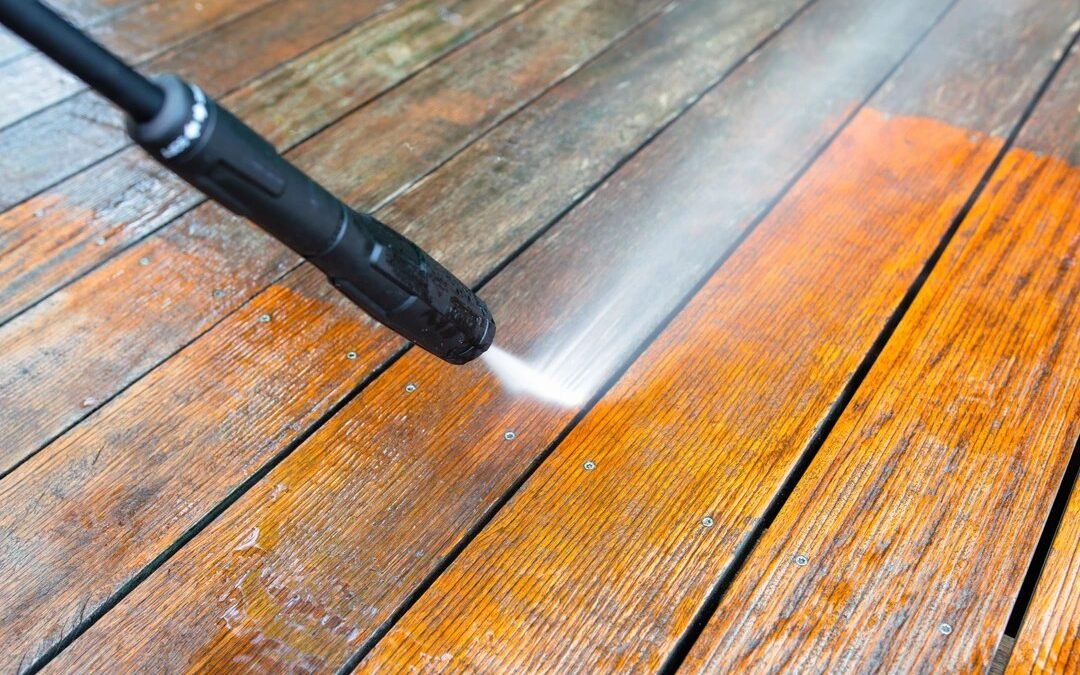
Plenty of deck washing bills grow, and plenty of deck boards get scarred, because of choices made before any water flows at all. Knowing which habits push the price upward helps a homeowner hire sensibly or rent equipment with a calmer plan.
A deck wash looks simple from the driveway: water, noise, and a grey surface turning brown again. The money and the damage both hide in the details, though. Quotes rise when a crew has to move furniture, work around planters, climb to a second level, or spend extra passes on years of algae. Boards get ruined when pressure substitutes for patience. Everything that follows separates the habits that inflate the bill or scar the wood from the approach that keeps both under control.
Habits That Push Deck Washing Quotes Higher Than Necessary
The first costly habit is describing the job vaguely. A homeowner who asks for a price by phone without mentioning the deck size, the levels involved, the stairs, or the state of the surface invites a cautious quote, and cautious quotes carry padding for the surprises a crew expects to find. Photographs, rough measurements, and an honest description of the green staining in the shaded corner cost nothing and routinely pull the padding back out. The same applies to timing: booking in the busiest spring weeks, when every crew is stretched, removes any reason for a company to sharpen its pencil.
Leaving the deck furnished is another quiet surcharge. Crews price the washing, not the removal service, and an hour spent carrying chairs, grills, and planters to the lawn appears in the bill one way or another. Combining jobs carelessly inflates things too: asking for the fence, the furniture, and the driveway as afterthoughts on the day produces day rate thinking rather than a planned price. Homeowners who also intend to tackle their siding face the same pricing logic there, and the reasoning behind pressure washing house siding yourself versus hiring it out mirrors the deck decision closely, since access, grime, and surface softness drive both quotes.
Neglect itself is a pricing habit. A deck washed every season or two needs a gentle rinse and a light detergent pass, while a deck left for many years under trees needs repeated treatment, dwell time for the cleaner, and slow work over boards that have gone soft in places. The difference between those two jobs can double the labour on the same square footage, which is why the cheapest deck wash is usually the one booked before the surface truly needs rescuing.
Pressure Habits That Gouge Softwood Deck Boards Beyond Repair
Wood damage from pressure washing follows a recognisable pattern: feathery raised grain, pale stripes where the surface fibres were torn away, and wand marks etched in arcs that show every pass the operator made. The cause is almost always a narrow jet held close. A concentrated stream concentrates force onto a small area, and soft earlywood between the growth rings erodes faster than the harder latewood beside it, leaving a rippled surface that holds dirt faster than before and splinters bare feet all summer.
Species decide how much abuse a board forgives. Cedar and redwood are soft and carve easily, pressure treated pine is somewhat harder but still marks under a careless jet, and composite boards present a different risk altogether, since aggressive washing can strip the protective cap layer that keeps moisture out of the core. Working through pressure washing methods and machine types explains how jet shape, distance, and flow combine to clean or to cut, and why the fan shaped tips colour coded by spray angle exist: a wide fan spreads the same force over a broader arc and treats the surface far more kindly.
Safety belongs in the same conversation, because a jet strong enough to carve wood treats skin worse. The national Consumer Product Safety Commission warns that pressure washer streams can lacerate skin and drive contamination deep enough to cause serious infection, injuries that look deceptively minor at first. Sturdy closed footwear, eye protection, and a rule that the wand never points toward anyone, including the operator changing grip, are part of competent deck work rather than optional caution.
Skipping Detergent and Relying on Raw Pressure Alone
The most destructive shortcut in deck washing is also the most common: skipping detergent and letting pressure do all the work. Raw water at high force will strip grey weathering and algae eventually, but only by removing wood along with them. A deck detergent formulated for the surface loosens algae, mildew, and weathered fibres chemically during a short dwell period, after which a modest rinse at gentle pressure carries the loosened grime away. The boards keep their surface, the cleaning reaches into the grain, and the whole job finishes faster despite the extra step.
Technique with detergent matters as much as the product. Apply it from the bottom up on vertical faces so it does not streak, keep it from drying on the surface in hot sun, and work in sections small enough to rinse before the cleaner fades. Plants and grass around the deck deserve a rinse beforehand and a cover where splashes concentrate, since even garden friendly formulations punish foliage left coated through a hot afternoon. Household bleach mixtures, an old habit, deserve retirement: they punish nearby planting, corrode fittings, and lighten the wood unevenly.
The pricing angle hides here too. A crew that relies on pressure alone works slower, passes over each board repeatedly, and still leaves shadows of algae in the grain that return within weeks. A crew using detergent properly charges for skill and chemistry rather than machine time, and the finish lasts longer because the organisms feeding the green film were killed rather than merely scattered across the surface.
How Deck Size, Access, and Grime Level Shape Any Quote
Every honest quote rests on three variables. Size is the obvious one, measured not just in floor area but in linear edges, stair treads, and railing spindles, each of which slows the work. Access is the second: a ground level deck with a nearby outdoor tap quotes very differently from a raised deck over a slope, reached by one narrow stair, where every surface change forces repositioning and slower, more careful passes. Background reading on deck structure and materials helps a homeowner describe levels, stairs, and built in seating accurately, which is exactly the vocabulary a quoting crew needs.
Grime level is the third variable, and the one homeowners most often understate. Light seasonal dust and pollen rinse away in a single pass, while established algae in shaded boards, tannin staining under planters, and rust marks from furniture feet each demand targeted treatment. Water supply plays a small part too: a weak outdoor tap starves a large machine and stretches the day, and a professional crew will ask about it for the same reason.
Put plainly, a modest ground level deck in decent condition commonly washes professionally for somewhere between one hundred fifty and four hundred, while large multilevel decks with heavy growth climb toward seven hundred or beyond. Those ranges only hold when the three variables are described truthfully; a quote given blind is a guess wearing a uniform, and guesses get corrected upward on the day.
Comparing Rental, Purchase, and Professional Crew Routes Honestly
Renting puts a capable machine in the driveway for between forty five and seventy five a day, plus the cost of detergent and perhaps a surface cleaner attachment that evens out passes across open floor areas. The rental route suits a confident homeowner with a sound deck, a free day, and the discipline to test the jet on an inconspicuous board and keep the fan tip moving at a steady distance. Buying an electric machine at somewhere in the region of one hundred fifty to two hundred fifty makes sense when the same machine will also handle siding, fences, and paving several times a year, since the second and third uses are where the purchase quietly pays for itself.
Hiring a crew buys three things the other routes cannot: insurance against the operator carving the boards, experience reading how each wood species reacts, and the detergent knowledge described earlier. For a soft cedar deck, a multilevel structure, or any deck where replacement boards would cost far more than the wash, that experience is the product being bought. The honest dividing line is risk rather than pride: a homeowner who has never run a pressure washer learns on whatever surface is in front of them, and a deck is an expensive classroom.
Questions Worth Asking Before Accepting a Deck Washing Price
Ask what pressure and tip the crew intends to use on your wood species, and listen for an answer that mentions fan tips, distance, and detergent dwell time rather than machine power alone. Ask whether the price includes stairs, railings, and moving furniture, since those three items account for most gaps between a quote and a final bill. Ask what happens if a board is damaged, and whether the company carries insurance that covers it.
Ask also about preparation on your side: what must be moved, whether nearby planting is protected, and how the crew handles the runoff on a sloped site. Finally, ask how long the finish should last and what maintenance keeps it there, because a company confident in its detergent work will happily describe the gentle annual rinse that keeps algae from re-establishing. A homeowner who has asked those questions, described the deck honestly, and cleared it before the crew arrives has done everything within their control to keep the price fair and the boards unscarred.
Get the agreed scope in writing before the work starts, even for a modest job, and keep it simple: the surfaces included, the detergent method, the treatment of stairs and railings, and the total price rather than an hourly guess. Comparing two written quotes side by side exposes the padded one immediately, because padding hides in vague lines while honest pricing names what it covers. If a quote arrives far below every other for the same described deck, treat the gap as a question rather than a bargain, since the saving usually reappears as surface damage, skipped detergent, or extras added on the day. Paying a fair price once, for gentle work that leaves the boards intact, is cheaper in every sense than rescuing scarred wood later.


