
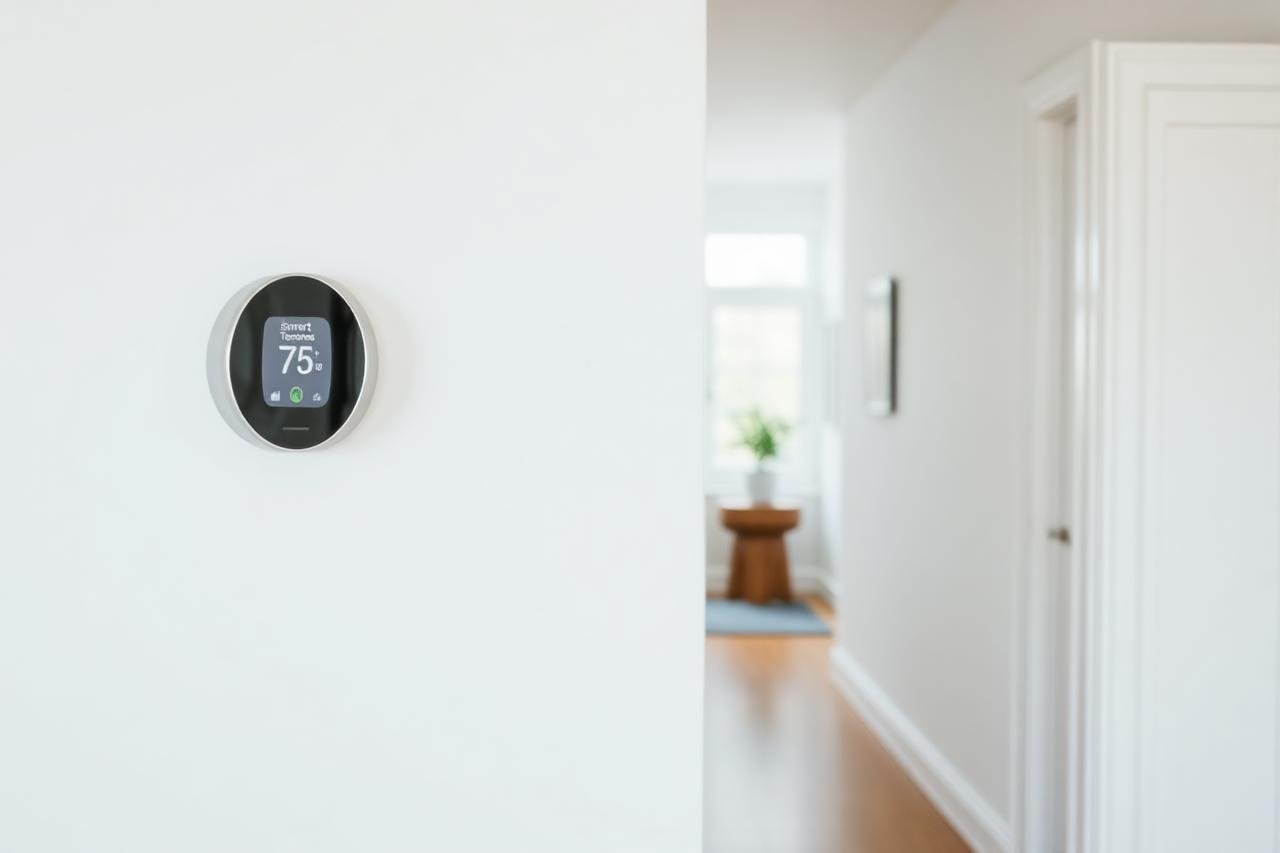
A thermostat that learns when a house sits empty sounds like a gadget, yet the savings question turns on wiring, heating type, and daily routine rather than novelty. Weighing those plain factors shows which homes gain real value and which gain almost none.
Heating and cooling together account for the largest share of energy use in a typical home, so the control on the wall matters more than most small appliances combined. Federal energy guidance has long advised turning temperatures down while occupants sleep or spend hours away, because a house does not need full comfort heating when nobody is awake to feel it. The same habit of matching energy use to occupancy extends beyond heating, and households weighing an affordable smart lighting setup are applying the identical test: does the device remove a repeated waste, or merely add another screen to manage. The argument over thermostat types is really an argument over who handles those setbacks: the homeowner remembering every morning, a fixed timetable, or a device watching patterns on its own.
Learning Models Versus Programmable Models Versus Basic Models for Thermostat Control
Learning models watch the first weeks of manual adjustments and occupancy signals, then build a schedule around what they observe. When someone leaves earlier than usual, motion sensing or phone location can trigger an away setting without any button being pressed. That automation suits households whose days shift from week to week, because a timetable written once would soon stop matching real life. The same devices usually report energy use in an app, which makes waste visible in a way a plain dial never could.
Programmable models follow a timetable the homeowner enters, divided into wake, away, return, and sleep periods across the week. They cost less, they need no internet connection, and they reward a routine that repeats reliably. Their weakness is human rather than technical: many owners never finish programming them, or set one schedule and ignore it through every season. A basic manual model simply holds whatever temperature it is given until someone turns the dial, which wastes energy in empty houses but never surprises anyone with an unwanted setback.
Certification separates serious products from novelty items. Under the national Energy Star programme, makers of certified models must submit field data showing measured savings in real homes rather than laboratory claims alone, and the Energy Star guidance on certified smart thermostats sets out what that label demands and which products carry it. A household comparing a learning model against a programmable one should treat certification as the floor, since uncertified connected models may offer an app and little else.
Homes and Heating Systems That Gain the Most From Automatic Setbacks
The strongest gains appear where a house stands empty for long, predictable stretches. Homes emptied by work and school hours, second properties visited on weekends, and houses in colder regions with long heating seasons all give a setback schedule many hours to work with. Overnight setbacks add more, since sleeping occupants tolerate cooler air under bedding far better than living rooms would during the evening. Households already reviewing how setback savings stack up often look next at lighting costs, and weighing an affordable smart lighting setup alongside heating control gives a fuller picture of where household energy money actually goes.
Heating type shapes the result just as much as routine. Forced air systems respond quickly, so temperatures recover within a short period after a setback ends and deep overnight reductions pay off. Radiant floors and heavy slab systems respond slowly, sometimes taking hours to warm a room back up, so aggressive setbacks can leave mornings uncomfortable and save less than expected. Heat pumps sit between the two: moderate setbacks work well, but very deep ones can trigger auxiliary resistance heat during recovery, and that auxiliary stage is expensive to run.
Cooling follows a similar pattern in hot climates. Letting indoor temperatures drift upward while a house sits empty through a working day reduces air conditioning run time substantially, and humidity control features on better models keep that drift from leaving the house feeling damp on return. Small flats with one occupant who works from home sit at the opposite end of the scale: the building is rarely empty, the conditioned area is modest, and there are few setback hours available for any device to exploit.
Wiring, Compatibility, and Sensor Placement Checks Before Purchase
Compatibility starts behind the old thermostat, where the wiring tells the real story. Many connected models rely on a common wire that supplies steady power from the heating system, and houses wired before that practice became standard may have no spare conductor in the wall. Some models draw power through the heating circuit instead, which works on many systems but can cause short cycling or silent failures on others. Photographing the existing terminals before removing anything, and matching each wire to its letter label, prevents most installation mistakes.
Heat pump owners face an extra layer of checking. A system with auxiliary heat needs a model built to manage staging correctly, deciding when the efficient pump alone is enough and when the backup stage should join in. Getting that logic wrong can quietly double winter running costs while the house still feels warm, so comfort alone proves nothing. Readers who want the background before shopping can work through an overview of smart thermostat technology and system types, which explains how these controls handle different heating equipment and where their limits sit.
Sensor placement decides whether the controlled temperature matches the lived temperature. A thermostat on a sunlit wall, beside a cooking range, or above a supply vent will satisfy itself while bedrooms stay cold. Remote room sensors help in houses where a hallway reading misrepresents the rooms people sleep in, letting the system average readings or prioritise the bedroom overnight. Before buying extra sensors, though, it is worth checking whether closed doors, blocked vents, or a badly placed existing thermostat explain the cold spots more cheaply.
What Ownership Involves After Installation Day Has Passed
The first fortnight with a learning model is a teaching period, and the household has to take part. Every manual correction trains the schedule, while constant overrides teach the device that nobody means what they set. Households that adjust the temperature thoughtfully for those early weeks usually end up with a schedule that fits, whereas households that fight the thermostat daily often conclude, unfairly, that learning does not work. Leaving the resulting schedule alone afterwards matters just as much as building it.
Ongoing ownership is light but not zero. Software updates arrive through the home network, location features depend on phones being carried and charged, and a broadband outage can disable remote control while the thermostat keeps following its stored schedule on the wall. Filter change reminders and frost protection alerts are genuinely useful, particularly for second homes that sit unwatched through cold snaps. Utility rebate programmes in many states reduce purchase prices for qualifying certified models, although amounts and eligibility vary widely by provider and change over time, so checking the current local offer before buying is worth the few minutes it takes.
Situations Where Keeping a Simple Thermostat Makes Better Sense
Some households gain almost nothing, and honesty about that saves money. A home occupied around the clock by retired occupants, home workers, or young children has few empty hours for setbacks to exploit, and comfort rightly wins over tiny savings. Mild coastal climates with modest heating and cooling bills offer the same problem from the other direction: even a healthy percentage saving on a small bill takes many years to repay a premium device.
Slow responding heating systems make another strong case for simplicity. A radiant slab that needs half a day to change temperature gains little from daily scheduling, and a basic or simple programmable control set to a steady, moderate temperature often serves it better. Renters who cannot alter wiring, owners planning to sell within a year or two, and anyone whose heating system is due for replacement soon should also wait, since a new system package frequently includes a matched control at a better combined price.
A Clear Recommendation Based on Routine, Climate, and Equipment
Buy a certified learning model when three conditions line up: the house stands empty or asleep for long stretches, the heating system responds quickly enough to recover from setbacks, and the wiring supports the device without makeshift workarounds. In that combination the automation earns its price, because it captures savings that a forgetful household would leave behind week after week. Choose a programmable model instead when the weekly routine is fixed and predictable, since a timetable set once will capture nearly the same savings for far less money.
Keep the simple thermostat when the house is occupied most hours, the climate is mild, or the heating plant is slow and heavy. Between those poles, let the wiring check and the heating type decide rather than the marketing: confirm the common wire, confirm heat pump staging support where relevant, place sensors where people actually sleep, and treat rebates as a welcome discount rather than the reason for buying. Judged that way, the purchase stops being a gamble on novelty and becomes a plain calculation about hours, equipment, and habit.
A practical trial costs nothing and settles most arguments before any purchase. For a fortnight, set the existing thermostat back by hand whenever the house empties and every night before sleep, then compare the next energy bill and the household comfort against the previous period in similar weather. If nobody remembered half the time, automation has something real to offer. If the manual routine stuck easily and comfort held, a programmable model will capture most of the benefit and the learning premium buys convenience rather than savings.
Price should be judged whole rather than by the box alone. A model that needs a power adapter kit, an electrician visit, or replacement sensors for several rooms costs more than its shelf price suggests, while a straightforward swap onto an existing common wire can be finished in under an hour with the power off at the breaker. Renters and owners of older wiring should count that hidden work honestly, because installation friction is where many otherwise sensible purchases stall half finished in a drawer. When the wiring is ready, the routine is variable, and the heating plant responds quickly, a certified learning thermostat is a sound, unglamorous upgrade. When any one of those conditions fails, the cheaper controls are not a compromise at all; they are the correct tool for that particular house.


